
Lieferung heute & morgen

Qualitätsgarantie

Willkommens-Angebote freischalten: KOSTENLOSE Lieferung | Bis zu 80 % RABATT | Kostenlose 30-Tage-JoyPlus-Testphase
App herunterladen
Water toys for children should keep them entertained, but they must not be mistaken for swimming aids or safety equipment. Bath toys, pool toys for children and beach toys differ considerably in their age recommendations, materials, intended use and supervision requirements.
Many disappointing purchases are the result of three common marketing pitfalls:
Before buying, it’s worth checking verifiable product details rather than relying on decorative product images or general marketing claims.
The age recommendation is an important guide. Water toys for babies and toddlers should be easy to grip and must not have accessible small parts. For babies from around three months, only products specifically intended for this age group are generally suitable, and they should be used only in shallow water or out of the water.
For children aged three and over, options include a beach ball, simple water capsules or a bodyboard for children. The manufacturer’s information, the child’s size and the specific environment are all important. A product designed for a pool is not automatically suitable for open water or currents.
Bath toys and beach toys should be made from durable, smooth materials that are easy to clean. After playing with sand or pool water, we recommend:
Before each use, check inflatable pool toys for cracks or air leaks around the valves, seams and surface. Damaged products should no longer be used in water. Claims such as ‘BPA-free’ or ‘non-toxic plastic’ should come from the product description or packaging and should not be applied indiscriminately to other products.
A toy may be suitable for the bath, garden, swimming pool or beach, but each setting has different requirements. A water track needs a stable, level surface. A beach ball needs plenty of clear space. A ride-on or bodyboard should only be used in shallow, calm water and under constant supervision.
Important: Water toys are not rescue equipment. Even a product labelled as a swimming aid for children is no substitute for a suitable, correctly fitted buoyancy aid or close supervision by a responsible adult.

Why it suits this profile: The sand and water mill is listed as suitable for children aged 12 months to 6 years and can be used in the bath, sandpit or garden.
There’s no need to inflate it or deal with complicated assembly. Wide feet help keep it stable, and sand and water residue can be rinsed off after use.
Funnel, Turtle-Wheel, seesaw and sun wheels; dimensions as listed: 22 × 14 × 43 cm, weight 390 g.

Why it suits this profile: According to the product information, this lightweight ball is intended for children aged 3 months to 3 years and can also be used outside the bath.
The age recommendation and diameter of around 10 cm make it easier to assess. The ball is not a flotation device and should only be used in shallow water under constant supervision.
A lightweight, waterproof design with a transparent ball, floating duck and confetti details. Check for cracks or loose parts before use.
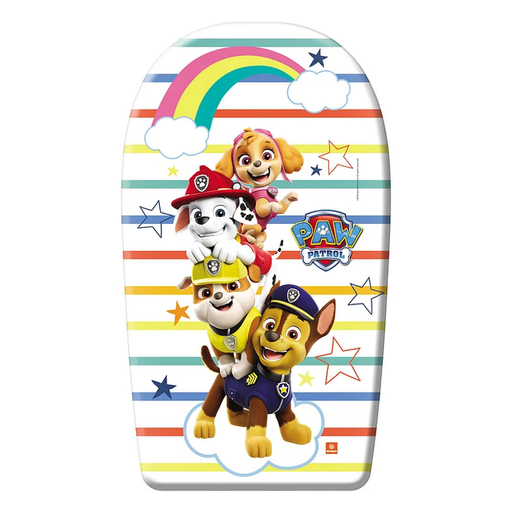
Why it suits this profile: This 84 cm foam bodyboard is designed for children aged 3 and over, and is suitable for supervised play in shallow water.
The product information clearly states that this is a water toy, not a rescue aid. Avoid open water and strong currents.
Lightweight foam and dimensions of 84 × 46 × 4 cm make it easier for children to carry than larger swim products.
We’ve put together a comprehensive, regularly updated list of products that meet these strict selection criteria and fully comply with the safety regulations in force in the EU.
The lifespan of water toys depends largely on the material, how often they’re used and how they’re stored. Chlorine, salt, sand, UV rays and moisture trapped over long periods can all put strain on surfaces and joints.
Only products with an age rating that explicitly covers the baby’s age should be considered. A lightweight ball or simple bath toy may be suitable, provided there are no accessible small parts. Any use in water must be in shallow water, carefully controlled and under close supervision.
There’s no standard lifespan that applies to every product. Regular visual checks are more useful than a general time limit. Check the seams and valves of inflatable products before every use. Storing them somewhere dry and dark can reduce wear and tear.
Simple bath toys and water tracks have few ongoing costs beyond water and, where necessary, cleaning. Inflatable products may require an air pump and extra care. For families, it’s worth choosing a product that suits where it will be used and is easy to clean and store.