
Lieferung heute & morgen

Qualitätsgarantie

Willkommens-Angebote freischalten: KOSTENLOSE Lieferung | Bis zu 80 % RABATT | Kostenlose 30-Tage-JoyPlus-Testphase
App herunterladen
Water toys for children should keep them entertained, but choosing one based only on its colour, shape or eye-catching marketing claims isn’t enough. A water playset for children, an inflatable swim toy and a swimming aid all serve different purposes and have different age recommendations and safety requirements.
Three common buying mistakes are particularly likely to lead to the wrong choice:
The age recommendation isn’t just for show: it’s an important guide to choosing the right product. For example, specially designed swimming aids may be suitable for toddlers from one year old. A water playset with small figures and boats, on the other hand, may only be suitable from age three if small parts could pose a choking risk.
For a swimming aid for learning to swim, body weight is also important. Some models are designed for a specific weight range, while children’s swim discs let you adjust the buoyancy support in stages. Make sure the swimming aid fits correctly and check it for damage before each use.
For plastic toys, information about materials, care and the recommended age is important. For toys sold in the EU, parents should look for clear product labelling, safety information and the CE marking. The EN 71 series of standards covers various aspects of toy safety, but it doesn’t replace checking the specific product.
Check the valves, seams and surface of inflatable items before each use. A repair patch can come in handy, but it doesn’t automatically make a damaged product safe for continued use. After use in chlorinated or salt water, rinse the item with clean water and let it dry completely.
A water playset for children is usually best suited to a flat outdoor area. The AquaPlay model, for example, measures 138 × 88 × 47 cm and weighs 4,6 kg. Make sure you have enough space for it on your balcony, patio or in your garden.
Inflatable swim toys, a swimming ring for children or a water ball for children are intended for supervised play in the pool or at the beach. They are not lifesaving devices. Baby arm bands, children’s swim discs and other swimming aids also do not prevent drowning. Children must always be supervised in and around water by a responsible adult.
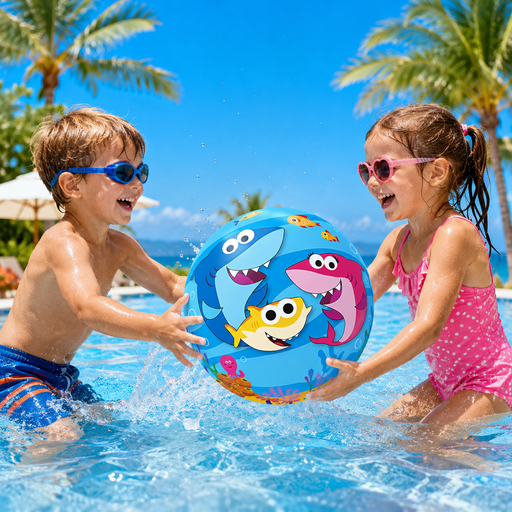
Why it suits this family: This inflatable ball is compact and easy to take along, making it a handy addition to supervised games at the pool or beach.
The product description clearly states that the ball is not a lifesaving device. This makes it clear that it’s for play, not for learning to swim.
23 cm in size, inflatable design, suitable for supervised games in the pool or at the beach.
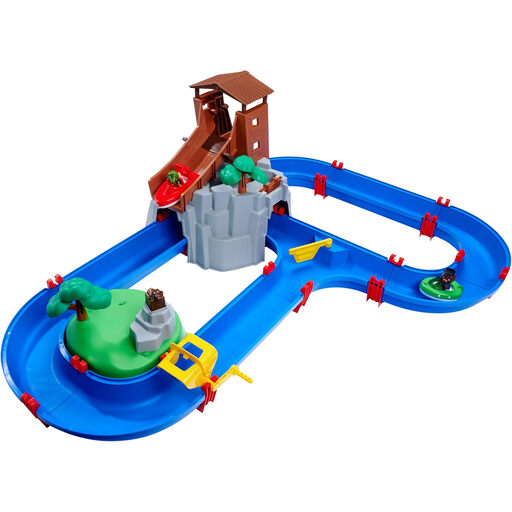
Why it suits this family: This large AquaPlay water playset offers a structured play area for children aged 3 to 7. It’s a great choice for families looking for plenty to do outdoors.
The dimensions and recommended age are clearly stated. This makes it easier to check that the playset suits your available space and your child’s stage of development before buying.
Water reservoir, hand crank to control the flow of water, lift, slide, two boats and two figures. No batteries required.
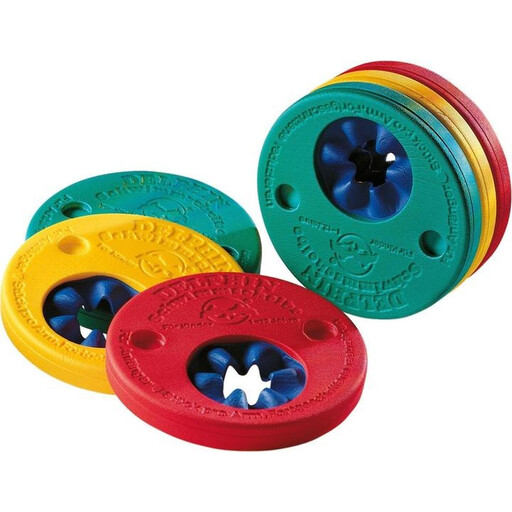
Why it suits this family: These swim discs are designed for supervised practice sessions at the swimming pool, in a home pool or as part of swimming lessons.
These buoyancy aids don’t need inflating, so there are no air valves to check. The discs can be removed gradually as swimming skills develop.
Six foam discs, adjustable buoyancy support in stages, suitable for children aged 1 to 12 or weighing up to 60 kg according to the product information.
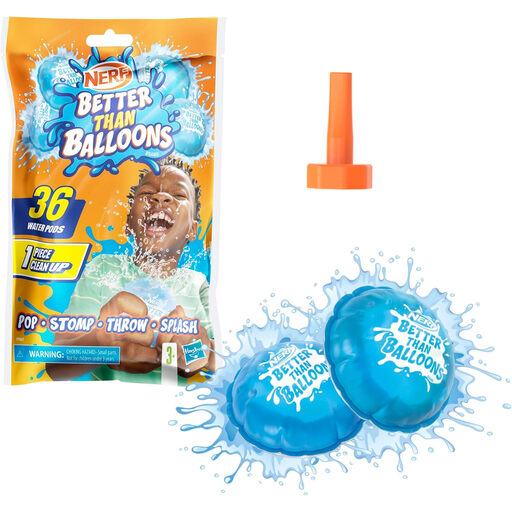
Why it suits this family: For families looking for reusable water bombs for group games, this set offers an alternative to traditional single-use water balloons.
The set is recommended for children aged 3 and over, and comes with warnings about small parts and the risk of slipping. Rinse the capsules after use and store them somewhere dry.
36 reusable water capsules, described as BPA-free in the product information, with no SVHC above 0.1 per cent detected in the test report.
For babies and toddlers, baby arm bands such as the Flipper SwimSafe 1010 may be worth considering if the child’s age and weight are suitable. According to the product information, this model is designed for children aged 1 to 6 or weighing 11 to 30 kg. It combines a PE foam core with an adjustable air chamber. However, it is not a lifesaving device.
An inflatable whale or sea turtle, on the other hand, is a pool toy for children or a beach toy. These products are for supervised play, not for reliable swimming support. Before buying, parents should always ask: does your child need a toy to inspire play, or a buoyancy aid?
We’ve put together a complete, regularly updated list of products that meet these strict selection criteria and fully comply with the safety regulations in force in the EU.
It depends on how they’ll be used. A water playset with boats and figures may be suitable for children aged three and over, as long as you follow the stated age recommendation. For active games in the pool, you could also consider water balls or reusable water bombs. Keep small parts away from younger children.
There’s no set lifespan. It depends on the material, exposure to UV light, storage and how often the item is used. Check the valves and seams regularly. After rinsing, let the product dry completely before storing it somewhere dry and out of direct sunlight.
A manual water playset normally doesn’t require batteries, so there are no battery costs. You’ll just need water and a suitable, flat area to set it up. Empty and clean the product after play. Whatever the water toy, responsible supervision and following the manufacturer’s instructions are essential.