
Lieferung heute & morgen

Qualitätsgarantie

Willkommens-Angebote freischalten: KOSTENLOSE Lieferung | Bis zu 80 % RABATT | Kostenlose 30-Tage-JoyPlus-Testphase
App herunterladen
Water toys for children should keep them entertained, but they should never be mistaken for a flotation aid or safety product. Bath toys, pool toys for children, beach toys and inflatable pool toys differ considerably in where they can be used, the materials they’re made from and the supervision they require.
Many disappointing purchases come down to three common marketing pitfalls:
The age guidance on the packaging is an important factor when choosing a product. For example, babies from 3 months old may benefit from lightweight toys that are easy to grasp and have no loose parts. With baby bath toys, parents should also check whether water can collect inside and how the product should be cleaned.
Small parts that could be swallowed are a particular concern for children under 3. These may include confetti elements, small accessories or detachable parts. Before each use, check the toy for cracks, sharp edges and loose parts.
Bath toys have different requirements from toys for the beach or swimming pool. A bath toy should be compact and easy to clean. Beach toys and pool toys for children, on the other hand, need to withstand being transported, getting sandy and being rinsed regularly with fresh water.
For inflatable products, check the following details:
An inflatable animal more than a metre long needs plenty of space and should only be used in suitable, supervised areas.
Check the material details, such as PVC, EVA foam or plastic, as well as the manufacturer’s care instructions. The CE marking indicates that the manufacturer declares the product to meet the relevant EU requirements. However, it is no substitute for checking the age recommendation, build quality and instructions for use.
Toys must also meet requirements for their mechanical and physical properties. The EN 71 series of standards can be a useful guide where it is mentioned in the manufacturer’s information. For products that come into direct contact with water, rinse the material after use and allow it to dry completely. This helps reduce residue, odours and unnecessary wear.

Why it suits this profile: This lightweight ball, measuring around 10 cm in diameter, is designed for children aged 3 months to 3 years and can be used on a play mat or in shallow water.
The specific age recommendation and guidance on shallow water help prevent the toy being used outside its intended setting.
A transparent plastic ball, a floating duck figure, a lightweight design and, according to the product information, waterproof construction.
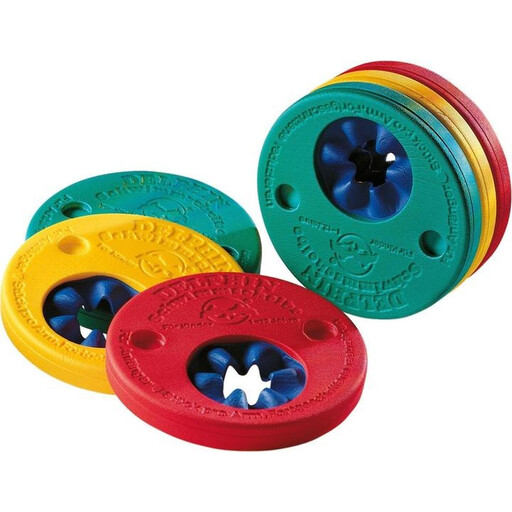
Why it suits this profile: This set of six foam discs is designed to let you adjust the level of buoyancy support gradually. According to the product information, it is suitable for ages 1 to 12 and weights of up to 60 kg.
The weight limit and number of discs are clearly stated, making it easier to check whether the product is suitable for your child before buying.
Six high-density foam discs, no inflation needed, and suitable for use at a swimming pool or swimming lesson under supervision.
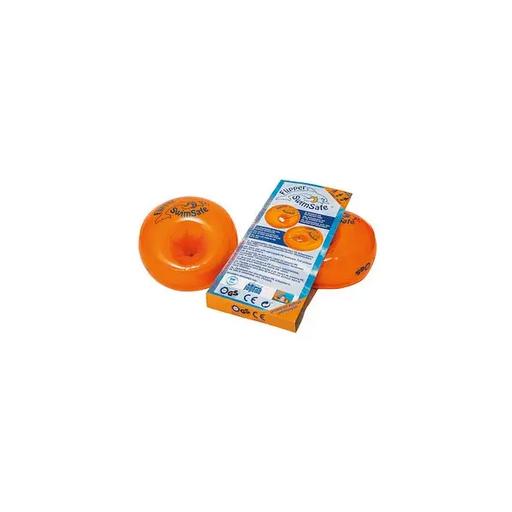
Why it suits this profile: Combining a PE foam core with an adjustable air chamber, this product is designed for children aged 1 to 6 who weigh between 11 and 30 kg.
The age and weight range, along with the warning that it is “not a life-saving device”, make clear that this flotation aid should only be used as extra support.
PE foam core, adjustable air chamber, safety valve and anti-slip coating in the underarm area, according to the product description.
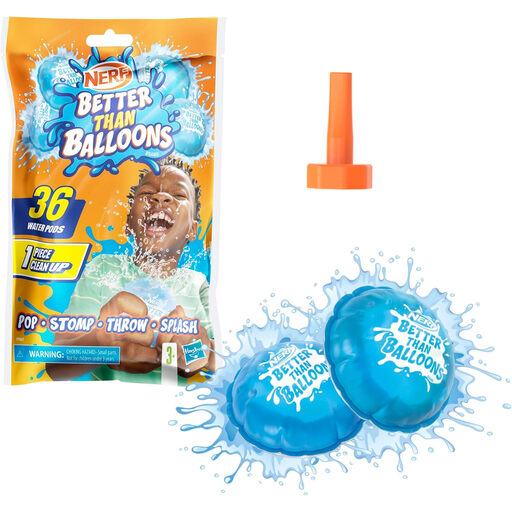
Why it suits this profile: The 36 reusable water capsules are designed for supervised group games in the garden or at the beach and are suitable for children aged 3 and over.
The age limit and warning about small parts make this unsuitable for toddlers and help you understand what the product is intended for.
36 capsules, a low product weight of 65 g, and easy storage and cleaning according to the product information.
We’ve put together a comprehensive, regularly updated list of products that meet these strict selection criteria and fully comply with the safety regulations in force in the EU.
Lightweight products that are easy to grasp and have no loose small parts may be suitable for babies. For baby bath toys, parents should follow the age recommendation and supervise their child closely in the water at all times. Even a small toy does not make the water any safer.
Their lifespan depends on the material, UV exposure, storage and how heavily they are used. After each use, rinse and dry inflatable items, then store them without sharp folds. Stop using the product if it has cracks, valves that stick or a persistent air leak.
Armbands and swimming discs can be used as a flotation aid for children, provided they fit properly and are used according to the instructions. However, they are not life-saving devices and do not reliably prevent drowning. An adult must always remain close by and supervise.