
Lieferung heute & morgen

Qualitätsgarantie

Willkommens-Angebote freischalten: KOSTENLOSE Lieferung | Bis zu 80 % RABATT | Kostenlose 30-Tage-JoyPlus-Testphase
App herunterladen
A water bottle should stay leak-free in your rucksack, be easy to clean hygienically and suit your daily routine. However, eye-catching colours, blanket claims such as “leak-proof” or large capacity figures do not automatically make a bottle the right choice. The key factors are the material, closure, cleaning requirements and intended use.
A leak-proof water bottle only works if the lid, sealing ring and thread fit together correctly. With screw-top closures, a displaced silicone ring can compromise the seal. A closure that is not fully closed can also allow liquid to escape inside your rucksack.
Before buying, check the following:
According to the product information, the silicone ring on the LocknLock Eco Water Bottle must sit correctly in the groove of the lid to ensure a watertight seal. It is designed for still, cold drinks at temperatures between -20 and 60 °C.
A BPA-free water bottle is not automatically suitable for hot drinks, the dishwasher or the freezer. Materials such as Tritan, PP, ABS, PCTG, glass and stainless steel all have different usage limits.
A BPA-free plastic sports bottle may be suitable for cold drinks, while the manufacturer advises against temperatures above 50 or 60 °C. By contrast, a vacuum-insulated stainless steel water bottle is often designed for both hot and cold drinks – but not necessarily for use in the microwave.
A 500 ml water bottle is compact and will often fit into bags or rucksack pockets. A 700 ml water bottle means fewer refills, but it may be longer and heavier. For short journeys, a 380 or 400 ml water bottle may be enough; for longer commutes or outdoor activities, 550 to 700 ml is often more practical.
As well as capacity, pay attention to the diameter and height. A model with a diameter of 65 mm is more likely to fit narrow side pockets or cup holders than a larger insulated bottle with a diameter of 70 mm.
A screw-top lid is usually straightforward and well suited to carrying around. An integrated drinking spout or sports cap, on the other hand, allows you to drink with one hand. This can be practical on a bike, at the gym or at work, but the opening needs to be cleaned thoroughly.
Carbonation increases the pressure inside the bottle. With bottles designed for carbonated drinks, the manufacturer advises not filling the bottle to the brim. Other models, including certain LocknLock and 24Bottles products, are not recommended for carbonated drinks.
A dishwasher-safe water bottle saves time, provided all its parts are approved for dishwasher use. According to the product information, the Mepal Ellipse bottle is dishwasher-safe, but the elastic band should be removed. The Mepal insulated bottle, by contrast, is designed for hand-washing the bottle body; the plastic parts of the lid can be placed in the dishwasher.
After each use, leave the bottle and lid open to dry. Sealing rings, drinking spouts and threads deserve particular attention, as residue can collect in these areas. Do not continue using the water bottle if it has cracks, deformation or damaged seals.
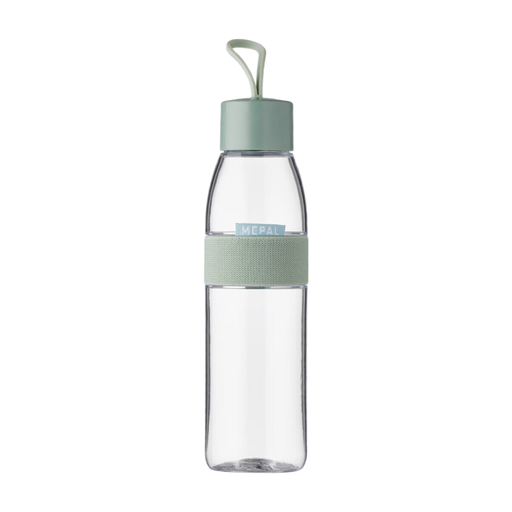
Why this product suits this profile: The compact 500 ml bottle is ideal for the office, short journeys and leisure time. According to the product information, it is BPA-free, leak-proof and suitable for carbonated drinks, provided it is not filled to the brim.
The product information provides specific guidance on the lid, seal and fill level rather than making an unsubstantiated promise for every situation.
500 ml capacity, weight of 110 g and dishwasher suitability when the elastic band is removed.
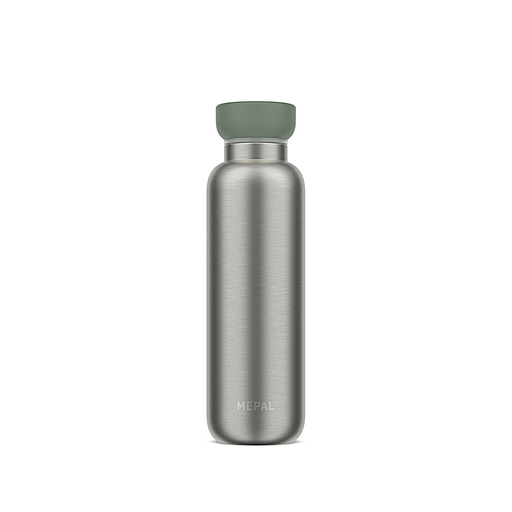
Why this product suits this profile: The double-wall stainless steel construction is aimed at professionals and commuters who want to take cold or hot drinks with them for several hours.
The insulation performance is described using specific manufacturer information, with separate figures for hot and cold drinks.
Double-wall stainless steel, 500 ml capacity and, according to the product information, keeping drinks cold for up to 24 hours and hot for up to 12 hours.
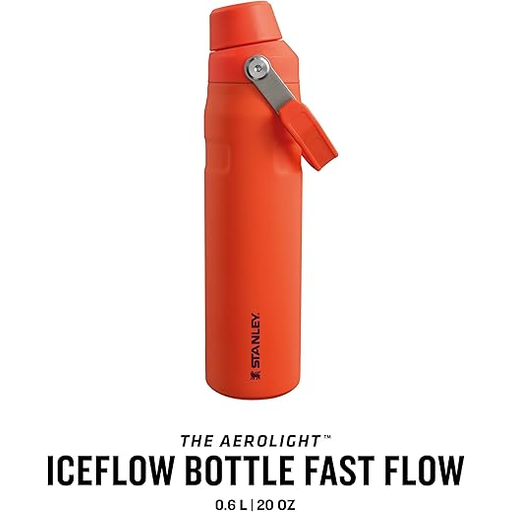
Why this product suits this profile: The Fast-Flow lid with carry handle is designed for sport, outdoor activities, travel and frequent use. According to the product information, the bottle is intended for cold drinks.
The product description limits use to cold drinks, helping to prevent incorrect use with hot liquids.
Double-wall vacuum insulation, dishwasher-safe individual parts and a carry handle with lid attachment.
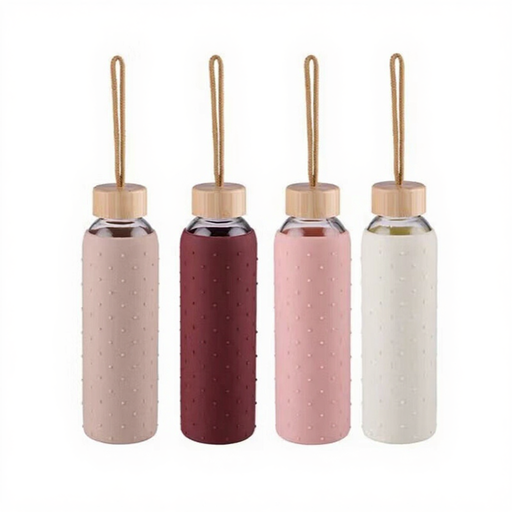
Why this product suits this profile: The reusable glass water bottle is ideal for commuting, the office and short trips. According to the product description, a matching carry sleeve is included; the colour is selected at random.
The product description clearly states that it is made of glass, includes a sleeve and has a specific capacity. The random colour selection prevents false expectations about a particular design.
500 ml capacity, reusable glass bottle and integrated thermal sleeve for carrying.
We have put together a complete, regularly updated list of products that fully meet these strict selection criteria and the safety regulations applicable in the EU.
For commuters, 500 to 700 ml is usually a practical range. A lightweight plastic bottle is easy to carry, while an insulated bottle can keep your drink at the right temperature for longer. A secure closure, a diameter that fits your bag and straightforward cleaning are also important.
Its lifespan depends on the material, how it is used and how well it is cared for. Stainless steel and glass can remain usable for a long time when handled carefully. Plastic bottles should be checked regularly for scratches, cracks, deformation and damaged seals. There is no single lifespan that applies to every model.
Yes, they can make cleaning easier. However, check whether dishwasher approval applies to the entire bottle or only to individual components. Elastic bands, seals and lids may have separate care instructions. After washing, all parts should dry completely before the water bottle is stored closed.