Start by choosing a camera based on how you’ll film your paper from above and whether you’ll have a computer available. A document camera makes it easier to show your work surface, a webcam suits a computer-based setup, and a mirrorless camera gives you more flexibility with lenses and recording. With the latter two options, you’ll need to plan the framing and mounting carefully, especially at your painting table. A high resolution alone doesn’t guarantee faithful reproduction of your watercolour colours.
Which camera is right for you?
Artists filming overhead tutorials
If you want to show your paper, brushes and perhaps your palette from above, check that you can capture the desired view from the available height and that the camera will stay stable at your painting table. IPEVO specifically recommends the V4K PRO for art lessons, while Logitech says the MX Brio has a downward-facing Show Mode.
Artists focused on documenting colour
If you want to compare painting stages and keep colour casts under control as far as possible in your working light, check the white balance and test the camera under the lamps you actually use. Sony Germany Support explains that white balance can affect colour casts.
Artists filming longer videos
For full sessions or recordings made without a computer, you’ll need to consider the recording process, power supply and storage. The Canon Germany Shop lists a battery and charger as included with an EOS R50 kit; with a mirrorless camera, you should still check the exact kit version and any additional equipment you’ll need.
What should you look for when buying?
USB document camera
A good fit if: You’re demonstrating at a computer and want to show your paper from above. IPEVO also recommends the V4K PRO for art lessons.
Bear in mind: USB operation ties your setup to a compatible computer. Check that your paper and palette will fit in the frame from the available height.
USB webcam
A good fit if: You already record or livestream on your computer and occasionally want to show your painting table. Logitech says the MX Brio has a Show Mode that tilts downwards.
Bear in mind: The tilt doesn’t guarantee a straight-down view that fills the frame with your paper. Logitech specifies a maximum of 30 frames per second for the MX Brio at 4K.
Mirrorless camera with interchangeable lens
A good fit if: You want to record independently or choose your framing with a lens. Canon lists 4K 30p for the EOS R50, while Sony Germany lists up to 4K 60p for the ZV-E10 II.
Bear in mind: Your lens, secure overhead mount, power supply and storage all need to suit your setup. A higher frame rate doesn’t guarantee better reproduction of pigment colours.
| What you’re looking for |
What to check before buying |
Who is it important to? |
| Stable overhead view |
Frame your paper and palette from the planned camera height; check that the camera is stable and leaves you room to move your hands freely. |
If I want to show my paper, brushes and palette in full, the framing matters more than the resolution figure alone. Around 33% of consumers put a complete overhead view first. |
| Controllable colours |
Check the white balance and record a test clip using white paper and your own paints, under the lamps you’ll be using. |
If I want to compare successive painting stages under my working lights, I look out for colour casts and banding. Around 27% of consumers prioritise control over colour and lighting. |
| Easy computer setup |
Check the USB connection, operating system and recording software are compatible; confirm the desired resolution is available at the frame rate you need. |
If I’m already recording or livestreaming on my computer, I want to use my camera and software without unnecessary hassle. Around 20% of consumers prioritise a straightforward computer-based setup. |
| Longer recordings |
For your chosen video mode, check the power supply, battery life, storage, ease of use on the mount and exactly what’s included. |
If I want to record a whole painting session without a computer running, I factor in the power and storage my setup will need. Around 20% of consumers focus on longer recordings or recording independently. |
Avoid common buying mistakes
-
Assuming 4K means a good view of your table or accurate colours
A high resolution doesn’t tell you whether your paper and palette will fit in the frame or whether your pigments will look as expected under your working lights.
Set up the camera where you plan to use it and check the framing. Then record a short colour test under the same lamps you’ll be using later.
-
Assuming a camera body is a complete overhead setup
A kit may include a lens, battery and charger, but that doesn’t automatically mean it includes the right mount or that the framing will work at your painting table.
Check exactly what’s included in the kit, then choose a lens and secure mount that suit your setup.
-
Only noticing flicker from artificial lighting after a long recording
Depending on the lighting and camera settings, you may see bands or colour changes in your recording. Sony Germany Support describes possible solutions, which depend on the model and settings.
Before your session, record a short clip under the same lamps and with the same video settings.
If you only notice a problem after the session, you may need to record the painting session again.
Camera brands to consider
IPEVO
Document cameras for computer-based demonstrations at your work surface; IPEVO also recommends the V4K PRO for art lessons.
- IPEVO lists USB operation, an LED and up to 3264 × 2448 pixels at 30 fps.
- These image and colour specifications are the manufacturer’s claims, not an independent test using your watercolour pigments. Check the framing at your own table.
Logitech
Webcams for computer setups; the MX Brio has a downward-facing Show Mode.
- Logitech documents adjustable white balance and, for the MX Brio, 4K at up to 30 fps or 1080p at up to 60 fps.
- Show Mode doesn’t guarantee a straight-down view that fills the frame with your paper. Logitech lists Windows and macOS as compatible with its settings software.
Canon
Interchangeable-lens cameras; the EOS R50 kit described here includes the RF-S 18–45mm lens.
- The Canon Germany Shop lists UHD 4K 30p for the EOS R50 and includes a battery and charger with this kit.
- You’ll need to check the framing and secure overhead mounting separately at your painting table. Other kits may have different contents.
Sony
Interchangeable-lens cameras for recording video independently; the ZV-E10 II is described as available in a kit with an E PZ 16–50 mm OSS II.
- Sony Germany lists up to 4K 60p for the ZV-E10 II and E-mount lenses.
- The video mode doesn’t guarantee better colour accuracy. Plan the lens, mount, storage and power supply separately to suit your setup.
Panasonic
Another interchangeable-lens camera option: the G100D version described here includes a 12–32mm lens and a tripod grip.
- Panasonic lists 4K 30p and USB-C charging for this version.
- The included grip isn’t a proven substitute for a secure overhead mount; other G100D versions may come with different accessories.
Webcams for recording on a computer
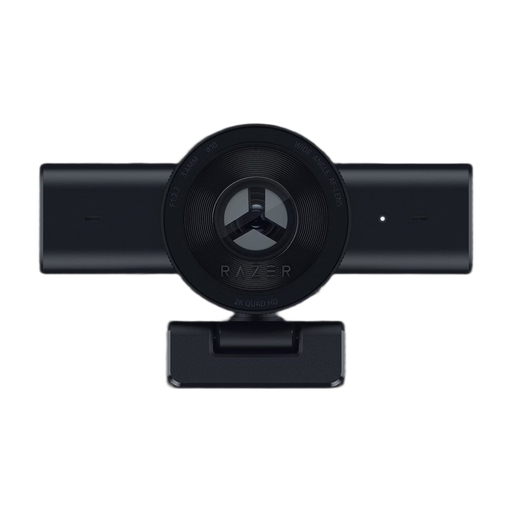
This Joybuy selection includes USB webcams for computer-based recording. For an overhead view of your work surface, check the orientation, framing and how to attach the camera securely at your painting table.
 No image available
Razer Kiyo V2 X Full HD webcam
For computer-based recording when you want to adjust the framing in software.
1080p at 60 frames per second, an 80° field of view and autofocus.
USB connection; plug-and-play compatibility with OBS and XSplit is described. Designed to be connected to a computer.
Joybuy
 No image available
AOC webcam for PC, 4K, 99° field of view
For computer-based recording when adjustable positioning is important for showing your work surface.
4K UHD at 30 frames per second and a 99° lens.
The description lists 180° tilt, 360° rotation and use on a desk or tripod. Plug-and-play and compatibility with Windows and macOS are specified; a computer is required for webcam operation.
Joybuy
Frequently asked questions
Is 4K enough to reproduce watercolour colours accurately?
No. Resolution alone doesn’t tell you how accurately colours will be reproduced. Sony Germany Support explains that ambient light can cause colour casts and that white balance affects them. Check a test clip under the lighting you actually work in.
How can I prevent bands appearing under my lights?
Depending on your camera and lighting, changing the shutter speed may help. Sony Germany Support suggests 1/50 or 1/100 of a second in regions with a 50 Hz power supply. Check whether the setting is available on your camera and works with your lights.
Do I need a computer for a webcam or document camera?
The USB options described here, the IPEVO V4K PRO and Logitech MX Brio, are designed to work with a compatible computer. Logitech lists USB-C with USB 3.0 support as a system requirement for the MX Brio; check that your recording software is compatible too.
What costs and rights should I consider when buying a camera?
Check what’s included and plan a secure overhead mount to suit your painting table. The Verbraucherzentrale distinguishes between your statutory rights against the seller and a voluntary guarantee. For online purchases, it generally allows a 14-day right to cancel from the conclusion of the contract or receipt of the goods; you must notify the other party to the contract that you wish to cancel.
What should I bear in mind if other people appear in my videos?
If other people can be identified in your recordings, or you use the footage for professional or commercial purposes, check the specific data protection and personality rights involved. The guidance on video recordings from the Federal Commissioner for Data Protection and Freedom of Information does not replace an assessment of your individual circumstances.


