
Lieferung heute & morgen

Qualitätsgarantie

Willkommens-Angebote freischalten: KOSTENLOSE Lieferung | Bis zu 80 % RABATT | Kostenlose 30-Tage-JoyPlus-Testphase
App herunterladen
Watercolour pencils combine the controlled line work of coloured pencils with the ability to blend pigments using water and a brush. That makes them appealing for artists, illustrators, art students and hobby sketchers who want dry details, shading and transparent washes all in one tool.
But not every pencil marketed as “water-soluble” suits every project. Misunderstandings about the lead, unsuitable paper, or sets whose colour selection doesn’t match your working style often lead to disappointing purchases. That’s why the following selection from the Joybuy Product Recommendation Officer focuses on clear product features rather than generic marketing claims.
Water-soluble coloured pencils can vary significantly in how they interact with water. With some products, dry strokes remain partially visible, while others release pigments much more readily when a damp brush is applied. For fine illustrations, controlled solubility can be useful; for soft washes, a highly soluble lead is more practical.
So look for specific details such as water-soluble pigments, suitability for wet-on-wet techniques, or use on watercolour paper. The label alone doesn’t tell you how the pencil actually performs.
A soft lead usually releases colour easily and works well for broad areas. At the same time, it can wear down faster under heavy pressure or break when sharpened. If you draw lots of details, outlines or hatching, you should also pay attention to the lead diameter, how the lead is secured, and a suitable sharpener.
Among the products mentioned, you’ll find leads with diameters of around 3.0 to 3.8 mm. These details help you assess precision and colour application more realistically.
Many colours don’t automatically mean a suitable palette. A 12-piece set with basic colours can be enough for colour mixing, whereas illustrators working on specific subjects may need skin tones, earth tones or greens. Individual 6-piece sets in colours like sepia, olive green, turquoise or light blue can be more targeted than a large collection of unused colours.
Also check whether storage, a brush or a water brush are included. A case or metal tin protects the tips during transport and reduces the risk of the pencils being damaged loose in a rucksack.
For watercolour pencils, the combination of pigment, binder and lead hardness is crucial. Soft leads produce strong colour with light pressure and can be blended with water. Harder leads support fine lines and structured hatching.
An example outside the coloured pencil range is the STAEDTLER Mars Lumograph Watercolor 8B Black Watercolor Pencil. According to the product details, this 8B graphite pencil has a water-soluble graphite lead with a diameter of approximately 3.6 mm. It can be used dry for dark sketches or with a damp brush for grey washes. It’s not intended for coloured watercolour painting, but can serve as a useful addition for preliminary drawings and monochrome studies.
Standard drawing paper can buckle, roughen or absorb pigments unevenly when water is applied. For wet-on-wet techniques, watercolour paper with a higher weight is recommended, for example in the range of 200 to 300 gsm. The exact suitability also depends on the amount of water used and the paper’s texture.
Rough paper holds more pigment on the surface, while smooth paper is better for fine details. For drawing and painting with lots of outlines, a smooth or medium-rough surface is often easier to control.
Before buying, it’s worth clarifying which technique you’ll mainly use:
Rinse your brush between different colours to avoid unwanted mixing. Store watercolour pencils in a dry place and avoid dipping the lead directly into water for extended periods.
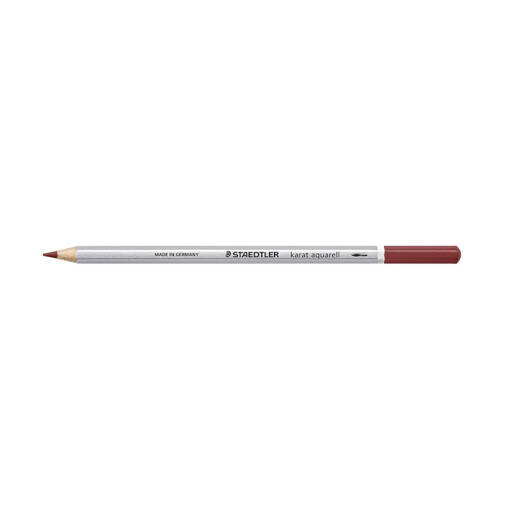
Why this product fits the profile: A small 6-piece set is ideal if you want to try out individual colours and wet techniques without committing to a full palette straight away.
The product details mention a soft, water-soluble lead as well as dry, dry-on-wet and wet-on-wet techniques. This makes the intended use clearer.
6-piece pack, hexagonal barrel, FSC-certified wood and a colour system with up to 60 available shades according to the product description.
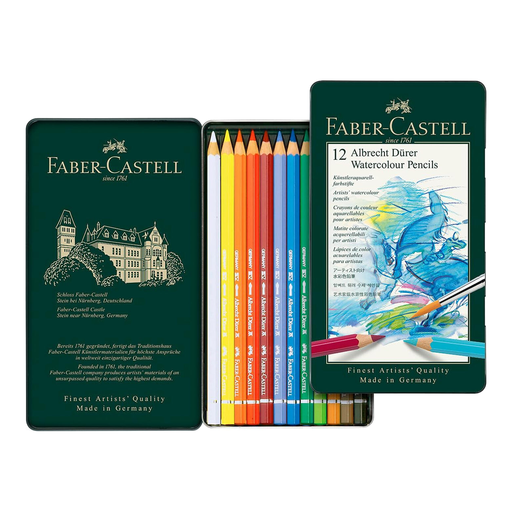
Why this product fits the profile: The set offers a mixed colour selection, 3.8 mm leads and a metal tin for artists, illustrators and adults who use them regularly.
The product description explicitly mentions dry use and blending with a damp brush. The metal tin protects the tips during storage.
12 water-soluble coloured pencils, 3.8 mm lead, ergonomic barrel and metal tin; according to the product details, intended for layering and colour transitions.
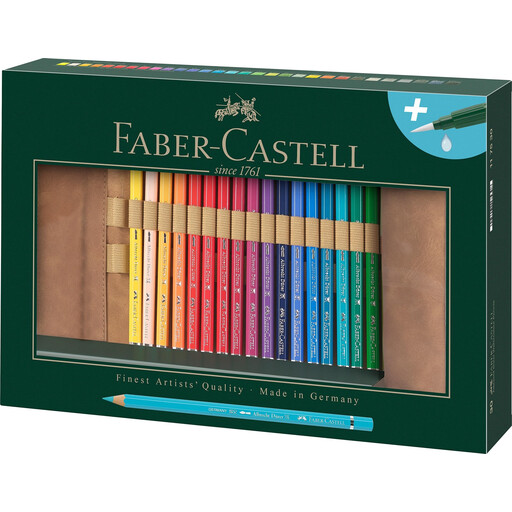
Why this product fits the profile: For illustrations, landscapes and frequent colour changes, the set offers a broader palette and a portable storage solution.
The roll case keeps the 30 pencils separate and easy to transport. A water brush is included according to the product description, so you need fewer additional materials for initial colour washes.
30 coloured pencils, 3.8 mm leads, roll case and a water brush; suitable for dry and activated colour applications according to the product details.
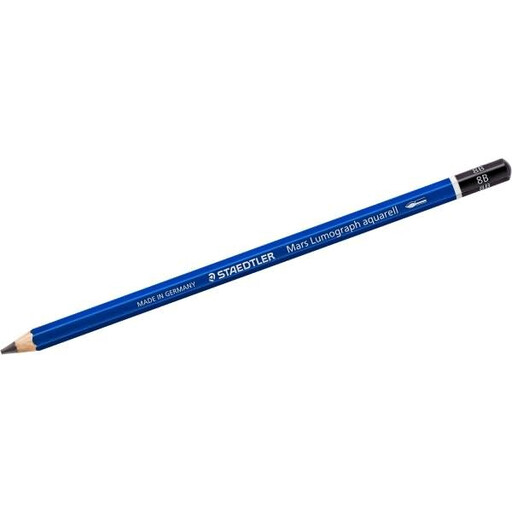
Why this product fits the profile: The black watercolour graphite pencil is aimed at users who want to create sketches, deep grey tones and washed-out contours rather than coloured areas.
The 8B hardness grade and graphite base make it clear that this is not a coloured artist pencil. This prevents unsuitable use for colourful watercolours.
8B graphite, approximately 3.6 mm lead, water-soluble version and PEFC-certified wood according to the product description.
We’ve put together a full, regularly updated list of products that fully meet these strict selection criteria and the safety regulations in force in the EU.
First, apply dry colour to watercolour paper. Then activate the pigments with a slightly damp brush. For controlled colour gradients, work section by section and use little water. Test the colour application beforehand on a scrap piece of the same paper.
The lifespan depends on lead hardness, pressure, sharpener and frequency of use. Soft leads wear down faster on large areas than on fine lines. A suitable sharpener, dry storage and avoiding drops will protect the lead. With sets that include a case or metal tin, the pencils also stay better organised.
Yes, as long as the set matches your intended use. A small 6-piece set makes it easier to get started with individual techniques. If you regularly do illustrations or watercolour painting, you can later expand to a 12-piece or 30-piece set. What matters isn’t just the number of colours, but also the paper, brush, lead stability and the level of control you want when blending.