
Lieferung heute & morgen

Qualitätsgarantie

Willkommens-Angebote freischalten: KOSTENLOSE Lieferung | Bis zu 80 % RABATT | Kostenlose 30-Tage-JoyPlus-Testphase
App herunterladen
Choosing the right watercolour pencils is crucial for bringing artistic visions to life. However, with a vast array of available sets, brands, and quality levels, making a selection can be complex. This article serves as your guide. It outlines objective purchasing criteria and presents a curated selection of products to help you make an informed decision when you're ready to buy watercolour pencils.
To find the perfect pencils for your needs, several technical features should be considered. These criteria will help you evaluate the performance and suitability of water-soluble coloured pencils for various artistic techniques.
For professional watercolour pencils, pigment quality and lightfastness are paramount. A high pigment concentration ensures vibrant, intense colours that retain their brilliance even after being activated with water. Lightfastness indicates how resistant the colours are to light exposure, which is crucial for the longevity of your artwork. Manufacturers like Faber-Castell often mark the lightfastness rating directly on the pencil, for instance, with a star system.
The composition of the lead affects both dry application and how it behaves when it comes into contact with water. A softer lead (e.g., B grade) typically releases more pigment and blends more easily into smooth watercolour washes. A harder lead (e.g., F grade) allows for more precise lines and fine details, which can remain partially visible even after being activated with water. The ability of the lead to dissolve completely in water is a hallmark of high-quality artist-grade watercolour pencils.
A watercolour pencil set offers a curated colour selection, perfect for starting out or expanding your palette. Smaller sets of 12 are suitable for foundational work or for trying out a new brand. Larger sets with 30 or more colours provide greater creative freedom. It's also practical to purchase individual pencils (open stock) to replace used-up colours or to specialise your personal colour palette.
The following products have been selected based on their technical specifications and their suitability for discerning artists.
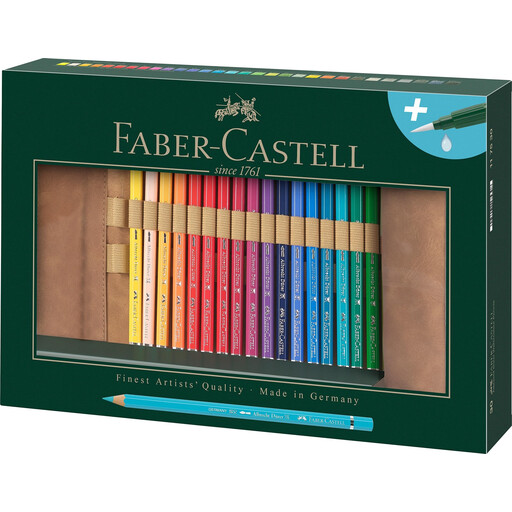
Why it stands out: This set from the Faber-Castell Albrecht Dürer series combines an extensive colour selection with practical accessories. The fabric roll-up case protects the pencils and is ideal for use on the go. The included water brush allows you to start painting immediately without needing a separate water cup.
Advantages:
Who it's for: This set is aimed at artists and illustrators looking for a versatile and portable solution for drawing and watercolour painting. The colour selection and accessories provide a solid foundation for complex projects.
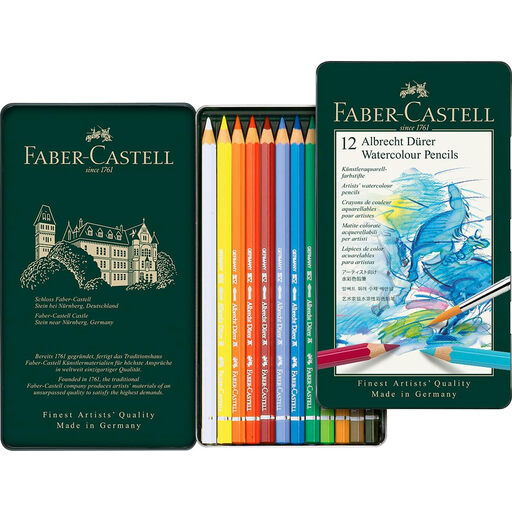
Why it stands out: As a compact starter set, this selection of 12 pencils offers the same high pigment quality of the Albrecht Dürer series in a sturdy metal tin. It's an excellent option for getting to know the characteristics of these pencils or for supplementing an existing collection.
Advantages:
Who it's for: Ideal for artists seeking a high-quality foundational set, as well as for illustrators who value precision. It is also a great choice for students and hobbyists who want to work with professional-grade materials.
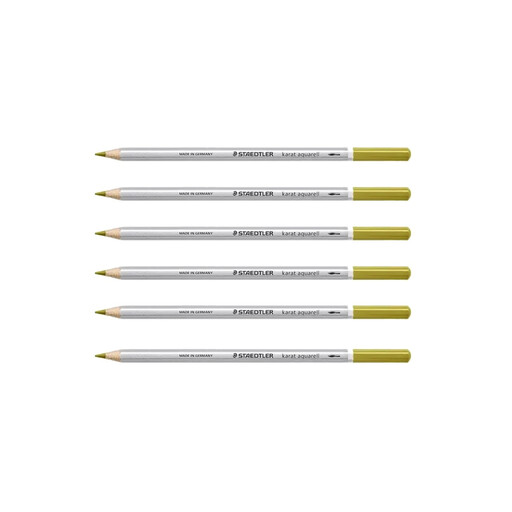
Why it stands out: This product offers the opportunity to expand your colour palette with a specific, professional-quality shade. Staedtler's Karat Aquarell pencils are known for their soft lead and high colour brilliance.
Advantages:
Who it's for: This pack is intended for artists who want to supplement their existing sets with specific shades or replace used-up pencils. It is especially practical for landscape or portrait artists who require specific colours.
If you didn't find the colour selection or set size you're looking for, you can explore a wider range of pencils and accessories in our Watercolour Drawing Pencil category. There, you can compare more products from various manufacturers.
The key difference lies in the binder used in the lead. Watercolour pencils contain a water-soluble binder that allows the pigments to dissolve when activated with water, behaving like watercolour paint. Regular coloured pencils are typically wax- or oil-based and are not water-soluble.
It is recommended to use paper with a heavier weight, ideally dedicated watercolour paper of at least 200 g/m?. This type of paper is more absorbent and stable, which prevents it from buckling or pilling when water is applied.
Yes, one of the greatest strengths of watercolour pencils is their versatility. They can be used just like high-quality coloured pencils for dry techniques such as drawing, layering, and hatching. The ability to also activate them with water simply expands the creative possibilities.