
Lieferung heute & morgen

Qualitätsgarantie

Willkommens-Angebote freischalten: KOSTENLOSE Lieferung | Bis zu 80 % RABATT | Kostenlose 30-Tage-JoyPlus-Testphase
App herunterladen
Watercolour pencils promise the best of both worlds: the precision of drawing and the fluid expressiveness of watercolour painting. However, the selection is vast, and not every product lives up to its advertising claims. Many artists and hobbyists invest in sets, only to find that the pencils hinder their creative intentions rather than support them. Before you make a decision, it's important to understand the common pitfalls that often lead to disappointment and unnecessary expense.
To avoid these problems, it's wise to focus on objective quality features rather than marketing promises. Three technical parameters are crucial for the performance of water-soluble coloured pencils.
The quality of the pigments determines the colour brilliance and longevity of your artwork. Professional watercolour pencils use highly concentrated, light-resistant pigments that retain their intensity even after years. Look for lightfastness ratings, which are often provided by manufacturers like Faber-Castell or Staedtler. A high pigment density also ensures that the colours remain vibrant even when heavily diluted with water.
A high-quality lead must be break-resistant. This is achieved through two factors: a special, resilient lead formula and a secure bonding of the lead throughout the wood casing. Manufacturers like Staedtler often highlight their special lead formulation and bonding process, which ensures high break resistance. This not only saves frustration when sharpening but also ensures that the pencils last longer. Another aspect is the origin of the wood; an FSC certificate indicates that the wood comes from sustainably managed forests.
The ability of the lead to dissolve completely in water without leaving a residue is the most crucial feature for pencils for watercolour painting. A soft lead not only lays down colour more easily, but its pigments can also be blended more effectively with a wet brush to create smooth washes. Unlike traditional coloured pencils, no visible strokes should remain. Watercolour markers offer an alternative here, as their ink is already liquid and often blends even more seamlessly.
Based on these objective criteria, we have identified several products suited for different artistic needs and workflows.
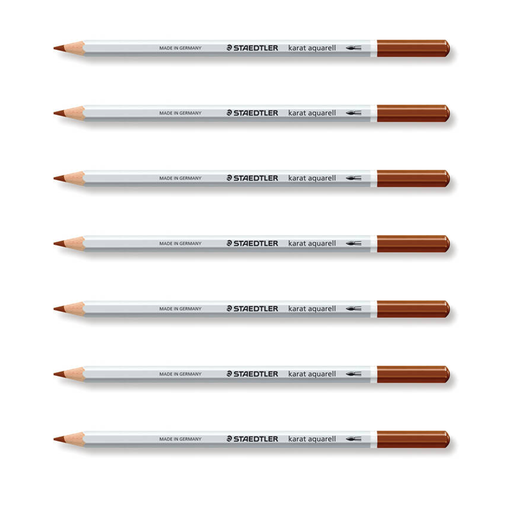
Why this product is a great fit: Ideal for those who want to start with high-quality materials without immediately investing in a large set. The pencils offer professional features like a soft lead and intense colours that allow for a true watercolour effect.
The soft, highly pigmented lead dissolves cleanly in water, avoiding harsh, unsightly lines. Staedtler's brand quality ensures good lead bonding, reducing the risk of breakage.
Excellent solubility for smooth transitions. According to the manufacturer, the wood comes from FSC-certified, sustainably managed forests.
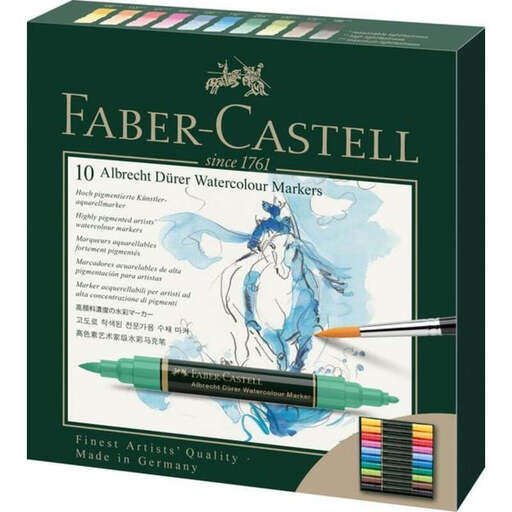
Why this product is a great fit: These markers are designed for artists who demand the highest standards of colour permanence and versatility. They are a modern complement to classic pencils and are ideal for dynamic sketches and sophisticated watercolour painting.
According to the manufacturer, the highly pigmented, water-based ink has high lightfastness, protecting against fading. The ink does not bleed through paper, allowing for clean work.
Two nibs per marker (a flexible brush tip and a stable fibre tip) offer maximum flexibility for broad washes and precise linework.
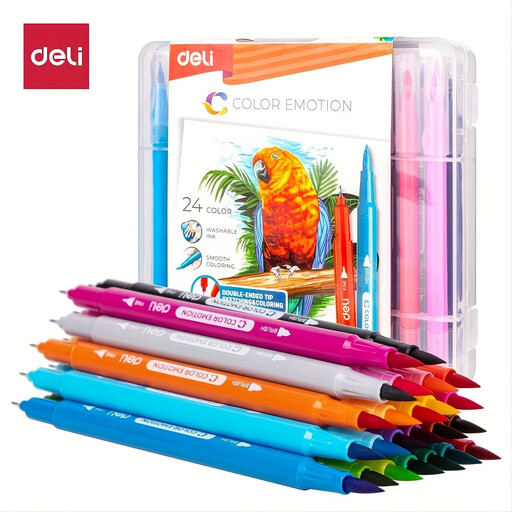
Why this product is a great fit: This set is a practical solution for artists who enjoy working on the go or outdoors. It offers a good range of colours in a compact format that requires no additional water or brushes.
As markers, this product completely bypasses the problem of lead breakage. The dual tip also offers more flexibility than a single pencil, making it suitable for various drawing styles.
A complete, ready-to-use watercolour marker set with 24 colours. The markers are easy to transport and allow for spontaneous, clean work without any setup.
We have compiled a complete, up-to-date list of products that fully meet these strict selection criteria.
Use a high-quality sharpener with a sharp blade, preferably a metal one. When sharpening, turn the sharpener, not the pencil, to ensure even pressure on the lead. For very soft leads, sharpening by hand with a sharp craft knife can be an alternative for greater control.
For optimal results, dedicated watercolour paper is essential. It should have a paper weight of at least 200 g/m? to prevent buckling when it comes into contact with water. The paper's surface texture (rough, cold press, or hot press) also affects how the pigments are absorbed and how the colour flows.
Yes, combining both media is a popular technique. Watercolour markers are well-suited for laying down base colours or for bold, defined lines. You can then use watercolour pencils to add finer details, textures, and softer shading. It is advisable to work with the markers first and then apply the pencils over them once the ink is dry.