
Lieferung heute & morgen

Qualitätsgarantie

Willkommens-Angebote freischalten: KOSTENLOSE Lieferung | Bis zu 80 % RABATT | Kostenlose 30-Tage-JoyPlus-Testphase
App herunterladen
Watercolour pencils combine the controlled line work of coloured pencils with water-soluble colour effects. They are ideal for sketches, illustrations, colouring and classic watercolour techniques. However, products vary significantly. A pretty box or the label “artist pencils” alone tells you little about pigment type, water solubility or practical use.
Not every coloured pencil is a watercolour pencil. With standard coloured pencils, the colour remains largely unchanged even when water is applied. For watercolour effects, the product description must clearly include terms such as water-soluble pigments, water-soluble coloured pencils or watercolour pencil.
A comprehensive set can be practical if you need many shades. For beginners, classroom use or specific colour themes, a 6-piece watercolour pencil set or 12-piece watercolour pencil set is often sufficient. What matters is whether the colours included suit your subject matter and whether individual shades can be bought separately.
A soft lead is usually easier to apply richly and dissolve with water. For fine outlines, however, a well-sharpenable lead with controlled colour application is more useful. Details such as 3.8 mm lead diameter, hardness grade or “break-resistant” help you assess the product. If this information is completely absent, you should examine the purchase more carefully.
Watercolour pencils can be used dry, just like ordinary coloured pencils. For the watercolour effect, the colour is then dissolved with a damp brush. Depending on the product description, techniques such as dry, dry-on-wet or wet-in-wet are possible.
For clean washes, watercolour paper or other absorbent paper types are ideal. On very thin printer paper, water can cause the sheet to buckle or become soggy. If you often work with plenty of water, you should therefore opt for a higher paper weight and a stable surface.
A thicker lead, for example with a 3.8 mm diameter, can offer advantages when colouring large areas. It holds more material and allows both broad and fine strokes. A break-resistant lead is particularly relevant for school bags, studios or frequent transport.
Nevertheless, every watercolour pencil should be used with a suitable sharpener. Overly coarse sharpening or dropping the pencil on the floor can damage even a robust lead.
Classic hexagonal barrels roll off the table less easily and provide a defined grip position. FSC-certified wood indicates timber from responsibly managed sources, but does not replace information about actual colour performance.
For everyday use, the following points are also relevant:
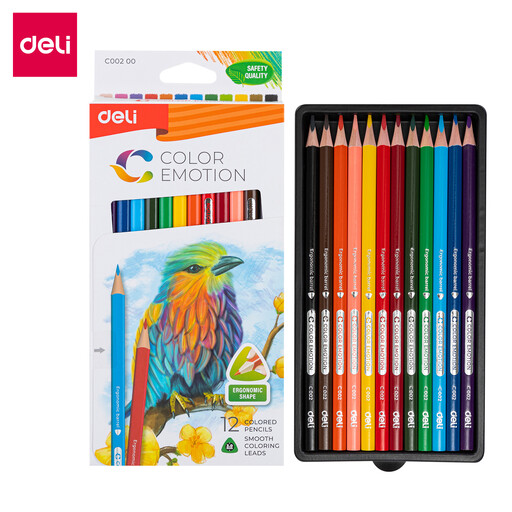
Why this product fits the profile: The 12-piece set is designed for basic drawing and colouring. Importantly, the available information does not mention water solubility. It is therefore more of a budget-friendly coloured pencil option than a classic watercolour pencil.
The clear classification prevents a standard coloured pencil set from being mistakenly purchased as a water-soluble product.
12 coloured pencils for drawing and colouring; suitable for first creative projects without watercolour technique.
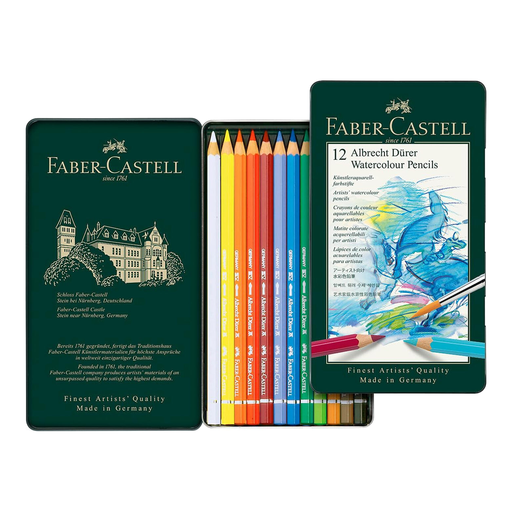
Why this product fits the profile: The set contains 12 colours, water-soluble pigments and 3.8 mm leads. The pencils can be used dry and then blended with a damp brush.
Water solubility, lead diameter and application are all specifically stated. This makes it easier to distinguish from conventional coloured pencils.
Water-soluble pigments, 3.8 mm lead, metal tin and suitability for both dry and wet techniques.
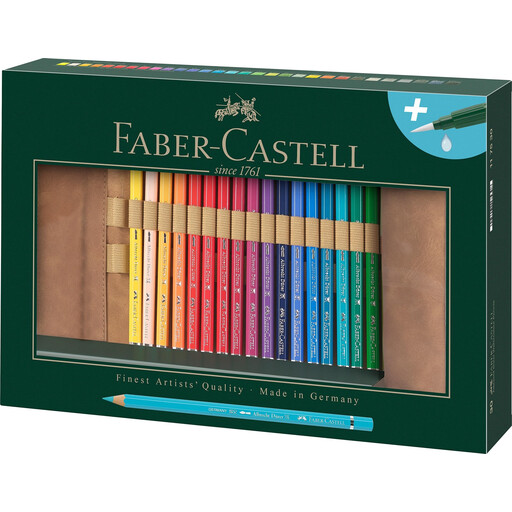
Why this product fits the profile: The 30-piece range covers more colour areas and comes with a pencil roll and water brush. This is ideal for illustrators, art students and heavy users.
The set size is linked to specific accessories and water-soluble application, rather than just promoting a high number of colours.
30 water-soluble coloured pencils, pencil roll and water brush; suitable for dry drawing and watercolour painting.
We have compiled a complete, regularly updated list of products that fully meet these strict selection criteria and the safety regulations in force in the EU.
Yes. The dry application is similar to that of classic coloured pencils. The watercolour effect can be tried out gradually with a little water. A 6-piece or 12-piece set is usually sufficient for initial practice.
Watercolour paper with a sufficient weight is the most practical choice. Thin paper can buckle from moisture. For dry drawings, drawing paper or mixed-media paper are also possible.
The lifespan depends on pressure, sharpening technique and frequency of use. A robust lead and a suitable sharpener reduce breakage. After use, the pencils should be stored dry and protected from moisture.