
Lieferung heute & morgen

Qualitätsgarantie

Willkommens-Angebote freischalten: KOSTENLOSE Lieferung | Bis zu 80 % RABATT | Kostenlose 30-Tage-JoyPlus-Testphase
App herunterladen
Watercolour pencils combine the control of a coloured pencil with water-soluble colour effects. They are ideal for sketches, illustrations, gradients and classic watercolour painting. Yet product descriptions don’t always lead you straight to the right purchase. Terms like “intense colours” or “professional” alone tell you little about handling, paper compatibility or the actual intended use.
With water-soluble coloured pencils, it’s the lead formula that determines how completely the pigments mix with water. Some pencils only dissolve on the surface, leaving visible strokes behind. For soft washes and smooth transitions, details about water solubility, lead thickness and the recommended paper type are more important than mere colour names.
A set of six colours may be enough for the odd splash of colour. However, if you’re creating landscapes, portraits or detailed illustrations, you’ll often need several base colours and mixing options. So check whether individual shades can be bought separately or combined with other ranges. According to product information, the STAEDTLER Karat Aquarell series is available in up to 60 colours.
Watercolour markers are ready to use and usually offer both a brush tip and a fibre tip. This is handy for quick sketches and bold colour areas. Watercolour pencils, on the other hand, give you finer control over pressure, hatching and line width. If you mainly work on the go, markers can save you time; for precise drawings and gradual colour application, pencils are often easier to control.
A thicker lead can deposit more pigment and is suitable for working over larger areas. The Faber-Castell Albrecht Dürer set of 12 pencils, for example, states a lead diameter of 3.8 mm. With soft leads, a sturdy wooden casing is also important, because frequent sharpening and heavier pressure put strain on the lead.
A break-resistant lead reduces material waste, but doesn’t replace a suitable sharpener. For artist supplies, use a sharp metal or precision sharpener where possible and avoid dropping them onto hard surfaces.
For watercolour techniques that use plenty of water, heavier watercolour paper makes sense. Thin drawing paper can buckle or absorb water unevenly. For dry sketches and sparing washes, mixed-media paper may suffice depending on the subject. The manufacturers’ product information expressly recommends watercolour paper for pronounced wash effects.
The texture also affects line quality: rough paper picks up more pigment in its hollows, whereas smoother paper makes finer details easier.
Before you start on your actual subject, test three methods:
These techniques produce different edges and colour intensities. Use water sparingly so that the paper fibres and colour layers aren’t unnecessarily stressed.
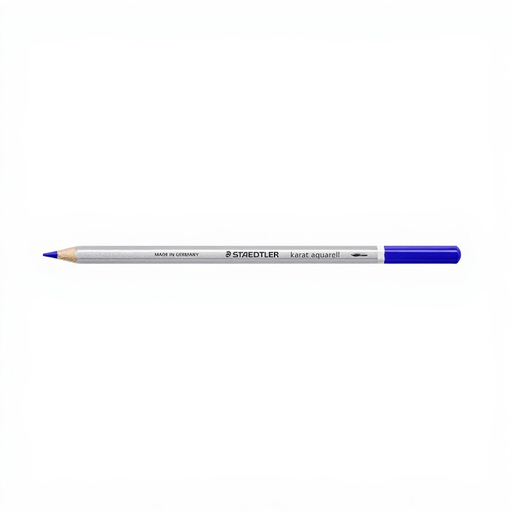
Why this product suits the profile: A 6-piece set is ideal for getting to grips with the combination of dry colour application and water, without committing to a large colour range straight away.
The product features mention a water-soluble lead as well as techniques applicable dry, wet-in-wet and dry-on-wet.
Soft watercolour lead, six-piece set and classic hexagonal wooden barrel made from FSC-certified wood according to product information.
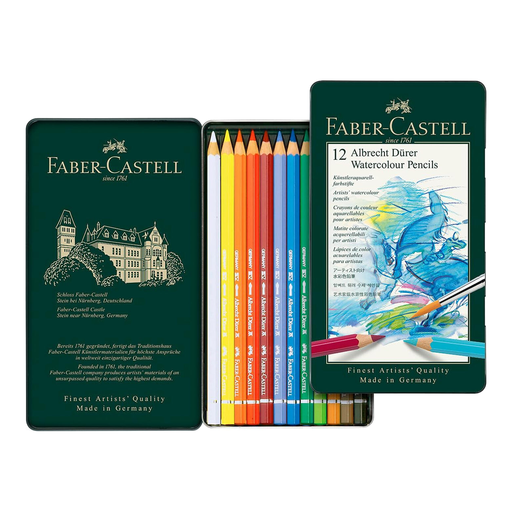
Why this product suits the profile: This set is aimed at illustrators and ambitious hobby artists who want to keep different shades organised in a metal tin.
The 3.8 mm leads and the information on water solubility provide concrete details rather than just promotional colour names.
12 coloured pencils, round ergonomic grip according to the product description and a metal tin for storage.
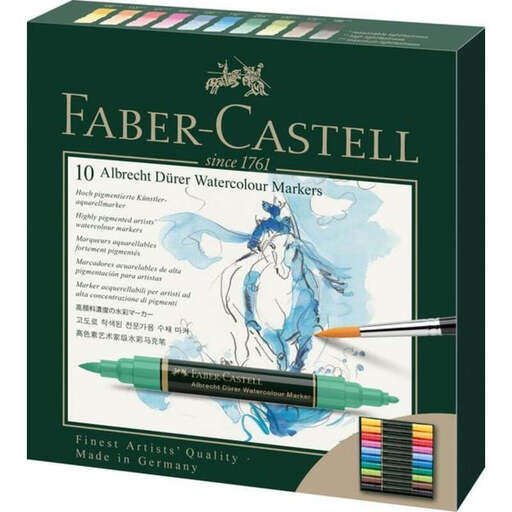
Why this product suits the profile: For on-the-go use, quick colour areas and illustrations, this compact set offers two tips per marker.
The product description mentions a flexible brush tip and a fibre tip for areas and outlines respectively.
Water-based, water-soluble ink, ten colours and two tips per marker; horizontal storage is recommended.
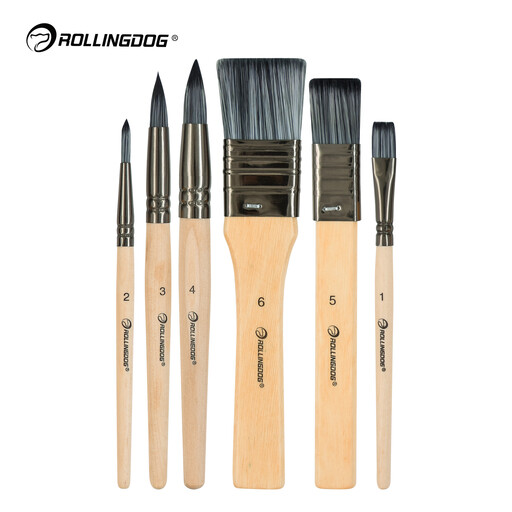
Why this product suits the profile: This set complements watercolour pencils, markers and other colours with several round and flat brushes for details and transitions.
The different sizes mean you don’t have to use the same brush for fine lines and broad colour areas.
Three round and three flat brushes with synthetic fibres, wooden handles and nickel-plated ferrules according to product data.
We’ve put together a complete, regularly updated list of products that fully meet these strict selection criteria and the safety regulations in force in the EU.
Work on a protected surface and test new colours on a scrap of paper first. Rinse your brush with clean water after each colour layer to prevent colours from mixing unintentionally. After use, markers should be closed tightly and stored horizontally if possible. Keep watercolour pencils dry and protected from strong temperature fluctuations.
Face paints are not automatically part of artist supplies for paper. Water-activated face paints are intended for external use and should only be used according to the manufacturer’s instructions and after a small patch test. They are not a substitute for watercolour pencils on paper, wood or canvas.
To get started, a small colour set with clearly identifiable water solubility is enough. A 6-piece set like STAEDTLER Karat Aquarell lets you practise lines, hatching and simple gradients. Watercolour paper and a medium-sized round brush are useful additions.
Durability depends on usage, sharpening technique and storage. Soft leads wear down faster with broad application than with fine sketching. A suitable sharpener, dry storage and avoiding heavy pressure can reduce material consumption. Because of the different ways they are used, it’s not possible to give a reliable fixed lifespan.
For small amounts of water, mixed-media paper can be sufficient. With several washes, wet-in-wet techniques or larger colour areas, heavier watercolour paper is more practical because it absorbs water better and warps less. Choose the paper texture to match the level of detail you want.