Who is this lighting solution for?

Watercolour artists focused on colour

If you want to show subtle colour variations and the whiteness of the paper consistently across repeated shots, check the light colour and white balance together using a reference shot. Canon Europe explains that white balance needs to be adjusted to suit the lighting conditions.

Photographers of larger studies

If you want to capture the whole sheet as evenly as possible and have room for two light sources, you can light each side separately. The Museums Association of Brandenburg describes a reproduction setup using two lights positioned to the sides.

Photographers working at a small table

If space on your work surface is limited, remember to allow room for the mount and power supply as well as the panel. What’s included can vary between versions with and without a stand.

What should you look for when buying?

Try the daylight you already have

A good fit if: You only photograph a small study occasionally and indirect daylight illuminates the sheet and its white background evenly.

The trade-off: You won’t need an extra light to start with, but changing daylight can make it harder to get consistent shots.

One diffused LED panel

A good fit if: You want to add a controllable light source but have limited space for your setup.

The trade-off: A single light doesn’t give you a second side that can be adjusted independently. Check the brightness across the whole sheet with a test shot.

Two LED panels positioned at the sides

A good fit if: You photograph studies regularly and want to adjust the lighting on each side independently.

The trade-off: Two lights need more space and suitable mounts. The Museums Association of Brandenburg describes a symmetrical setup for reproductions, with the lights positioned at roughly a 45° angle. This isn’t a fixed rule for every small watercolour.

What matters What to check when buying Who should pay particular attention?
Colours and paper whiteness Check the adjustable white-light range and the manufacturer’s colour-rendering information. Take a reference shot under the lighting you plan to use. If I want to compare subtle colour variations and white paper reliably, I check both in a test shot. Around 36% of consumers put reliable colour reproduction first.
Even illumination Check the diffuser and positioning. Assess the brightness at the edges and in the centre of the whole sheet. When photographing larger studies, I want to avoid the centre and edges of the sheet looking different in brightness. Around 29% of consumers prioritise even lighting across the study and background.
Space and setup Check the panel dimensions, mounting options and stand version against the space available. When I photograph at a small table, I need to leave room for the light and its mount as well as the sheet. Around 21% of consumers prioritise the space needed and a setup that can be positioned securely.
What’s included and power supply For the specific version, check separately whether it includes a power supply, diffuser, stand and, where applicable, compatible batteries. When I want to set up the light straight away, I want to know whether the mount and required power supply are included. Around 14% of consumers prioritise what’s included.

Common buying mistakes

  • A high CRI guarantees colour-accurate watercolour photos

    The stated light rating doesn’t tell you how the camera will set its white balance under the specific lighting, or how the image will look in mixed ambient light.

    Use the CRI as a guide to the model at most, and check the paper whiteness and colours in a test shot under the lighting you actually plan to use.

  • A particularly bright single panel will suit every sheet size

    For reproduction, it also matters how the light is distributed across the whole surface. Differences in brightness or shadows at the edges of the sheet will show up in a shot of the entire sheet.

    Start by assessing a test shot, then decide whether one panel is enough or a second light source would be useful.

  • A single panel, a stand set and a battery-powered version all include the same things

    The versions described come with different components, and batteries are not automatically included with the NEEWER and Rollei offers mentioned here.

    Check what’s included with the specific version against your planned setup before relying on a stand or battery power.

An overview of relevant brands

NEEWER

The NL660 is described as a single bi-colour panel, available with or without a stand, as well as a two-panel set with stands. These are different setup options, not a claim about a particular level of image quality.

  • NEEWER says that the colour temperature and brightness can be adjusted; the versions described include diffusers.
  • NP-F batteries are not included, and not every single-panel version comes with a stand. The CRI figure is the manufacturer’s claim, not an independent test using watercolours.

Rollei

The LUMIS LED Panel Bi-Color is described as a single panel and as a two-panel set with light stands. The versions differ in whether they include one light or two.

  • For the single panel, Rollei lists dimensions of 35 × 24 cm, a range of 3.200–5.600 K and a CRI above 96.
  • According to Rollei, batteries are not included with the single panel described. The model specifications don’t automatically guarantee colour-accurate or even-lit watercolour photos.

amaran

The P60x is a bi-colour panel supplied with a softbox, which may be useful if a light modifier is part of your planned setup.

  • The manufacturer lists a colour temperature range of 3.200–6.500 K, with a softbox, power supply and mount included.
  • The manufacturer’s claims about light output and colour rendering are no substitute for assessing the light on your own sheet. Check the size, position and light distribution you need for your setup.

Joybuy products

The selection below includes LED camera lights for compact photography setups, as well as light boxes and a ring light as alternative types of lighting. Light boxes and ring lights are not LED panels; particularly small light boxes may be too small for larger watercolour studies.
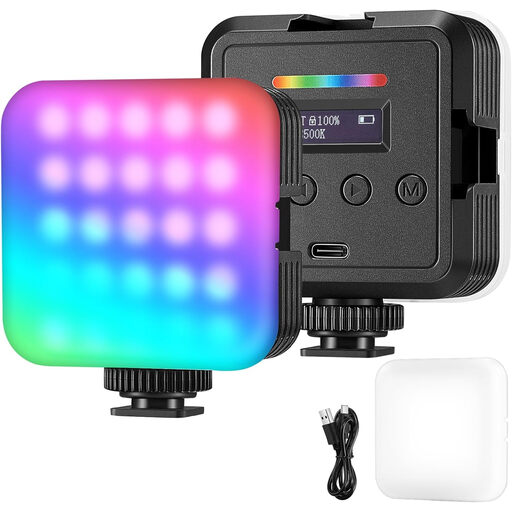
RGB LED camera light for photography, video and streaming

RGB LED camera light

A compact lighting option for photography and video, with adjustable lighting modes.

The product description says that brightness and colour temperature are adjustable. It also lists white, warm light and RGB modes.

Joybuy
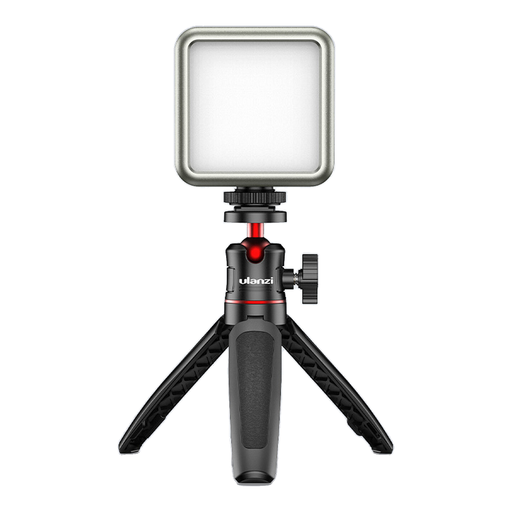
ULANZI VL49 LED video light

ULANZI VL49 LED video light

A compact lighting option for small photography setups when you need an adjustable colour temperature and flexible mounting.

The product title lists a 2.000-mAh battery and a colour temperature range of 2.500–9.500 K. The description mentions dimmable brightness and magnets for attaching it to metal surfaces.

Joybuy
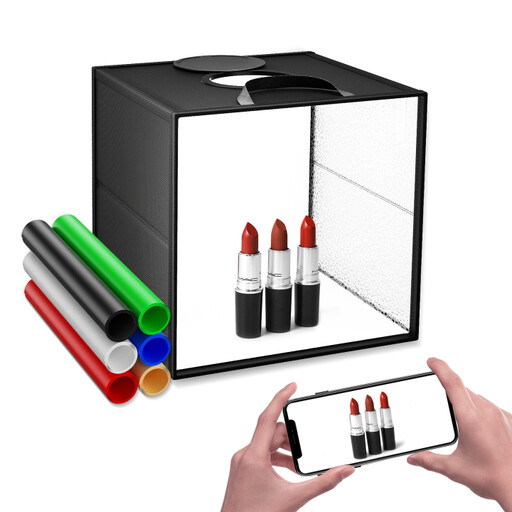
Light box with a 30 × 30 cm shooting area and six backdrops

30 × 30 cm light box with six backdrops

For small subjects, this light box can provide a compact shooting area with built-in lighting. The area may be too small for larger studies.

The description lists dimmable lighting and an integrated diffuser system. The product title says that six coloured backdrops are included.

Joybuy
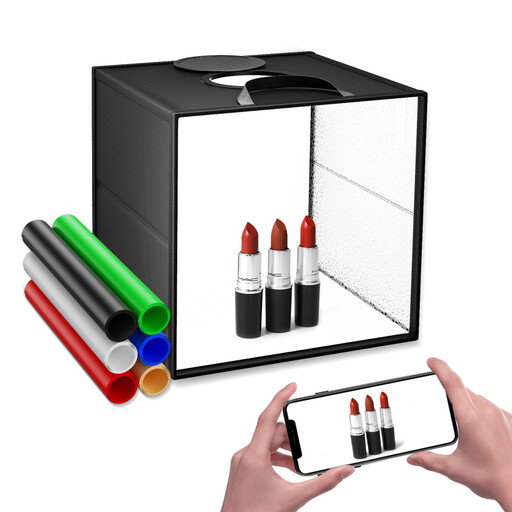
30 cm foldable LED light box

30 cm foldable LED light box

For small still lifes and products, this light box is a compact alternative to a freely positioned LED panel. Its shooting area may be too small for larger watercolour studies.

The product title lists 120 LEDs, three colour temperatures, nine dimming levels and six coloured backdrop papers.

Joybuy
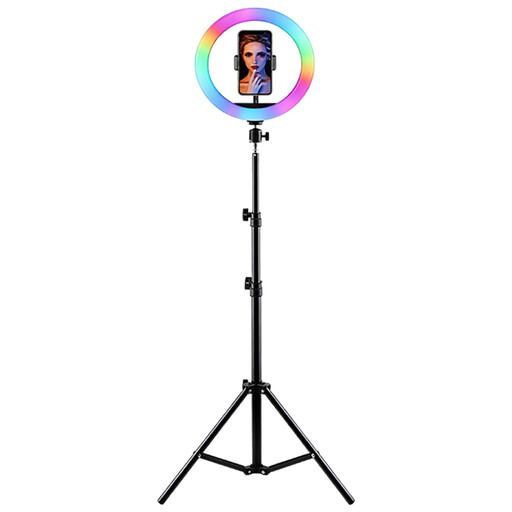
LED ring light with height-adjustable stand

LED ring light with stand

An alternative type of lighting for photography or video where you need to position the light. It isn’t a substitute for an LED panel if a panel light is what you’re looking for.

The product title says that the brightness and colour temperature are adjustable. The description lists a height-adjustable stand and a tilting ring.

Joybuy

Frequently asked questions

How can I photograph my study with as little colour cast as possible?

Light the whole sheet as evenly as possible under consistent conditions, and set the white balance for that light. A shot of the white paper or a suitable reference under the same lighting can help you check the result. The light’s Kelvin or CRI figures don’t replace this step.

Do I need to position two panels at a 45° angle?

No, not for every small study. The Museums Association of Brandenburg describes two lights positioned at the sides at roughly a 45° angle for a reproduction setup with enough space and distance. Take a test shot of your sheet to see whether one light is enough or the other side needs additional light.

Does an LED panel automatically come with a stand and battery?

No, it depends on the specific version. The NEEWER NL660 is described as a single panel option with or without a stand; compatible NP-F batteries are not included according to the manufacturer. Rollei also says that batteries are not included with the LUMIS single panel described. Check what’s included with the offer you’re considering.

What are my rights if a panel is faulty?

When you buy from a business seller, European Union consumer information states that you have a legal guarantee of at least two years from the date you receive the goods. This applies to the seller and is separate from any voluntary manufacturer’s guarantee.

What should I check to make sure an electric photography light complies with regulations?

Check the product labelling and accompanying documents for the specific offer. The German Federal Network Agency lists CE marking, product identification, manufacturer details, required instructions and the declaration of conformity among the points to check. CE marking says nothing about photographic quality and, on its own, doesn’t show how the light will perform when you photograph your watercolour.