
Lieferung heute & morgen

Qualitätsgarantie

Willkommens-Angebote freischalten: KOSTENLOSE Lieferung | Bis zu 80 % RABATT | Kostenlose 30-Tage-JoyPlus-Testphase
App herunterladen
The quality of tap water is a key concern for many households. A Waterdrop reverse osmosis system promises to reduce contaminants and significantly improve water quality. However, the market is flooded with options, and not every system delivers on its promises. As your Joybuy Product Recommendation Officer, I'll help you avoid the common pitfalls and make an informed decision.
Before you invest, you should be aware of the most common marketing traps that often lead to disappointment and unexpected costs.
To avoid these mistakes, focus on objective, verifiable criteria. These three aspects are crucial for the performance and long-term satisfaction with your kitchen water filter.
The heart of any system is the reverse osmosis membrane. It uses an extremely fine filter (often 0.0001 microns) to reduce total dissolved solids (TDS), heavy metals like lead, chemicals like PFOA/PFOS, and also limescale. Look for independent certifications like NSF/ANSI 58, which confirms effective TDS reduction, or NSF/ANSI 372, which guarantees lead-free materials. These standards provide an objective benchmark for filter performance.
The choice of form factor depends on your available space and installation options.
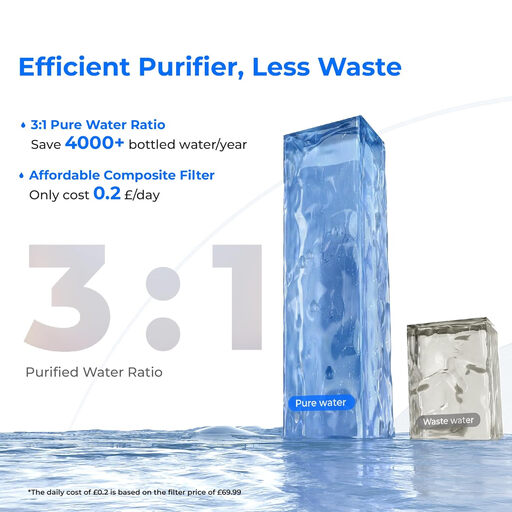
Also, check the pure-to-wastewater ratio. Modern systems achieve ratios of 2:1 or even 3:1, meaning that for every two or three litres of pure water, only one litre of wastewater is produced.
A tool-free filter change that can be done in seconds is a key convenience factor today. Systems with twist- or click-mechanisms prevent leaks and make maintenance a breeze. Smart indicators on the faucet or unit that show the filter status in real-time take the guesswork out of it and ensure you replace the filter at the optimal time. This is particularly relevant if you are specifically looking for a WD-G3P600-RO or WD-A2RF filter.
Here are some configurations tailored to specific needs and households that specifically avoid the pitfalls mentioned.
Why This Fits Their Persona: Ideal for anyone who cannot or does not want to perform a permanent installation. The unit is simply placed on the countertop and plugged into an outlet—perfect for rental apartments, offices, or even RVs.
Completely avoids the pitfall of complex installation. No drilling or connection to the water line is needed. The filter change is straightforward thanks to the composite design.
Offers 6 temperature settings (15-95°C) for cold and hot beverages. The efficient 3:1 pure-to-wastewater ratio saves water.
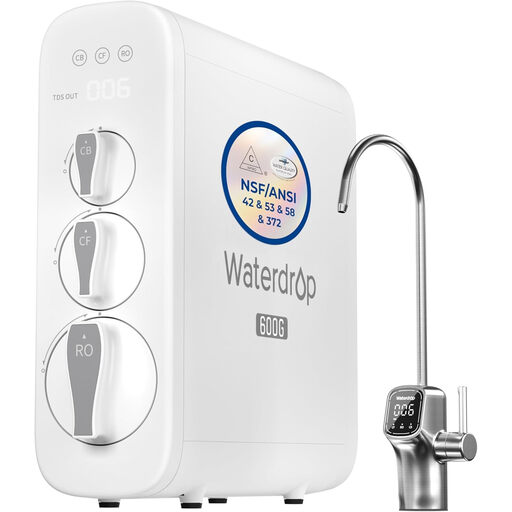
Why This Fits Their Persona: A high-performance under-sink solution for homeowners who want seamless kitchen integration and a high flow rate for the whole family.
The efficient 2:1 ratio minimises water waste. The smart LED faucet displays the filter lifespan, eliminating guesswork and unnecessary costs.
NSF/ANSI 58 & 372 certified. The high flow rate of 600 GPD fills a glass in about 8 seconds. The tool-free filter change takes only 3 seconds.
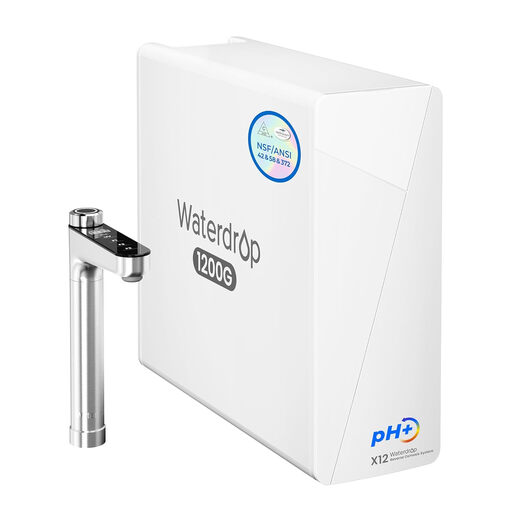
Why This Fits Their Persona: For users who want not just pure water, but also water that is optimised for health. This system not only filters but also re-enriches the water with minerals.
Provides an all-in-one solution that combines filtration, UV sterilisation, and remineralisation. This eliminates the need to buy and maintain multiple separate devices.
11-stage filtration including an alkaline water filter with remineralisation (calcium, magnesium). The RO membrane has a lifespan of up to 24 months.
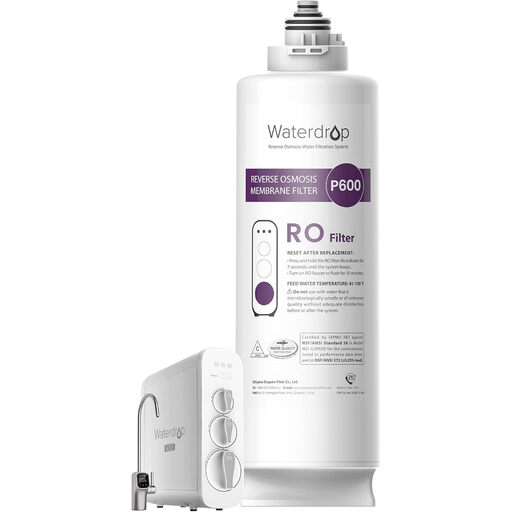
Why This Fits Their Persona: This replacement filter is specifically designed for owners of the Waterdrop G3P600 system who want to maintain their unit's performance and safety by using an original, certified filter.
Guarantees full compatibility and maintains the overall system's NSF certifications. This avoids performance degradation or potential damage from non-matching third-party filters.
Offers a long lifespan of up to 24 months or 8,328 litres. The NSF/ANSI 58 & 372 certifications ensure continuous reduction of TDS and heavy metals.
We have compiled a complete, up-to-date list of products that fully meet these strict selection criteria and comply with rigorous safety standards.
The replacement frequency depends on the specific filter and your water consumption. Pre-filters (sediment/carbon) often need to be changed every 6 to 12 months. The central RO membrane, like the WD-G3P600-RO, has a much longer lifespan of up to 24 months. Modern Waterdrop systems feature a filter life indicator that reminds you when it's time for a change.
Yes, absolutely. A water filter for limescale is one of the core functions of reverse osmosis. The fine membrane effectively retains the calcium and magnesium ions responsible for limescale buildup. The result is soft water that protects household appliances and improves the taste of tea and coffee.
A 2:1 ratio means that the system produces only one litre of wastewater for every two litres of pure drinking water it generates. This is a very efficient rating. Older systems often have a ratio of 1:3 or worse, meaning they discard three times as much water as they purify. Choosing a system with a good ratio is therefore both economically and ecologically sensible.