
Lieferung heute & morgen

Qualitätsgarantie

Willkommens-Angebote freischalten: KOSTENLOSE Lieferung | Bis zu 80 % RABATT | Kostenlose 30-Tage-JoyPlus-Testphase
App herunterladen
The quality of drinking water in Germany is generally high, but on its journey from the water plant to your tap, it can pick up contaminants from old pipes or regional environmental factors. Many households are therefore looking for an additional filtration solution to optimise the taste, purity, and quality of their water. A Waterdrop reverse osmosis system can be an effective solution for reducing unwanted substances like limescale, lead, chlorine, and other particles.
This article serves as a guide. It explains the key features of reverse osmosis systems and presents a selection of models to help you decide on the right system for your kitchen.
Before you decide on a model, you should consider several technical aspects and personal requirements. The following points will help you make the right choice.
Choosing the installation location is a fundamental decision.
The performance of a system is often indicated in GPD (Gallons per Day). A higher GPD value means a faster water flow—your glass fills up more quickly. Also, pay attention to the filter stages and their specific effects. Modern systems often offer more than just basic filtration. A water filter with mineralization selectively adds minerals like calcium and magnesium back into the filtered water, which can improve taste and raise the pH level. This is particularly relevant because the reverse osmosis process removes minerals along with contaminants.
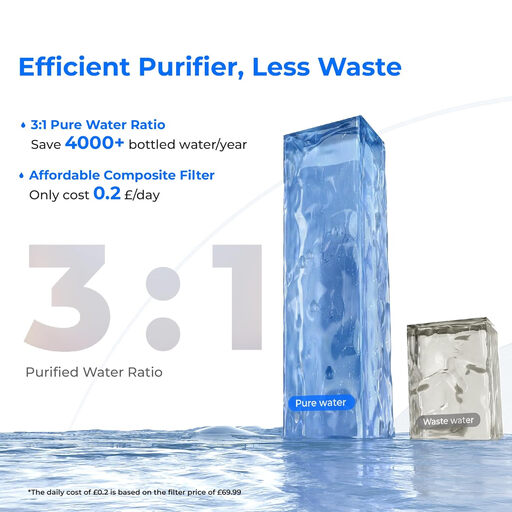
Reverse osmosis produces not only pure drinking water but also wastewater, in which the filtered-out substances are concentrated. The ratio of pure water to wastewater is a key efficiency criterion. Modern systems operate with ratios of 2:1 or even 3:1. This means for every two or three parts of pure water, only one part of wastewater is generated. A better ratio is not only better for the environment but also for your wallet.
Here is a selection of Waterdrop systems that cater to different needs and applications.
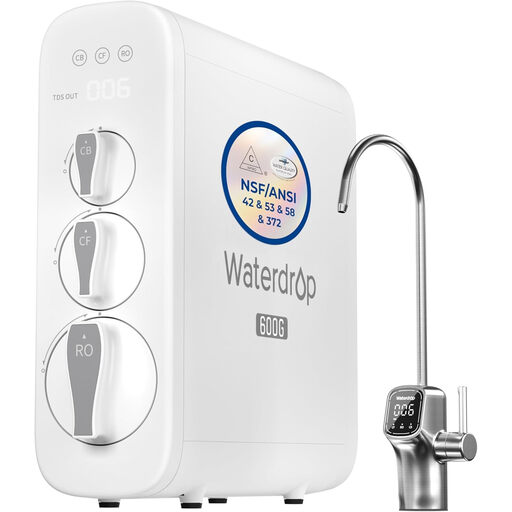
Why it stands out: This under-sink system combines a high flow rate with a smart faucet and a space-saving, tankless design.
Advantages:
Who is it for? For households looking for a powerful, permanently installed solution for their kitchen who value smart features and high efficiency.
Why it stands out: This countertop unit requires no installation and also offers the ability to heat or cool water to various temperatures.
Advantages:
Who is it for? For users who want maximum flexibility without the hassle of installation and are looking for an all-in-one solution for filtered, hot, and cold water.
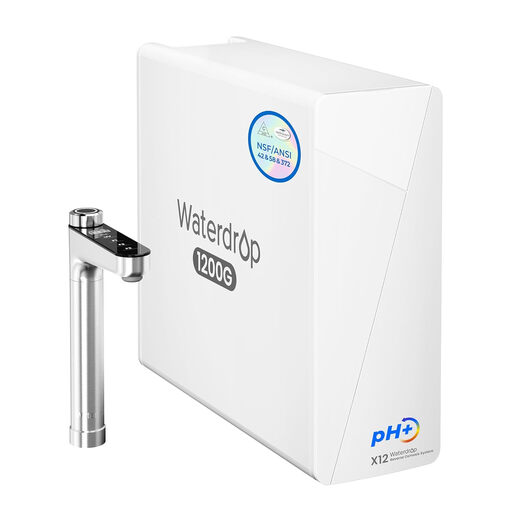
Why it stands out: This high-end under-sink system offers an extremely high flow rate and advanced 11-stage filtration, including UV disinfection and alkaline mineralization.
Advantages:
Who is it for? For demanding households seeking a high-performance under-sink solution with maximum filtration power, mineralization, and a very high water flow.
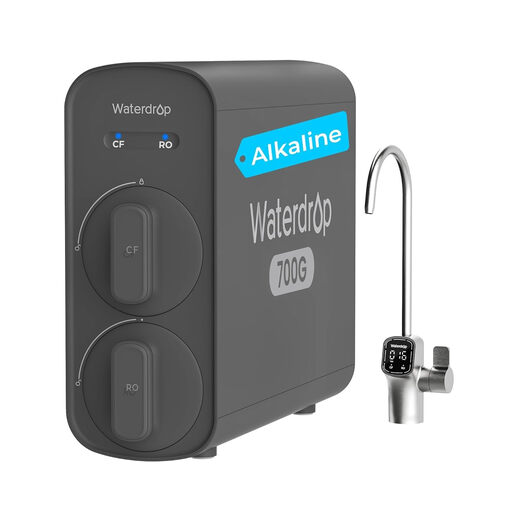
Why it stands out: This under-sink system offers solid performance with alkaline mineralization and operates without an electrical connection.
Advantages:
Who is it for? For homeowners who want a reliable under-sink reverse osmosis system with a mineralization function and prefer a solution that does not require an electrical connection.
Haven't found the right model for your needs yet? Every kitchen and every household has different requirements. Explore our entire range and find the perfect solution for your home.
Explore More Reverse Osmosis Water Filters
In reverse osmosis, tap water is forced under pressure through an extremely fine, semi-permeable membrane. The pores of this membrane are so small (approx. 0.0001 micrometres) that only water molecules can pass through. Larger particles such as salts, heavy metals (e.g., lead), bacteria, viruses, and other dissolved solids are blocked and flushed away with the wastewater.
Yes, reverse osmosis is a very effective method for reducing limescale. Limescale consists mainly of calcium and magnesium ions dissolved in the water. The fine RO membrane reliably retains these ions. A water filter for limescale and lead, such as a reverse osmosis system, not only protects your health but also safeguards household appliances like kettles and coffee machines from limescale buildup.
The replacement intervals depend on the specific filter type and usage intensity. A system typically consists of several filter cartridges (e.g., pre-filter, RO membrane, post-filter) that have different lifespans. These can range from six months to two years or more. Many modern Waterdrop models feature a smart filter life indicator on the unit or faucet that reminds you in a timely manner when a replacement is due.