Several glasses after your food shop
If you want to blend the watermelon soon after shopping for several people, check the jug’s usable capacity – not just its maximum stated capacity.


If you want to make several glasses after your weekly food shop, compare jug blenders by their usable jug capacity. For a single serving to take with you, a compact personal blender may be more practical. Cleaning requirements matter too, as does whether the specific model is approved for blending ice, if you plan to use it. A larger jug takes up more space, while a small cup may mean extra blending rounds when you’re making drinks for several people.
If you want to blend the watermelon soon after shopping for several people, check the jug’s usable capacity – not just its maximum stated capacity.
If you blend fresh fruit regularly, check how easy it is to clean the jug, lid and blade assembly on the specific model.
If you usually make one serving, a personal blender cup with a drinking lid can save you from transferring your drink. If you need more glasses, you may have to blend extra batches.
First, decide whether you want to make several glasses in a jug or a single serving in a cup to take with you. Then check how easy the model is to clean and whether it is approved for blending ice.
| Buying priority | What to look for | Who is this important to? |
|---|---|---|
| Usable capacity for several drinks | Compare the specific model’s usable or effective capacity and fill markings with the number of glasses you want to make. | If I want to make several drinks after my food shop in as few batches as possible, the amount I can actually blend is what matters. Around 36% of consumers prioritise capacity for several glasses. |
| Cleaning after repeated blending | Check the cleaning instructions for the jug, lid, seal and blade assembly separately. | If I use my blender regularly, I want to be able to clean residue thoroughly, including around the blades. Around 29% of consumers mainly look for easy cleaning. |
| One serving without transferring | Check the cup size, fill markings and drinking lid included with the specific set. | If I want to make a single serving to take with me, a personal blender cup with a drinking lid is handy. Around 21% of consumers prioritise making one serving without transferring it. |
| Ice for chilled drinks | Check whether the exact model can blend ice, and follow the guidance on quantities and how to do it. | If I want to blend ice with watermelon, I need to make sure the specific appliance is approved for this. Around 14% of consumers prioritise iced drinks. |
Philips lists the HR2041/00 as having a maximum capacity of 1.9 l, but an effective capacity of 1.0 l. So, it’s the effective capacity that determines how many glasses you can make.
Compare the specific model’s usable capacity and fill markings with the amount of drink you plan to make. A lower effective capacity may mean you need to blend in extra batches.
In a practical blender test, CHIP points out that high power alone doesn’t guarantee good blending results. Ice and other ingredients may also have different requirements from soft watermelon.
Start by considering the quantity, recipe and cleaning requirements. Assess the wattage in the context of the specific model and how you plan to use it.
The German Federal Institute for Risk Assessment (BfR) warns that germs can multiply in pre-cut melons when they are stored without refrigeration.
Use the watermelon as soon as possible after cutting. If you’re storing cut melon, follow the BfR’s refrigeration advice.
The Kult X Mix & Go is designed for a single serving in a blend-and-drink cup.
The VitaPower Serie 2 MMB2111S is a compact option for drinks on the go, while VitaBoost is a separate range of jug blenders.
The Series 3000 HR2041/00 is a jug blender; its effective capacity is what matters when working out how much drink it can make.
The PowerBlend 3 JB 3272 SI comes with a jug and two bottles for drinks on the go.
The InfinyMix BL91HD combines a jug with an ice function and a cup for drinks on the go.
The following products are jug blenders; some models also include bottles for drinks on the go or an ice function.
 Image unavailable
The blending jug is suitable for drinks, while the extra travel bottle lets you take a serving with you.
Listed in the product title: 1500-ml blending jug, 600-ml travel bottle, 300-ml chopper cup, 6 stainless steel blades, 24,000 rpm, ice blending and dishwasher-safe parts.
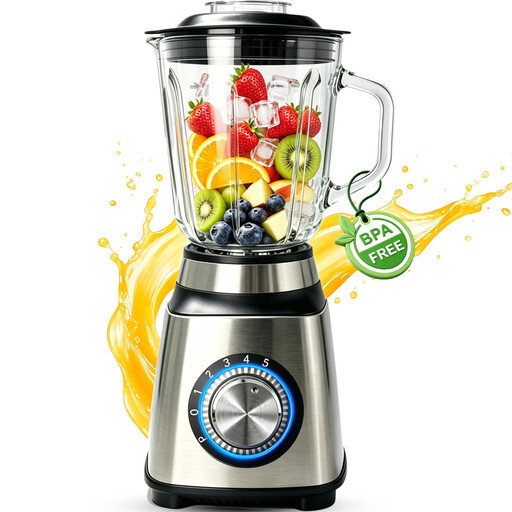 Image unavailable
The jug is designed for making drinks; ice crushing is an additional feature listed in the product title.
Listed in the product title: 1.5-l glass jug, 6 blades and ice crushing.
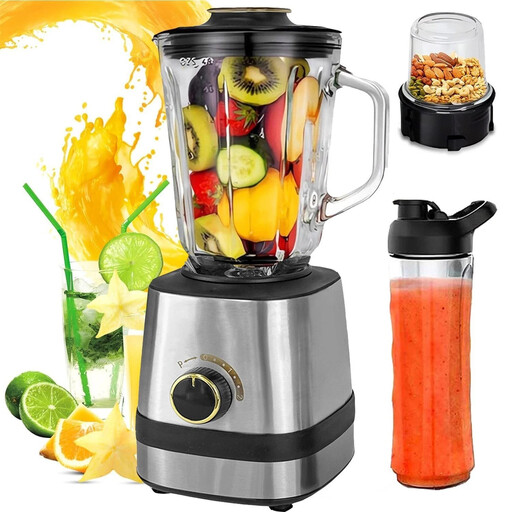 Image unavailable
The container is designed for making smoothies, while the extra bottle is handy for a serving to take with you.
Listed in the product title: 1.5-l container, 600-ml bottle and 6 blades.
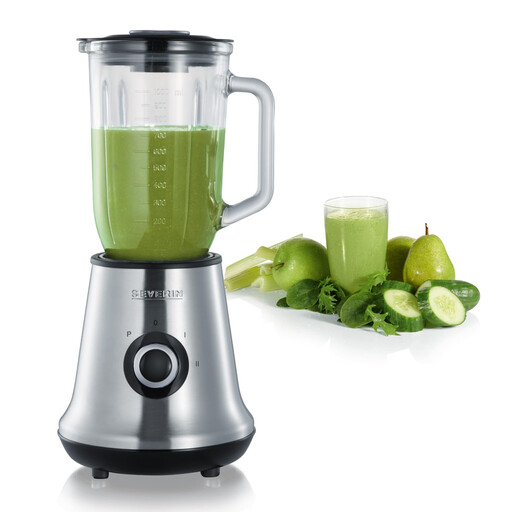 Image unavailable
The 1.0-l glass jug is an option for smaller quantities of drinks; the product title lists two speed settings and a pulse function.
Listed in the product title: 500 W and stainless steel blades running at up to 22,000 rpm.
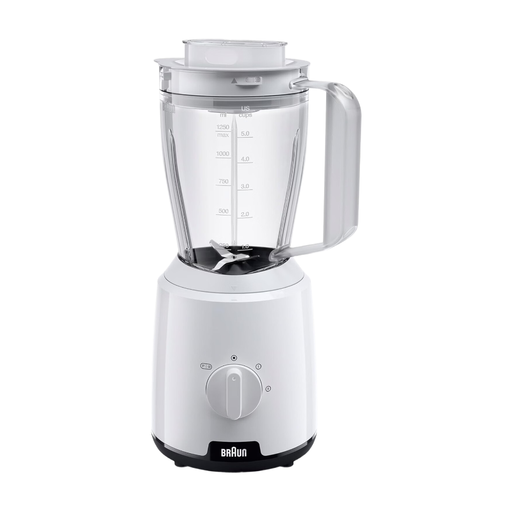 Image unavailable
The 1.5-l blending jug has room for drinks, and the product title specifically lists an ice-crushing function.
Listed in the product title: 2 speed settings and 600 W.
For pre-cut melon, the German Federal Institute for Risk Assessment (BfR) recommends eating it promptly or keeping it continuously chilled, preferably at +4 to +6 °C. A drinking lid doesn’t replace refrigeration for cut fruit. Use the watermelon as soon as possible after cutting, and follow storage guidance based on the ingredients and how they need to be chilled.
Not necessarily. Check the instructions for the specific model to see which parts are dishwasher-safe. For the BL91HD, Tefal says the jug is dishwasher-safe when the blades are removed; this doesn’t mean the blade assembly or other models are also approved for dishwasher use.
If there’s a fault, your statutory rights against the seller are separate from any voluntary guarantee. For a standard online purchase from a trader, you generally also have a 14-day right to cancel from the date of delivery; terms and possible exceptions apply.
Not necessarily. EU safety rules apply to materials that come into contact with food. According to the consumer advice centre, a separate symbol may not be needed if it’s clear that the item is intended for food contact. So, the absence of a symbol alone doesn’t prove that a part sold as a blender container is unsuitable.
No. For products covered by the relevant harmonised EU legislation, the manufacturer uses the CE marking to declare that the product meets the applicable requirements. It is neither a blending-performance test nor an EU certificate issued centrally.