
Lieferung heute & morgen

Qualitätsgarantie

Willkommens-Angebote freischalten: KOSTENLOSE Lieferung | Bis zu 80 % RABATT | Kostenlose 30-Tage-JoyPlus-Testphase
App herunterladen
An unexpected leak on a roof, RV, or water pipe requires a fast and reliable solution. Given the vast number of sealing and repair tapes on the market, choosing the right product can be a challenge. This guide is designed to help you understand the properties of waterproof butyl tape and make an informed decision for your specific project. As your Joybuy Product Recommendation Officer, I will provide you with objective information and a selection of products suited for various applications.
To find the right product for your needs, you should consider a few technical specifications. These criteria will help you objectively evaluate the performance and suitability of a sealant tape.
The foundation of any sealant tape is its adhesive. Butyl sealant tape uses butyl rubber, a synthetic rubber known for its excellent sealing properties, weather resistance, and durability. Unlike conventional adhesive tape, butyl remains flexible even with temperature fluctuations and does not become brittle.
Pay attention to the backing layer. An aluminum butyl tape features an aluminum foil top layer that provides additional protection against UV radiation and mechanical stress. This is especially important for an outdoor sealing tape, such as a tape for roof repair.
Not every tape is suitable for every environment. Check the manufacturer's specified temperature ranges for application and long-term durability. For use on vehicles like an RV sealant tape or on boats, tapes with high UV and weather resistance are essential. Compatibility with various surfaces (e.g., metal, plastic, wood, concrete) is also a crucial factor for permanent adhesion.
The dimensions of the tape should match your repair project. A wider tape (e.g., 100 mm) is well-suited for covering larger cracks or seams on roofs and tarps. A narrower tape (e.g., 50 mm) is more flexible for sealing pipes, window frames, or more complex shapes. The thickness of the tape, often specified in millimetres or mils, indicates its robustness and ability to compensate for uneven surfaces.
Here is a selection of sealing and repair tapes that are distinguished by their specific properties for different projects.
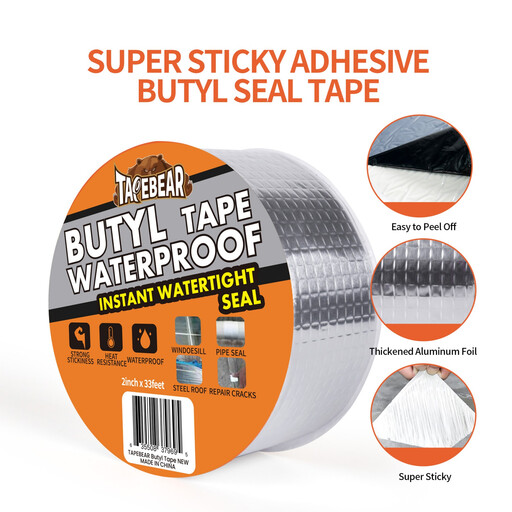
Why It Stands Out: This tape combines a durable aluminum foil backing with a butyl rubber adhesive layer. According to the manufacturer, the adhesion strengthens over time after application, resulting in a particularly durable bond.
Pros:
Who Is It For? This tape is an excellent choice for targeted repairs on pipes, window joints, ventilation systems, and smaller leaks on RVs or garden sheds where a narrow but highly durable seal is required.
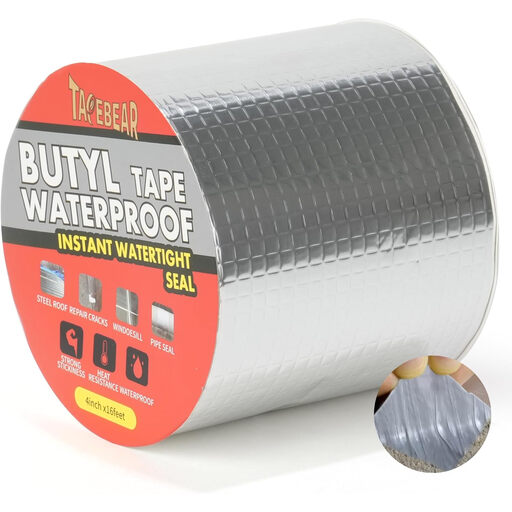
Why It Stands Out: With its 100 mm width, this tape allows for efficient coverage of larger areas. The construction of pure butyl rubber with a reinforced backing system of PET aluminum foil and non-woven fabric is designed for longevity.
Pros:
Who Is It For? This product is particularly suitable for large-area sealing, such as repairing RV roofs, awnings, gutters, or wider cracks in surfaces where maximum coverage is necessary.

Why It Stands Out: This product is not a butyl tape, but a versatile, fabric-reinforced waterproof repair tape based on a natural rubber adhesive. It is characterized by its high tear resistance and the ability to be torn by hand.
Pros:
Who Is It For? This is a universal solution for general repairs, bundling, and fastening around the house, in the workshop, or outdoors. It is an alternative to classic extra-strong gaffer tape and is suitable for tasks where a quick, strong, but not necessarily permanent sealing solution is the priority.
If your project involves packing, securing, or bundling items and does not require permanent sealing, you can find other suitable products for transport and storage in our Stretch Wrap category.
For optimal adhesion, the surface must be completely clean, dry, and free of grease, oil, or dust. Apply the tape and press it down firmly and repeatedly to remove any air bubbles and ensure a complete bond. According to manufacturer instructions, the tape should be protected from water and movement for at least 24 hours after application to allow the adhesive to develop its full strength.
The main difference lies in the material and the primary purpose. Butyl tape is made of synthetic rubber and is specifically designed for a permanent, waterproof, and weather-resistant seal. It remains permanently flexible. Duct tape is typically a fabric-reinforced tape with a strong adhesive for general, often temporary, repairs, bundling, and fastening. While it is water-resistant, it is generally not intended for permanent sealing under constant exposure to water.
Butyl tape adheres to a wide variety of materials. These include metals (aluminum, steel, copper), glass, wood, concrete, brick, plastics (like PVC and polycarbonate), and EPDM roofing membranes. However, the surface should always be non-porous, clean, and dry to ensure the best possible adhesion. For porous or dusty substrates, the use of a primer may be necessary.