
Lieferung heute & morgen

Qualitätsgarantie

Willkommens-Angebote freischalten: KOSTENLOSE Lieferung | Bis zu 80 % RABATT | Kostenlose 30-Tage-JoyPlus-Testphase
App herunterladen
If you park your vehicle outdoors permanently, you’ll know the typical consequences: rainwater, frost, leaves, bird droppings, dust and intense UV rays all take their toll on the paintwork, windows and interior. A waterproof car cover can reduce direct exposure – provided it fits your vehicle and is secured correctly.
Many poor purchases happen not because of a lack of protective features, but because of unclear sizing information and unrealistic expectations about the material. A thin PEVA cover, for example, is easy to handle, whereas a multi-layer tarpaulin takes up more weight and storage space. The following criteria will help you choose a suitable weatherproof car cover for outdoor use in the UK.
Length measurements such as 5.4 m often refer only to the outer dimensions of the cover. Roof height, width, wing mirrors, spoilers and the shape of the bumpers all affect how it actually sits. A car cover against rain, snow and sun that is too large can crease and rub against the paintwork in the wind. If it’s too small, parts of the vehicle remain unprotected.
Before buying, you should therefore measure your vehicle’s length, width and height, and compare them with the size chart of the particular offer. The vehicle type is also crucial: a car cover for an SUV won’t necessarily fit a saloon or an estate.
“Waterproof” describes the barrier against rain and moisture. A cover can still be problematic if condensation builds up underneath it. Ventilation openings, a proper fit and a dry vehicle when fitting are therefore important.
With coated fabrics, you should check the material specification. PE, PEVA, polyester and Oxford fabric differ in weight, flexibility and tear resistance. Terms like “waterproof” or “UV-resistant” should be understood as product features according to the seller’s description, not as an unlimited guarantee of protection in every weather condition.
A cover without secure fastening can slip or lift in the wind. Elastic hems, straps, hooks and reinforced eyelets are therefore not minor details. With a PE tarpaulin with eyelets, you will also need suitable ropes, tension hooks or bungee cords. In storms, strong wind or thunderstorms, a loose cover should be re-tensioned or temporarily removed according to the manufacturer’s instructions.
Choose a cover that matches your body style:
The product data for the Kayme models explicitly distinguish between these vehicle classes. Some SUV covers are not intended for saloons or hatchbacks according to the seller. Even with an all-season car cover, the correct size remains the key factor.
Multi-layer PE and PEVA constructions combine, according to product information, a waterproof layer, a reflective aluminium layer and a soft inner layer. This can be of interest for vehicles that are regularly parked outdoors. A soft inner side is particularly useful when the cover is used on a clean, dry vehicle.
A lightweight PEVA cover, on the other hand, is easier to fold and store in the boot. It suits users who frequently put their cover on and take it off. For hail protection car covers, specially padded models with an EVA layer are intended. These are not the same as a simple rain or UV cover.
Look out for:
The cover should not be pulled over dirt, sand or small twigs. Particles between the fabric and the paintwork can cause scuff marks when the cover moves.
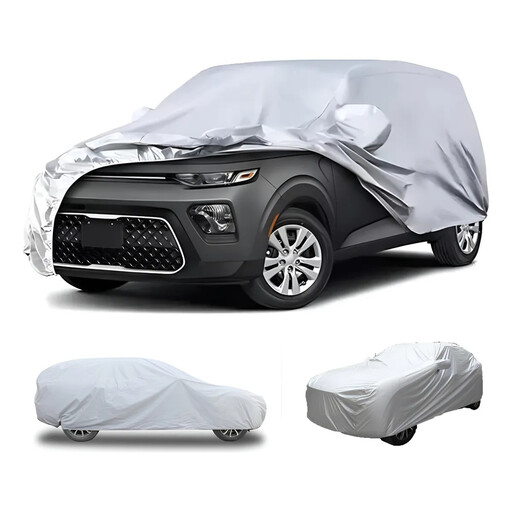
Why this product suits the profile: The single-layer PEVA cover is, according to the seller, lightweight and foldable, and is intended for many saloons, hatchbacks and compact vehicles. The dimensions are 540 × 175 × 120 cm.
The fixed outer dimensions and the elastic hem make selection more straightforward than a completely vague universal specification. You should still compare your vehicle’s measurements beforehand.
PEVA material, silver surface, dust protection and compact storage bag according to the product description.
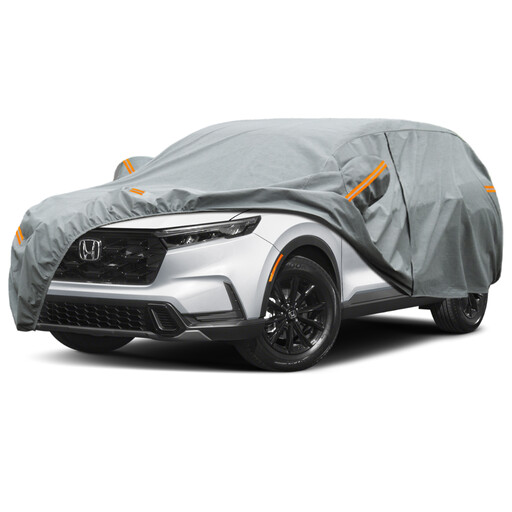
Why this product suits the profile: The cover is aimed, according to the seller, at SUVs with a length of 465 to 488 cm and uses a five-layer fleece material with a soft inner layer.
The clear restriction to SUVs and the specified length window reduce the risk of choosing a saloon cover that is too small for a taller vehicle.
Three wind straps, elastic hem and reflective strips are mentioned in the product description.

Why this product suits the profile: The model is designed, according to the seller, for saloons and coupés with a length of 475 to 495 cm and features a 5 mm EVA composite layer for a specially padded construction.
The cover is not listed as an SUV model. This clear categorisation prevents a padded cover from being chosen for the wrong vehicle type based on its protective claims.
EVA composite material, three wind straps, ventilation openings and reflective elements according to the seller’s information.
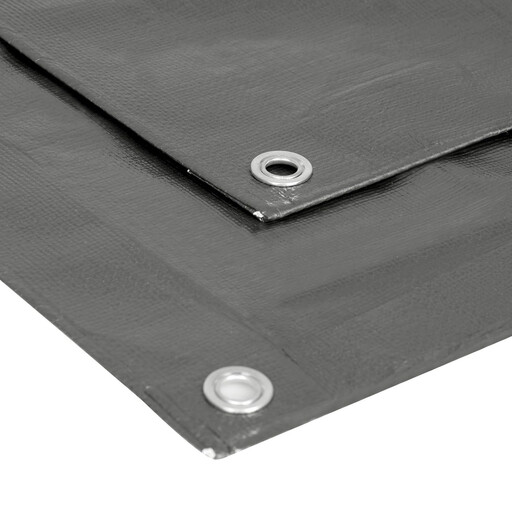
Why this product suits the profile: The 5 × 6 m PE tarpaulin with eyelets is suitable, according to the seller, for vehicles and other items such as garden furniture, wood or pool covers.
The eyelets along the reinforced edges allow flexible fastening. This means the tarpaulin is not limited to a single body shape.
280 g/m² PE fabric, reinforced edges and eyelets spaced approximately 50 cm apart according to the product description.
We have put together a complete, regularly updated list of products that fully meet these strict selection criteria and the safety regulations in force in the EU.
With a universal tarpaulin, sharp edges, hot exhaust parts and naked flames should be avoided. A protective cover for a car, garden furniture or wood is not intended as a permanent structure or as a climbing surface.
Only use the cover on a vehicle that is as clean as possible. Sand, dust and small plant debris can get between the inner surface and the paintwork. A soft inner layer can reduce the risk of rubbing, but it does not replace cleaning and correct fastening.
The lifespan depends on the material, sun exposure, wind, frequency of use and care. Coatings can deteriorate through prolonged UV light and friction. Check the seams, eyelets, straps and the water-repellent surface regularly. If you see visible tears or damaged fastenings, the cover should no longer be used outdoors.
A cover described as an all-season car cover can, according to the product description, be intended for rain, snow, frost and sun. However, this does not mean it should be left unattended in every storm or heavy snowfall. For expected hail, a padded model designed for that purpose is more suitable than a thin standard cover.