
Lieferung heute & morgen

Qualitätsgarantie

Willkommens-Angebote freischalten: KOSTENLOSE Lieferung | Bis zu 80 % RABATT | Kostenlose 30-Tage-JoyPlus-Testphase
App herunterladen
Choosing the right footwear is crucial for demanding tours in the mountains or on long trekking paths. An ill-fitting boot can not only compromise comfort but also jeopardise safety. However, the market for women's outdoor shoes is filled with marketing promises that often obscure more than they clarify. Before you make a purchasing decision, it's important to know the most common pitfalls that lead to disappointment and unnecessary expense.
Many hikers invest in boots that seem ideal on paper but prove inadequate in practice. Here are three common problems to watch out for:
To make an informed decision, you should focus on objective, technical features. These three parameters are non-negotiable when selecting trekking boots and mountain boots for women.
For challenging terrain, high-cut hiking boots for women are essential. An ankle-high shaft stabilises the ankle joint and protects against twists on scree fields or uneven paths. Equally important is the torsional rigidity of the sole construction. A stiffer boot prevents the sole from twisting under lateral stress, which provides greater safety and better power transfer. Look for a stable midsole that supports the foot even on long distances.
The sole is the direct point of contact with the ground. A deeper and more aggressive lug pattern is critical for sure-footedness. Look for multi-directional lugs that provide grip during both ascents and descents. The sole's rubber compound determines its grip. Softer compounds offer excellent grip on rock but wear out faster, while harder compounds are more durable. For mixed alpine terrain, a balanced compound is ideal to ensure slip-resistant hiking boots.
A waterproof hiking boot for women must have a special membrane. This microporous layer is engineered so that water molecules from the outside cannot penetrate, while sweat in the form of water vapour can escape from the inside. This ensures a dry and comfortable foot climate. Check the product details to confirm that an explicit waterproof and breathable membrane is integrated, rather than just a superficial water-repellent treatment.
Based on the criteria above, we have identified a model suitable for experienced hikers who value functionality and protection.
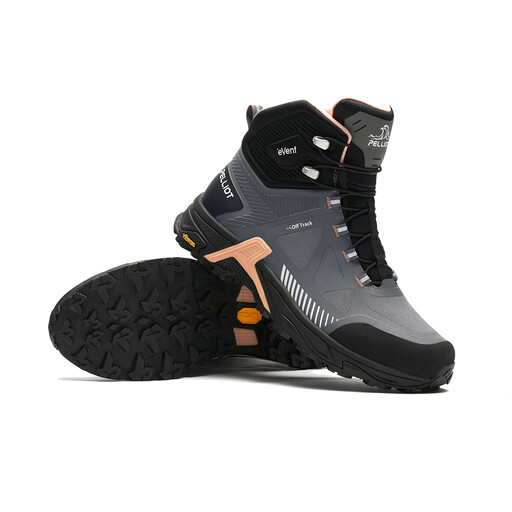
Why this model is a good fit: These Pelliot hiking boots are designed for experienced hikers and mountaineers who need a boot for demanding conditions. The construction is focused on stability and protection during strenuous treks and technical ascents, meeting the requirements for challenging alpine terrain.
The boot features an integrated, breathable and waterproof membrane for reliable weather protection. The high shaft and robust overall construction provide the necessary stability, avoiding the drawbacks of overly lightweight shoes. The enhanced Fitgo quick-lacing system allows for precise, one-handed adjustment and is designed for durability.
The sole's special lug pattern ensures traction on wet rock, loose scree, and muddy slopes. The abrasion-resistant upper and protective toe cap offer comprehensive foot protection in challenging terrain.
We have compiled a complete, up-to-date list of products that fully meet these strict selection criteria and rigorous safety standards.
Modern women's mountain boots made from synthetic materials often require a shorter break-in period than traditional full-leather boots. Start with shorter walks on flat terrain and gradually increase the duration and difficulty of your hikes. Pay close attention to any potential pressure points or chafing. A correct fit from the start is the most important factor in preventing problems.
Avoid cotton socks. Cotton absorbs sweat and dries very slowly, which can lead to blisters and an uncomfortably damp feeling. Instead, wear performance socks made from merino wool or synthetic fibre blends. These materials effectively wick moisture away from the skin and support the breathability of your waterproof hiking boots.
Clean your boots of coarse dirt and mud after every tour, preferably with a brush and lukewarm water. Remove the insoles to let them air out. Allow the boots to air dry and avoid direct heat sources like radiators or open fires, as this can damage the materials and adhesives. If necessary, the water-repellent property of the upper material can be renewed with a suitable waterproofing spray.