
Lieferung heute & morgen

Qualitätsgarantie

Willkommens-Angebote freischalten: KOSTENLOSE Lieferung | Bis zu 80 % RABATT | Kostenlose 30-Tage-JoyPlus-Testphase
App herunterladen
Wet rocks, loose scree and muddy climbs put footwear to the test. When looking for waterproof hiking boots for women, an impressive-looking tread pattern is not enough. What matters is the combination of fit, sole construction, upper material, fastening system and protective details.
The advice below will help experienced hikers, trekkers and mountaineers assess marketing claims objectively and avoid a disappointing purchase.
An outer material described as waterproof will not automatically keep your feet dry during every stream crossing or prolonged spell of rain. Look for specific details about the waterproof membrane, the material construction and care instructions. The PELLIOT models featured here are described as having a breathable, waterproof membrane in the lining. This is a clear product feature, but it is not a substitute for a stated hydrostatic head rating or a tested protection class.
Shaft height matters too: high-cut women’s hiking boots can keep splashes and dirt away from your ankles more effectively than low-cut models. However, water can still get in from above if your trousers and the boot shaft do not meet properly.
A chunky rubber sole can offer advantages on mud and loose ground, but it will not provide the same grip on every surface. Check whether the tread is specifically described as suitable for wet rocks, scree and muddy slopes, and whether the sole is made from abrasion-resistant rubber.
“Non-slip hiking boots” is not a standardised quality rating. Always consider the term alongside the sole design, rubber material and intended terrain. On technical climbs, a secure heel hold may also be more important than an especially soft feel underfoot.
Hiking boots with a quick fastening system can save time, provided you can adjust the tension evenly. But a fastening system alone cannot make up for a poor fit. Boots that are too loose can let your feet slide forwards on descents; boots that are too tight can become uncomfortable on longer walks.
According to the product description, the Fitgo lacing system on the PELLIOT models can be operated with one hand. A Nifco cord stopper is also mentioned, which can likewise be adjusted one-handed. Even so, measure your foot length before buying and compare the size chart with the actual fit inside the boot.
For women’s hiking boots and waterproof trekking boots, your heel should feel secure while your toes have enough room to move. On descents, your big toe should not press against the front of the boot. If you are between sizes, the advice for the PELLIOT models featured here is to choose the larger size.
The available sizes correspond to the following foot lengths:
Measure both feet in the afternoon, wearing the hiking socks you plan to use on your walks. Use the measurement of your longer foot.
For outdoor footwear designed for challenging terrain, abrasion-resistant uppers and a reinforced toe area are useful features. Hiking boots with toe protection reduce the risk of the front of the boot being damaged quickly by contact with stones or roots. However, they are not a substitute for safety boots or mountaineering boots on specially protected climbing routes.
The PELLIOT high-top models are described as having abrasion-resistant synthetic material and a protective toe cap. These features are suited to walks involving scree, undergrowth, mud and the occasional stream crossing.
A treaded sole with deep lugs can provide more points of contact on loose ground. Its suitability depends on the tread pattern, rubber compound, wear and terrain. Clean the sole after each walk to stop mud building up between the tread blocks.
For care, the manufacturer recommends wiping the boots with a damp cloth and mild soap, then leaving them to air-dry. Direct heat, washing machines and tumble dryers can damage the upper, adhesive points and membrane.
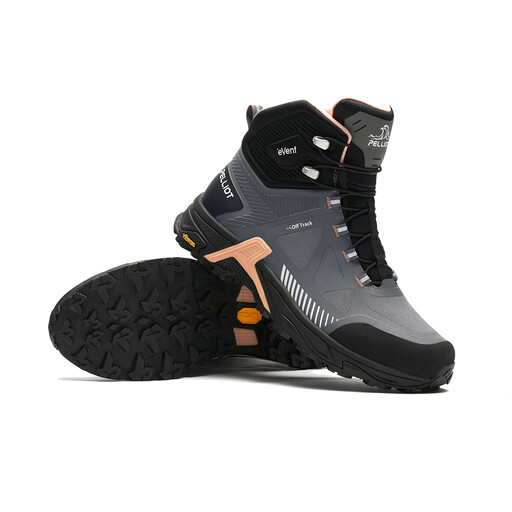
Why this product suits this profile: The EU 37 version has a high shaft, a quick fastening system that can be operated with one hand and a membrane described in the product details as waterproof. It is designed for regular walks in changeable weather.
The product details list specific features rather than relying on general outdoor claims: a treaded sole, toe cap, waterproof membrane and cord stopper.
Abrasion-resistant synthetic material, a protective toe cap and one-handed adjustment of the Fitgo quick fastening system.
Why this product suits this profile: The EU 38 version combines a high shaft with protective details for rocky paths, scree and rough terrain. It is a good choice for buyers who compare material and construction details before purchasing.
The description specifies the material, lining, sole and toe protection, making it easier to match the boots to the kind of walks you have planned.
High-grip rubber sole with a pronounced tread, a membrane described as waterproof and an abrasion-resistant upper.
Why this product suits this profile: The EU 39 version is aimed at walkers who want a secure fastening system, toe protection and a treaded rubber sole for longer treks.
According to the product details, the cord stopper can be adjusted with one hand, even while wearing gloves. This can be useful when conditions change.
High shaft, reinforced toe area and combined Fitgo and Nifco fastening system for quick adjustment.
We’ve put together a complete, regularly updated list of products that meet these strict selection criteria and fully comply with the safety regulations in force in the EU.
Start with short walks on flat ground, wearing the hiking socks you plan to use. Check that your heel and midfoot feel secure and that your toes do not press against the front of the boots when walking downhill. Only then move on to longer walks involving scree or significant changes in elevation.
Their lifespan depends on the terrain, distance walked, body weight, care and storage. Visible cracks, heavily worn tread blocks, sections of sole coming loose or a loss of grip are all signs that it may be time for a new pair. Allow the waterproof membrane to dry completely after every walk, but do not put the boots on a radiator.
No. Lower-cut outdoor shoes may be enough for flat paths and short walks. High-cut models provide more ankle coverage and are particularly useful when your route includes scree, mud, undergrowth or uneven descents. Fit, tread and intended use remain the most important factors.