
Lieferung heute & morgen

Qualitätsgarantie

Willkommens-Angebote freischalten: KOSTENLOSE Lieferung | Bis zu 80 % RABATT | Kostenlose 30-Tage-JoyPlus-Testphase
App herunterladen
If you’re looking for waterproof hiking boots for women and men, you’ll find plenty of models described as “All Terrain”, “Waterproof” or “Mountain Performance”. These labels alone, however, tell you little about fit, durability or how suitable a boot really is. For walks in the UK, it’s worth checking the product details: shaft height, tread pattern, weather protection and sizing.
A waterproof membrane can help keep out rain and splashes. However, it won’t protect your feet indefinitely if the boot is fully submerged or water gets in over the top. Seams, the tongue and the joins between the upper and sole also affect weather protection. Check whether the product description mentions a membrane, sealed seams or specific testing conditions.
The PELLIOT models featured here are described as having a waterproof and breathable membrane in the lining. The product information does not give a specific hydrostatic head rating or standardised test number. Bear this in mind if your route includes long sections crossing streams.
Deep lugs can be useful on mud and loose ground. But on smooth, wet rock, grip also depends on the rubber compound, contact area and sole construction. “Non-slip” is not a single, universally protected quality mark for all outdoor footwear. Look for a clearly described tread and choose boots suited to the terrain you have in mind.
High-cut hiking boots can offer more ankle coverage and help keep out stones, twigs and dirt. But too much movement around the heel can cause rubbing, while a toe box that’s too tight may lead to pressure points on long descents. Always compare the size guidance with your foot length and the walking socks you plan to wear.
For hiking boots for challenging terrain, mountain walking boots and sturdy trekking boots, a grippy rubber sole with a well-designed tread is important. Wider tread blocks may be easier to clean, while smaller, closely spaced elements can provide more contact on firm ground, depending on the construction. For city walks or easy woodland paths, a very deep tread may not be necessary.
According to the product descriptions, the PELLIOT models have a high-traction rubber sole with a specially designed lug pattern. Suggested terrain includes wet rock, loose scree, muddy slopes, streams and scrub. These details describe the construction and intended use, but they don’t guarantee a secure grip on every surface.
A hard-wearing synthetic upper can be useful when you’re walking among stones or branches. A reinforced toe area helps reduce the risk of knocks from smaller obstacles. Also check that the joins between the upper and sole are neatly finished and that the boots are easy to clean.
The selected PELLIOT models feature abrasion-resistant synthetic material and a protective toe cap. To clean them, wipe with a damp cloth and mild soap. Machine washing and drying with direct heat are not recommended.
A hiking boot with a quick-lacing system can be especially handy when you need to adjust your boots on the go or while wearing gloves. What matters most is that the heel and midfoot are held securely. Quick adjustment shouldn’t come at the expense of squeezing your forefoot.
The PELLIOT boots are described as featuring a one-handed Fitgo quick-lacing system and a Nifco cord lock. According to the size guide, the women’s models are available in EU sizes 35 to 39 for foot lengths of 225 to 245 millimetres. The men’s models are listed in EU sizes 39 to 45 for foot lengths of 245 to 275 millimetres. If your foot length falls between two sizes, the product information recommends choosing the larger size.
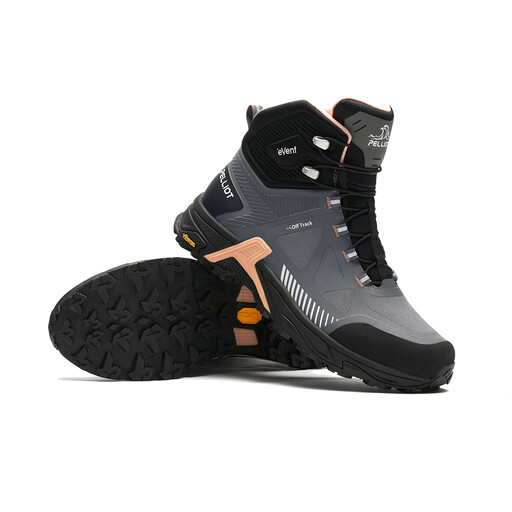
Why this product suits this profile: The high shaft, waterproof membrane and stated EU size 37 make these boots a versatile choice for beginners looking for footwear for woodland trails, camping and changeable weather.
The product details specify the material, membrane, toe protection, sole and exact foot lengths, rather than relying solely on generic outdoor claims.
Abrasion-resistant synthetic material, a protective toe cap and a one-handed quick-lacing system.
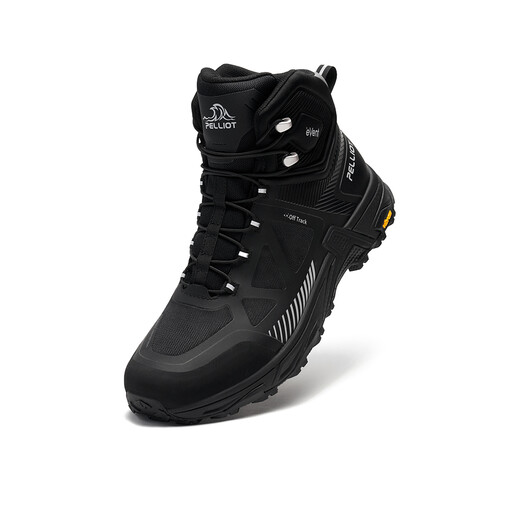
Why this product suits this profile: This men’s model is for walkers who value shaft stability, weather protection and adjustable lacing for trekking, travel and camping.
The fit can be adjusted using the quick-lacing system and cord lock, while the size guide also gives foot lengths in millimetres.
Men’s sizes EU 39 to 45 according to the size guide, an abrasion-resistant upper and a treaded rubber sole.
Why this product suits this profile: This model may suit women who often move between walking trails, campsites and unpaved routes while travelling, and prefer a high shaft.
The care instructions advise against machine washing and direct heat, helping you care for the stated weather protection in a way that’s suitable for the materials.
High shaft, waterproof membrane and treaded sole; the stated foot length for EU 39 is 245 millimetres.
How long waterproof hiking boots last depends on the terrain, how often you wear them, your body weight, how you care for them and how you store them. It wouldn’t be reliable to give a general mileage figure. Check regularly:
After a wet walk, let your boots dry at room temperature. Newspaper can help absorb moisture, while radiators, hairdryers and direct sunlight may damage the materials and adhesives. To help ensure a good fit, wear the boots in with the socks you plan to use before setting off on a long walk.
We’ve put together a complete, regularly updated list of products that meet these strict selection criteria and fully comply with the safety regulations in force in the EU.
No. Lower-cut outdoor shoes may be enough for easy routes and short walks. High-cut hiking boots are particularly useful if you want extra protection from stones, twigs or dirt. The added height can affect both freedom of movement and weight.
Your heel should move as little as possible when you walk. When trying the boots on facing downhill, leave a little room in front of your toes so they don’t hit the front. Try on both boots with walking socks, and measure your feet in the late afternoon if possible, as foot size can vary during the day.
As well as the purchase price, factor in care products, insoles, replacement laces and how long you’ll actually use the boots. A well-fitting pair that’s properly cared for may work out cheaper than a bargain that needs replacing because it rubs, lacks support or wears out quickly.