
Lieferung heute & morgen

Qualitätsgarantie

Willkommens-Angebote freischalten: KOSTENLOSE Lieferung | Bis zu 80 % RABATT | Kostenlose 30-Tage-JoyPlus-Testphase
App herunterladen
A high-quality mattress is an investment in good sleep and well-being. But everyday mishaps like spilled drinks, sweat, incontinence, or pet accidents can quickly ruin this investment. A waterproof mattress protector seems like the logical solution. However, many products on the market suffer from flaws that only become apparent after purchase. Before you make a decision, you should be aware of the three most common pitfalls that lead to frustration and unnecessary expense.
To avoid these problems, you should base your choice on objective criteria. Pay attention to the following three key parameters to find a durable and functional product.
The functionality of a waterproof protector depends on the combination of its surface material and the underlying membrane.
How the protector is secured to the mattress determines your daily comfort and its protective effectiveness.
A mattress protector is a hygiene product. Therefore, ease of care is not a luxury but a necessity. A high-quality protector should be machine washable at a minimum of 60°C to ensure hygienic cleaning. Also, check if the product is dryer-safe (usually at a low temperature). This significantly shortens the drying time and ensures the protector is ready for use again quickly—a key factor in family life or care settings.
Based on these criteria, we have identified several products that offer well-designed solutions for specific user profiles.
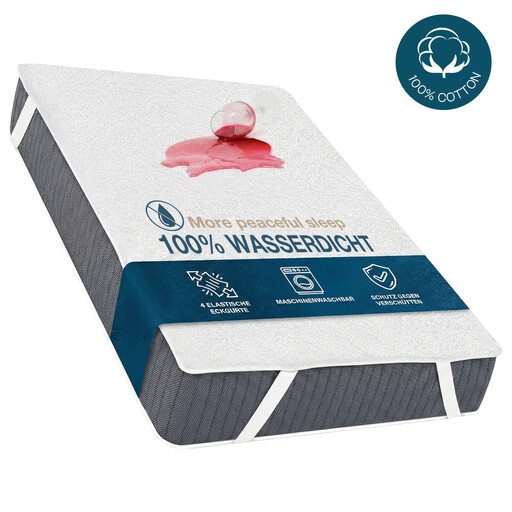
Why it's a great fit: Ideal for daily family life, where quick changes and hygienic cleanliness are essential. The pure cotton surface is soft on the skin, and its washability at up to 60°C ensures the necessary hygiene after little accidents.
The breathable membrane under the cotton prevents excessive sweating. Clear care instructions (washable up to 60°C) ensure the protective function is maintained even with hygienically necessary wash cycles.
A combination of natural material (100% cotton) and a high washing temperature for optimal hygiene.
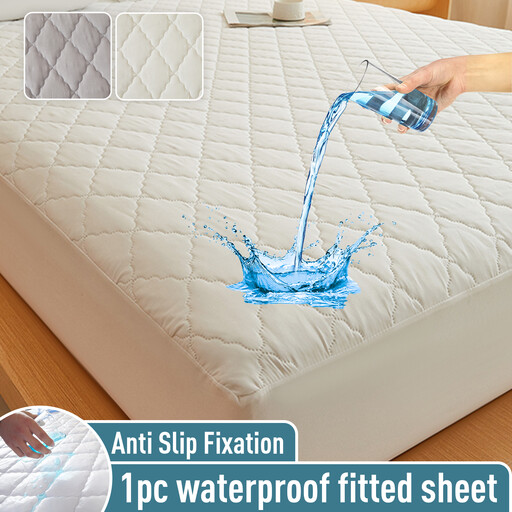
Why it's a great fit: When absolute reliability and a secure fit are critical. The fitted-sheet style with a 30cm deep pocket fits even high mattresses and prevents any slipping, which is essential in care settings or for heavy incontinence.
The fitted sheet design completely solves the problem of slipping. The quilted surface provides extra durability for frequent washing without compromising the waterproof function.
Maximum hold thanks to the fitted-sheet style with a deep pocket, ideal for demanding use.
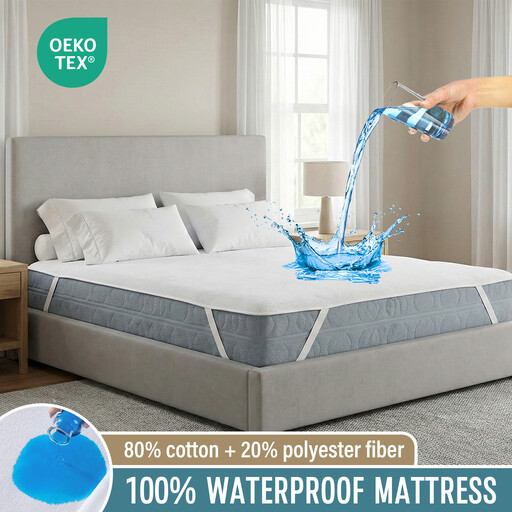
Why it's a great fit: A solid and cost-effective solution for general mattress protection against sweat and minor spills. The simple corner-strap fastening is practical and sufficient for most standard situations.
This model uses a waterproof and breathable TPU film, thus avoiding the heat build-up of a simple plastic cover. It provides essential protective functions without costly extras.
Functional and breathable basic protection that offers excellent value for money.
We have compiled a complete, up-to-date list of products that fully meet these strict selection criteria and all relevant safety regulations.
For general use to protect against sweat and dust, it is recommended to wash the mattress protector every one to two months. In cases of allergies, after an illness, or if any liquid has been spilled on it, it should be cleaned immediately. Always follow the washing instructions on the label; typically, 40°C or 60°C is recommended.
Older or very basic models with a rigid plastic coating can cause a rustling sound with movement. However, modern, higher-quality protectors use flexible and soft materials like TPU for the waterproof membrane. These are specifically designed to be quiet ("rustle-free") and not disturb your sleep.
A mattress protector lies between you and the mattress and can slightly alter its properties. However, a good, breathable protector is designed to minimally restrict air circulation. It allows water vapour to pass through, which ensures a dry sleeping climate, and does not affect the supportive function of the mattress. The protection against moisture, which significantly extends the life of the mattress, far outweighs this minimal impact.