
Lieferung heute & morgen

Qualitätsgarantie

Willkommens-Angebote freischalten: KOSTENLOSE Lieferung | Bis zu 80 % RABATT | Kostenlose 30-Tage-JoyPlus-Testphase
App herunterladen
A high-quality mattress is an investment in your sleep and well-being. To protect this investment for the long term, a waterproof mattress protector is a smart addition. However, the market is flooded with products whose features often overpromise and underdeliver. Many buyers only realise after a few weeks that their new protective cover creates more problems than it solves.
To help you avoid a bad purchase, we'll show you the three most common pitfalls and what you should look for instead:
An effective protective mattress cover must do more than just repel liquids. It should maintain sleep comfort, be hygienic, and stay securely in place.
To avoid the problems mentioned above, you should check three key product features before buying. These determine whether a waterproof mattress pad also meets your requirements for comfort and hygiene.
The waterproof function is achieved by a special membrane on the underside of the protector. There are qualitative differences here that directly affect the sleep climate.
Therefore, specifically look for a breathable PU membrane to combine comfort and protection.
A shifting cover is ineffective and annoying. The type of fastening is crucial for a reliable fit.
Check the maximum mattress depth (pocket depth) for which the protector is designed to ensure an optimal fit.
The care instructions are crucial, especially for allergy sufferers, families with children, or when used as a washable incontinence pad. Washability at at least 60°C is necessary to reliably kill dust mites, bacteria, and germs. Products that can only be washed at 40°C do not offer sufficient hygienic safety. Also, check if the protector is dryer-safe, which significantly simplifies daily handling.
Based on the criteria above, we have compiled a selection of products suitable for different user profiles and their specific requirements.
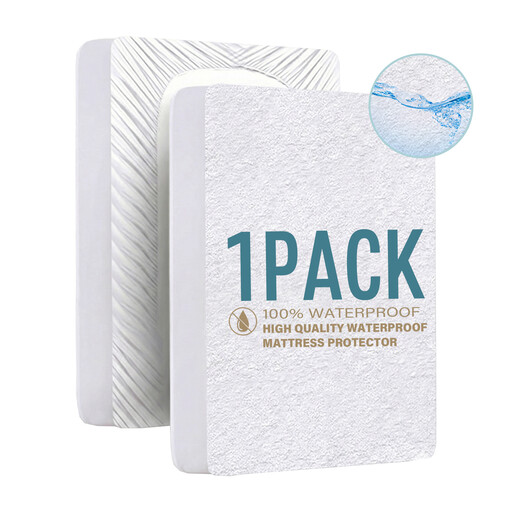
Why This Fits Their Persona: The robust polyester material reliably repels liquids and is easy to clean. The combination of a deep fit for mattresses up to 30 cm and corner straps ensures a secure hold, even with restless sleepers or playful pets.
The breathable barrier prevents excessive sweating (the "Plastic Bag" Trap), and the secure fastening prevents slippage, a common problem with simpler covers.
Offers a deep fit for tall mattresses and is machine washable, making it easy to care for in a hectic family life.
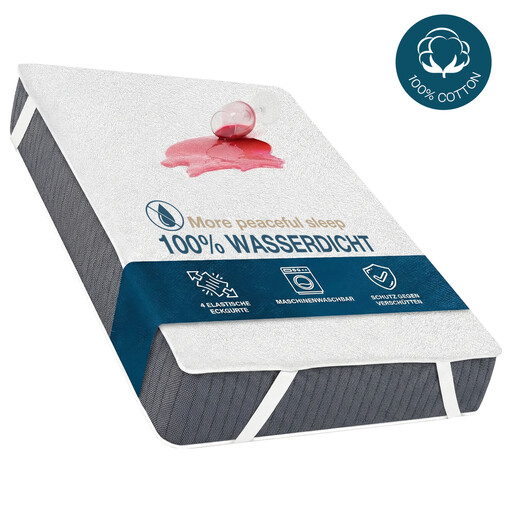
Why This Fits Their Persona: The 100% cotton terry surface is particularly skin-friendly, absorbent, and soft. Crucial for this profile is its ability to be washed at up to 60°C, which effectively reduces dust mites and bacteria.
Solves the Hygiene Trap as it can be washed at 60°C. The cotton surface also prevents the clammy feeling of a pure plastic membrane and ensures a pleasant feel against the skin.
Combines skin-friendly cotton with hygienic washability at 60°C. The ultra-thin construction is also low-noise.
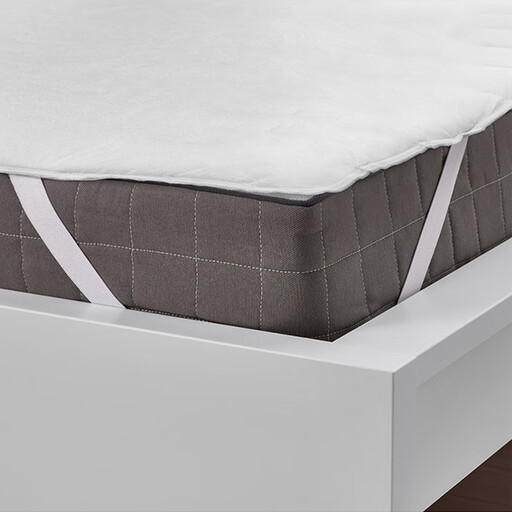
Why This Fits Their Persona: Specifically designed for the common double bed size of 180x200 cm. The four corner elastics allow for quick fitting and removal without having to lift the entire mattress, which is especially practical for large, heavy mattresses.
Offers a simple and quick solution for large mattresses and bypasses the Slippage Trap with strong elastic bands that securely fix the protector at the corners.
Practical handling for large mattress sizes and suitable for mattress depths up to 30 cm. The corner-only attachment makes changing it significantly easier.
We have compiled a complete, up-to-date list of products that fully meet these strict selection criteria and UK safety regulations.
The washing frequency depends on its use. For general use, it is recommended to wash the protector every one to two months. For allergy sufferers, those who sweat heavily at night, or for incontinence protection, it should be washed weekly or more often as needed to ensure optimal hygiene.
Modern mattress protectors with a high-quality PU membrane are generally very quiet or even silent. The annoying crinkling sound is a problem with older models that have a PVC coating. Look for products with a soft surface (e.g., cotton or terry cloth) and a flexible membrane to minimise noise.
A well-designed, thin mattress protector should not noticeably change the feel of the mattress. Thick, padded covers, on the other hand, can influence the feel and alter the supportive properties of the mattress. If you want to maintain the original feel of your mattress, choose the thinnest possible protective mattress cover.