
Lieferung heute & morgen

Qualitätsgarantie

Willkommens-Angebote freischalten: KOSTENLOSE Lieferung | Bis zu 80 % RABATT | Kostenlose 30-Tage-JoyPlus-Testphase
App herunterladen
As a Joybuy Product Recommendation Officer, I see motorcyclists searching for the ideal luggage solution every day. For touring riders and all-weather commuters, a reliable, completely waterproof tail bag isn't a luxury—it's a necessity. However, the market is flooded with products whose marketing promises often don't hold up in practice. Before you invest, it's crucial to understand the common pitfalls that lead to soaked luggage and frustration.
Many well-intentioned purchases end up as costly mistakes. Pay close attention to these three points to avoid disappointment:
To avoid these pitfalls, focus on the technical features that define a high-quality motorcycle tail bag.
The material is the first line of defence against the elements. Look for bags made from high-frequency welded PVC (Polyvinyl Chloride) or TPU (Thermoplastic Polyurethane). These materials are inherently waterproof and extremely durable.
The closure is just as critical. A conventional zipper is almost never 100% sealed. The most reliable solution is a roll-top closure. This involves folding the bag's opening over several times and securing it with buckles. This principle, known from the classic motorcycle luggage roll or motorcycle dry bag, creates a water- and dust-proof seal. A PVC roll-top bag of this type reliably protects its contents.
Volume is measured in litres. For example, a 66L motorcycle bag offers enough space for a multi-day tour, while 40-50 litres are often sufficient for weekend trips or daily commuting.
However, more important than sheer volume is how the bag is attached to the motorcycle. Look for the following features:
Safety is non-negotiable. Large, often black tail bags can reduce the motorcycle's visibility. Integrated reflective elements are therefore an important feature for being seen better in low-light conditions or at night. Additional external pockets (if waterproof) or attachment options for more luggage can further increase its utility.
Based on the criteria above, we have identified products suitable for the specific needs of motorcyclists in the UK and Europe.
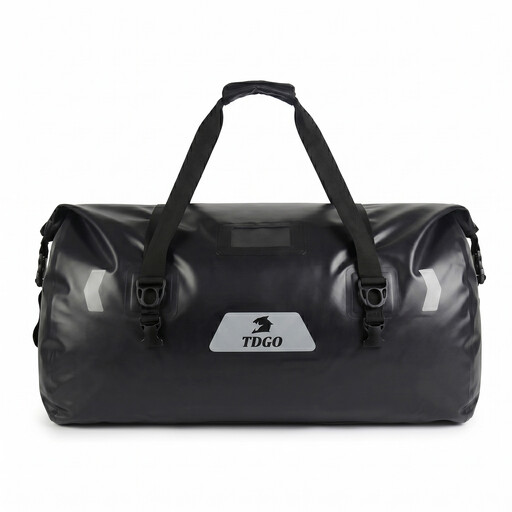
Why this model is a good fit: For riders planning multi-day or week-long tours who need maximum, reliably dry storage space. The large 66-litre volume easily accommodates clothing, camping gear, and supplies.
The construction of high-strength PVC mesh fabric with a roll-top closure ensures true waterproofness, not just water resistance. The four-strap system ensures a stable attachment, even when fully loaded, preventing dangerous shifting.
Very large volume (66L) combined with a high load capacity of up to 200 kg (according to the manufacturer) and reflective elements for increased safety.
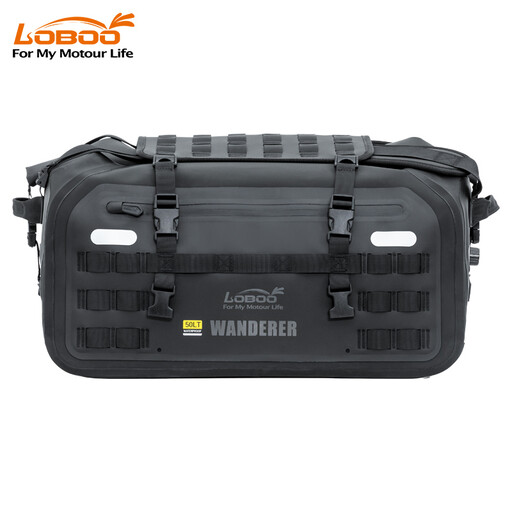
Why this model is a good fit: Ideal for riders looking for a versatile bag for the daily commute, weekend trips, or off-road adventures. The 50L capacity is a good compromise between size and manageability. The backpack straps allow for easy transport off the motorcycle.
The TPU material is not only waterproof but also particularly abrasion-resistant and flexible in cold temperatures. The roll-top closure guarantees dry contents. The bag is designed as a robust motorcycle saddlebag or tail bag, not just a repurposed backpack.
High versatility thanks to the included backpack straps, which transform the bag into a fully-fledged backpack. This makes it practical for destinations where you need to carry your luggage with you.
We have compiled a complete, up-to-date list of products that fully meet these strict selection criteria and safety regulations.
Start by positioning the bag centrally on the pillion seat or luggage rack. Run the mounting straps under the seat or through sturdy frame points. Cross the straps for maximum stability (e.g., the front left strap to the rear right attachment point). Tighten all straps firmly and check for a secure fit before every ride. Ensure that no straps are hanging loose or could come near hot (exhaust) or moving parts (wheel, chain).
Both materials are excellent for waterproof bags but have different properties. PVC is extremely robust, durable, and more cost-effective. It is the tried-and-tested choice for heavy-duty luggage rolls. TPU is a more modern material that is more flexible (especially in cold temperatures), lighter, and even more abrasion-resistant. It is also considered more environmentally friendly to produce but is typically more expensive.
Care is straightforward. After a dirty ride, simply clean the bag with a damp cloth and clean water. Do not use harsh detergents or brushes, as they could damage the waterproof coating. Store the bag in a cool, dry place and ensure it is completely dry to prevent mould or mildew. Avoid transporting sharp or pointed objects in the bag without protection.