
Lieferung heute & morgen

Qualitätsgarantie

Willkommens-Angebote freischalten: KOSTENLOSE Lieferung | Bis zu 80 % RABATT | Kostenlose 30-Tage-JoyPlus-Testphase
App herunterladen
A waterproof outdoor jacket should keep out the rain, protect against the wind and prevent excess moisture from building up inside during activity. In practice, unclear material specifications, poorly designed fits and missing care information often lead to disappointing purchases. This applies just as much to a men’s outdoor jacket as to a unisex rain jacket or a trekking jacket.
Before buying, it is therefore worth taking a close look at the technical specifications and intended use.
Water-repellent surfaces can initially allow light drizzle to bead off. However, this property may not be enough during prolonged rain, when pressure is applied by a rucksack or in strong winds. A waterproof outdoor jacket should therefore provide clear information about its membrane, hydrostatic head and whether the seams are welded or taped.
If this information is missing altogether, it remains unclear how the jacket will perform in several hours of rain.
A breathable jacket does not automatically prevent every feeling of dampness. Its actual performance depends, among other things, on the membrane, ventilation options, the clothing worn underneath and your level of physical activity. When hiking or cycling to work, underarm zips, an adjustable hood and enough room for an additional layer are all practically important.
A lightweight rain jacket can fit close to the body. With a 3-in-1 jacket or a waterproof winter jacket, however, there must also be room for a jumper or fleece jacket underneath. Sleeves that are too tight restrict movement and can reduce comfort when carrying a rucksack. Size charts should therefore be compared with your own measurements and the layers you plan to wear underneath.
The hydrostatic head is measured in millimetres and describes the pressure a material can withstand in a test procedure. A higher figure may indicate a stronger barrier, but it does not replace checking the seams, zips and fastenings.
For everyday use, a lightweight rain construction is often sufficient. If you are looking for a camping jacket or windproof hiking jacket for longer trips, you should also look for:
With a waterproof jacket for water sports, a compact pack size or an included storage bag may also be relevant.
Water vapour permeability is often stated as an MVTR value in grams per square metre over 24 hours. This figure is only meaningful under the relevant test conditions. In practice, what matters is whether the jacket allows sufficient air circulation while you are moving.
A membrane with ventilation openings may be more suitable for trekking, travelling and commuting than a completely sealed construction. With a 3-in-1 jacket, it should also be clear whether the outer jacket and inner jacket can be worn separately.
For hard-wearing outdoor clothing, the outer material, zip quality and durability around the shoulders and pockets all matter. If you frequently carry a rucksack, walk on rocky paths or go camping, look for information about abrasion and tear resistance.
Care also affects the product’s lifespan. Zips should be closed before washing. Bleach, high temperatures and fabric softener can damage coatings or membranes. Always follow the care instructions for the specific product.
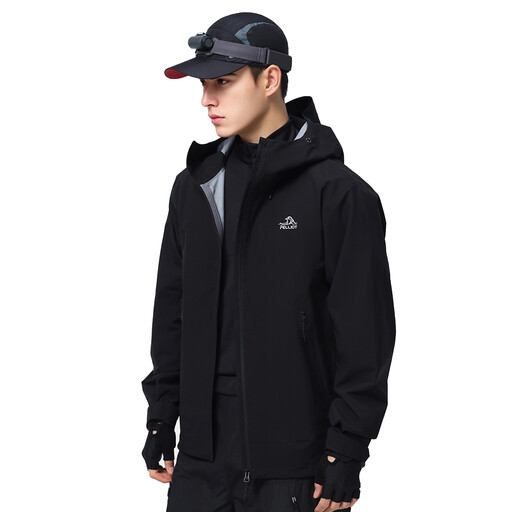
Why this product suits this profile: According to the product information, this unisex rain jacket is designed for water sports and changeable showers. The stated storage bag may be useful for travelling, day trips or carrying in a rucksack.
The product name specifically refers to waterproofing and storage. Before buying, you should still check the size details and intended use.
Unisex design in size M, black colour option and stated dry-bag storage.
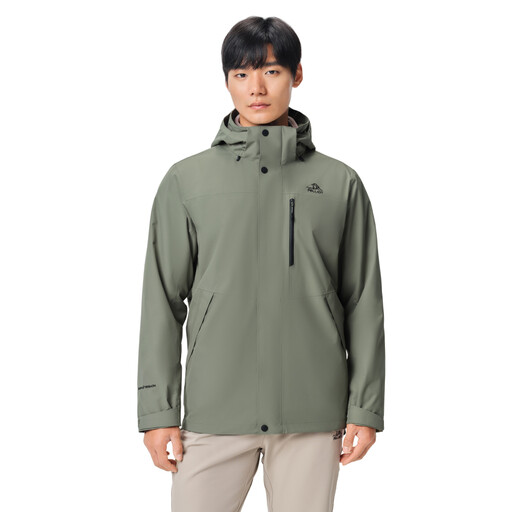
Why this product suits this profile: According to the product specifications, this trekking jacket combines an outer construction with a 35.900 mm hydrostatic head, a stated MVTR of 16.000 g/(m²·24 h) and an inner layer for colder conditions.
The product description gives specific measurements rather than relying solely on general terms such as “stormproof”. These figures should be understood as the manufacturer’s specifications and compared with your intended use.
Stated hydrostatic head of 35.900 mm H₂O, MVTR of 16.000 g/(m²·24 h) and abrasion resistance of more than 40.000 cycles.
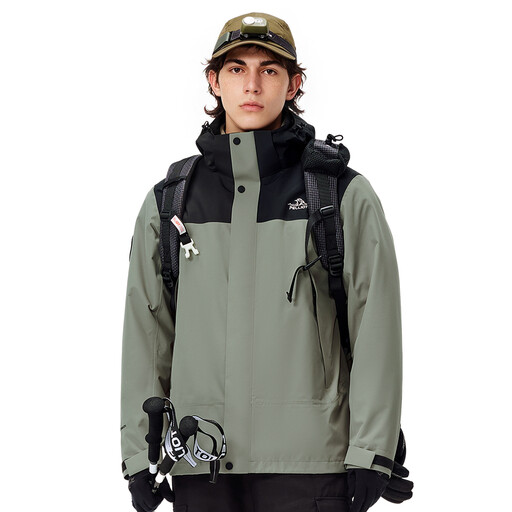
Why this product suits this profile: The 3-in-1 jacket is designed for users who want to switch between the outer jacket, inner layer and combined design when camping, trekking or going about their everyday lives.
The three ways to wear it reduce the need for several separate jackets. The temperature ranges in the product description are guidelines and do not replace individual clothing planning.
According to the product specifications, the outer and inner jackets can be worn separately. The product also features a hard-wearing outer layer and taped seams.
We have put together a complete, regularly updated list of products that fully meet these strict selection criteria and the safety regulations applicable in the EU.
The lifespan of a jacket depends on friction, washing frequency, exposure to UV rays and storage. After heavy rain, a jacket should be allowed to dry completely, but it should not be left on a radiator for extended periods. Dirt can affect the performance of the outer coating. For this reason, the product’s specific washing instructions are more important than general claims about durability.
It is also worth taking a closer look when a fleece jacket is described as waterproof. The fleece or thermal layer is often responsible for warmth, while the outer layer provides weather protection. Both functions may not be available at the same time in every wearing configuration.
For short journeys and light rain, basic water-repellent materials may be sufficient. For hiking, camping and longer periods outdoors, information about hydrostatic head, seams and zip protection is useful. The required features depend on the duration, amount of rainfall and the load carried in your rucksack.
A rain jacket generally focuses on protection from rain and wind. A 3-in-1 jacket consists of an outer layer and a separate inner layer, which can be worn individually or together. This makes it more versatile, although it may also be heavier and take up more space when packed.
The jacket should allow freedom of movement around the shoulders and arms without being unnecessarily loose. With a winter jacket or 3-in-1 jacket, there should be enough room for the jumper you plan to wear underneath. The hood, hem and cuffs should be adjustable so that rain and cold air cannot easily get in.