
Lieferung heute & morgen

Qualitätsgarantie

Willkommens-Angebote freischalten: KOSTENLOSE Lieferung | Bis zu 80 % RABATT | Kostenlose 30-Tage-JoyPlus-Testphase
App herunterladen
A waterproof soccer ball is a practical choice for families, recreational players and clubs when playing on wet grass, artificial turf or at the beach. However, not every model labelled “waterproof” is automatically suitable for every age group or playing surface. The key factors are the material, size, valve and included accessories.
Three common and avoidable pitfalls should be considered when choosing:
Ball size affects weight, circumference and handling. As a practical guide, the models presented here correspond to the following categories:
For a youth soccer ball for children aged 8 to 12, size 4 is therefore usually the most obvious choice. For younger children, a size 3 soccer ball can make controlled dribbling, passing and stopping easier. Clubs should also check during group training that the selected size matches their particular training concept.
According to the product description, the LONGSAIL models feature a seamless shell made from a foam-rubber composite material. This construction is designed to prevent the surface from absorbing water, swelling or becoming permanently heavier when it comes into contact with moisture. This makes the ball an interesting option for grass, artificial turf and damp recreational surfaces.
A rubber soccer ball may also have a slightly more forgiving surface than a traditional hard ball. This can feel comfortable for beginners and children during their first contact with the ball. However, official matches are governed by the requirements of the relevant organiser or association. The products described here are primarily intended as training and recreational soccer balls.
When using the ball at the beach, bear in mind that sand, salt and sharp stones can also put durable materials under strain. After playing, clean the ball with a damp cloth and store it in a dry place.
According to the product information, the LONGSAIL balls feature a dual-layer valve system. The stated air-loss range is below 1 to 3 percent within 48 hours. This figure comes from the product description and should not be interpreted as an independent comparative measurement.
For size 4, the recommended pressure is stated as 7 to 9 PSI. No specific PSI range is provided in the available information for size 3. The ball should therefore not be overinflated by feel alone; the instructions on the product or packaging should be treated as authoritative.
According to the product information, the variants presented include:
A soccer ball supplied with an air pump and needle is especially convenient for families and coaches. The storage bag protects the ball during transport and helps keep it separate from shoes or wet clothing after training.
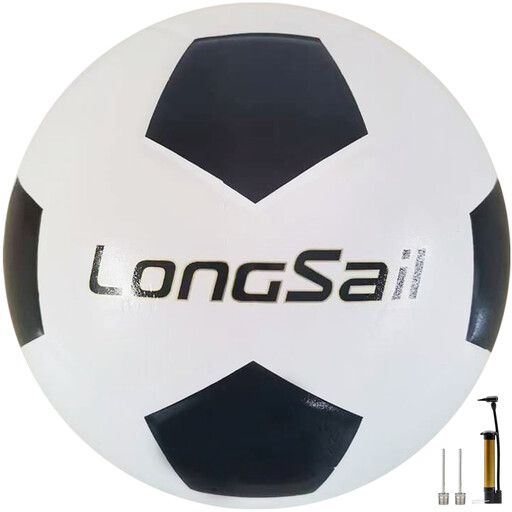
Why it fits the profile: For children under 8 and introductory practice on grass, artificial turf or in the garden, this size offers a manageable circumference.
The product information specifies a seamless, water-repellent foam-rubber surface, along with a pump, needle and mesh bag included in the set.
Size 3 for younger children; according to the product information, a seamless construction and complete accessory set.
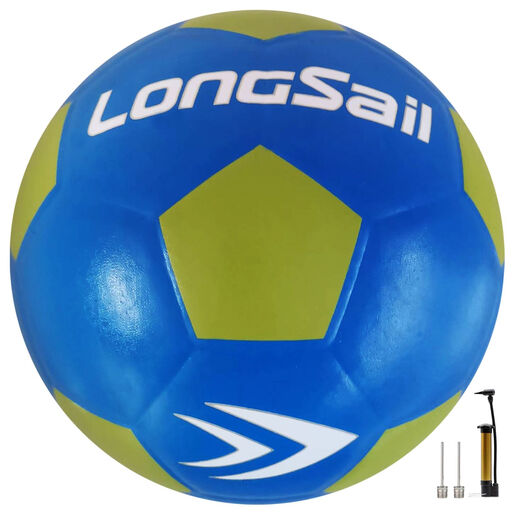
Why it fits the profile: According to the product information, size 4 is intended for youth players aged 8 to 12 and is suitable for regular practice sessions.
The size and recommended pressure range of 7 to 9 PSI are specified in the product information. This makes preparation easier to plan.
Size 4 for youth players; pump, needle and storage bag included according to the product description.
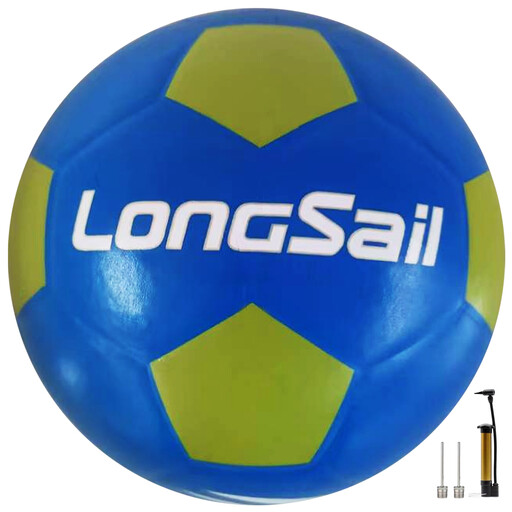
Why it fits the profile: The highly visible colour combination can be practical for recreational outdoor games. The size is intended for younger children.
According to the product description, the seamless surface is designed for damp areas and beach use. Cleaning is still necessary after playing.
Water-repellent foam-rubber shell according to the supplier; set with pump, needle and mesh bag.
Even a durable soccer ball requires proper care. After playing on wet grass or at the beach, remove dirt and sand from the surface with a damp cloth. The ball should then be stored in a cool, dry place. Sharp objects, radiators and direct exposure to extreme heat can place strain on the material and bladder.
Before inflating the ball, lightly moisten the needle. This reduces stress on the valve. The ball should not be stored permanently at excessive pressure or used on unsuitable surfaces with very sharp edges.
We have put together a current selection of products that can be compared based on size, material, accessories and intended use.
According to the product information, the LONGSAIL models presented feature a seamless, water-repellent shell. This is designed to reduce water absorption and swelling. After use in the rain, the ball should still be wiped clean and stored dry. “Waterproof” also does not replace an inspection for damage to the valve or surface.
For children under 8, these models specify a size 3 soccer ball. Size 4 soccer balls are intended for youths aged 8 to 12. For club or league training, the relevant requirements of the club or association should also be observed.
This depends on usage, temperature, storage conditions and the condition of the valve. According to the product description, the LONGSAIL models are stated to lose less than 1 to 3 percent of air within 48 hours. The pressure should be checked briefly before every training session. A set with an air pump and needle makes this regular check easier.