
Lieferung heute & morgen

Qualitätsgarantie

Willkommens-Angebote freischalten: KOSTENLOSE Lieferung | Bis zu 80 % RABATT | Kostenlose 30-Tage-JoyPlus-Testphase
App herunterladen
A waterproof 280 g/m² tarpaulin is designed to protect garden furniture, timber, vehicles or other items from rain, snow, dust and sunlight. In practice, however, the weight per square metre alone doesn’t determine suitability. Material, workmanship, size and the way you fasten it must match the intended use.
280 g/m² describes the weight of the tarpaulin material per square metre. This value can indicate a relatively dense PE fabric and a durable coating. It does not automatically tell you how well the eyelets, hems or corners are finished. Strong winds exert high tensile forces in these areas. Reinforced edges and corners are therefore just as important as the weight.
Even a weatherproof cover can be problematic if water collects in hollows. The extra weight stresses both the fabric and the fixings. For a waterproof tarpaulin you should therefore create a slight slope so that rainwater can run off. The cover should not lie flat on sensitive items for long periods.
A 4x4 m tarpaulin provides a square area of 16 m². A 5x6 m tarpaulin covers 30 m². However, your choice shouldn’t be based only on the footprint of the item. Allow for overhangs at the sides, the height of garden furniture or wood stacks, and space for secure fastening. Too little material often results in eyelets being under constant tension or edges being left exposed.
A PE tarpaulin with eyelets is usually made from polyethylene fabric with coating on both sides. At 280 g/m², it’s a comparatively substantial material specification within common tarpaulin variants. Also look for specific information on:
Even a tear-resistant tarpaulin is still vulnerable to sharp edges, chafing points and sustained high tensile loads. If needed, place a soft layer under protruding corners.
Eyelets spaced at around 50 cm allow more even fastening with ropes, tensioners or suitable hooks. It’s crucial that the eyelets aren’t set in a thin single layer of fabric. Reinforced hems, integrated PP ropes and reinforced corners help distribute forces more effectively.
Fasten the cover with a little give. Mounting it too tightly can stress the material in windy conditions. In storms or strong gusts, a loosely fitted cover should be retensioned or temporarily removed.
For a waterproof cover for garden furniture, a slight overhang is useful without the cover dragging on the ground. When covering wood, allow for air circulation so that moisture doesn’t build up unnecessarily beneath the cover. A car cover or lorry tarpaulin needs secure fixing points and must not be pulled across dirty, sharp-edged surfaces.
Similar principles apply to pools, boats, trailers and trampolines: Dimensions must be sufficient, water should be able to run off and the fastening must suit the shape. A tarpaulin is generally not a permanent structure and does not replace a purpose-made pool or vehicle cover if such requirements exist.

Why this product suits the profile: The 3 x 4 m size is suitable for manageable covering tasks in the garden, when camping, or for smaller vehicles and wood stacks. According to the product information, the eyelets are approximately 50 cm apart.
The specified eyelet spacing makes even fastening easier. Reinforced edges and corners reduce the strain on individual fixing points.
PE fabric, waterproof construction, UV-resistant properties and foldable storage, as per the product description.

Why this product suits the profile: The square 4 x 4 m format is suitable for garden furniture sets, medium-sized vehicles, wood stores or temporary weather protection with equal side lengths.
Rust-resistant eyelets every 50 cm and reinforced corners address typical weak points at fixing locations.
280 g/m² PE material, reinforced edges, UV resistance and a stated weight of around 4.48 kg.
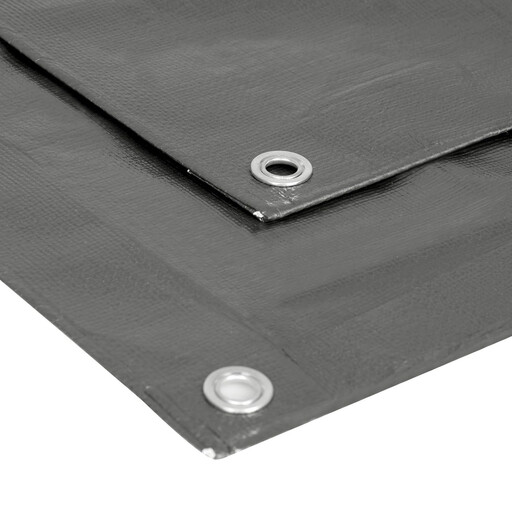
Why this product suits the profile: 5 x 6 m offers ample area for larger wood stacks, boats, trailers, pools, agricultural materials or multiple pieces of garden furniture.
Continuous reinforcements and regular eyelet spacing help you tension the larger area in a controlled way. In windy conditions, additional securing is required.
280 g/m² new PE material, 50 cm eyelet spacing, reinforced corners and several available sizes according to the product information.
We’ve compiled a comprehensive, regularly updated list of products that fully meet these stringent selection criteria and comply with EU safety regulations.
Before covering, the surface should be clean and dry. Tension the tarpaulin so that rainwater can run off without excessively stressing the eyelets. Suitable options include ropes, tensioners or elastic fasteners, provided they’re rated for the relevant load.
For maintenance, water and a mild detergent are sufficient for many PE tarpaulins. Allow the cover to dry completely before folding. Store it in a dry, cool place and protect it as far as possible from direct sunlight. Open flames, hot exhaust parts and heat sources must be avoided. The tarpaulin is also not a toy, nor is it a fall or safety barrier.
PE tarpaulins with 280 g/m² can be intended for seasonal protection against rain, snow and frost. However, snow should not be left lying on the tarpaulin for long periods. A suitable slope and stable fastening are important. In storms or exceptional weather, it’s advisable to remove the cover.
Distribute tensile force across multiple eyelets and use suitable ropes or tensioning fasteners. Don’t pull only at two opposite points. The tarpaulin should be tight enough to prevent slipping, but not under constant maximum tension. Avoid chafing points on walls, branches or metal edges.
A fixed lifespan cannot be stated reliably without details on use, sun exposure, wind, care and storage. UV-resistant materials can limit the impact of sunlight, but they are not impervious. Regularly checking the fabric, seams, hems and eyelets will show when a cover should be replaced.