
Lieferung heute & morgen

Qualitätsgarantie

Willkommens-Angebote freischalten: KOSTENLOSE Lieferung | Bis zu 80 % RABATT | Kostenlose 30-Tage-JoyPlus-Testphase
App herunterladen
A waterproof tool bag should protect your tools from moisture, keep them organised and make them easier to carry day to day. For electricians, fitters, service engineers and serious DIYers, it’s not just the material specifications that matter. Details such as the base, the opening and the strength of the carry handles can determine whether a bag remains practical in the long term.
The label alone doesn’t explain the conditions in which the bag offers protection. Look for specific details about the fabric, seams, zip and base. For example, a water-repellent outer material won’t necessarily prevent water from getting in through the seams or fastening.
If you’re using the bag outdoors, it’s also important not to leave it out in the rain for long periods. Even a tool bag described as waterproof should be stored somewhere dry after use.
A large tool bag isn’t automatically practical. Without internal and external pockets, screwdrivers, pliers and measuring instruments end up piled on top of one another. This can slow you down at work and damage delicate items.
A tool bag with plenty of pockets should therefore suit the tools you own. For small to medium-sized tools, several narrow tool pockets are often more useful than a completely open main compartment.
A fully loaded bag can be much heavier than you expect when you buy it. Thin handles or an unpadded shoulder strap can make it harder to carry every day. For longer journeys, a padded carry handle, an adjustable shoulder strap and a sturdy base are all important factors to consider.
On a 600D polyester tool bag, “600D” refers to the density of the fabric threads. However, this figure alone doesn’t tell you everything about the bag’s quality. Buyers should also look for a double layer of fabric, neat stitching and sturdy attachment points.
A heavy-duty tool bag should have reinforcements in areas that take the most strain. These include:
A firm base makes the bag easier to set down and protects its contents from contact with the ground. A hard PE base or similar reinforcement, along with plastic feet, can be useful. These features keep the bag off wet or dirty surfaces.
If you regularly work on building sites, in cellars or around vehicles, choose a bag with a sturdy, abrasion-resistant base rather than a simple fabric bag.
A tool bag with a wide opening makes it easier to see what’s inside. An integrated metal frame can help keep the opening in shape. A two-way zip makes packing and unpacking easier, provided it runs smoothly and is well made.
The right size depends on the tools you need to carry. A bag measuring around 35 × 19 × 22 cm is better suited to small and medium-sized hand tools. Larger storage bags offer more room for bulky equipment or bigger loads, but usually don’t provide the same pocket layout as a professional tool bag.
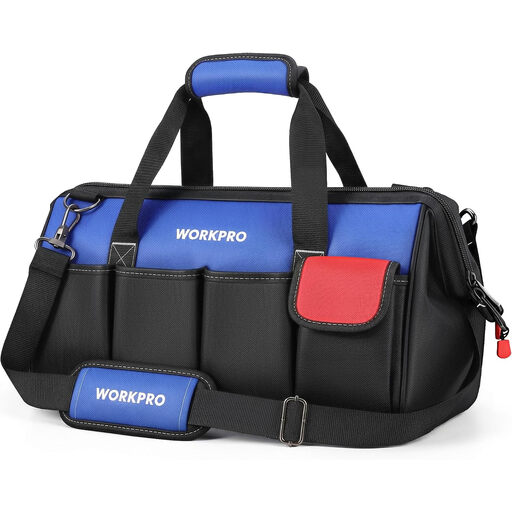
Why this product suits this user: Designed for small to medium-sized tools, this bag combines a wide opening with internal and external pockets. The adjustable shoulder strap can come in handy when travelling to customers, building sites or workshops.
The product description specifies 600D polyester, a double layer of fabric, reinforced stitching, a PE base and a two-way zip. This gives you specific details about several important aspects of the bag’s construction.
35 × 19 × 22 cm, wide opening with a metal frame, multiple pockets, padded handle and adjustable shoulder strap.
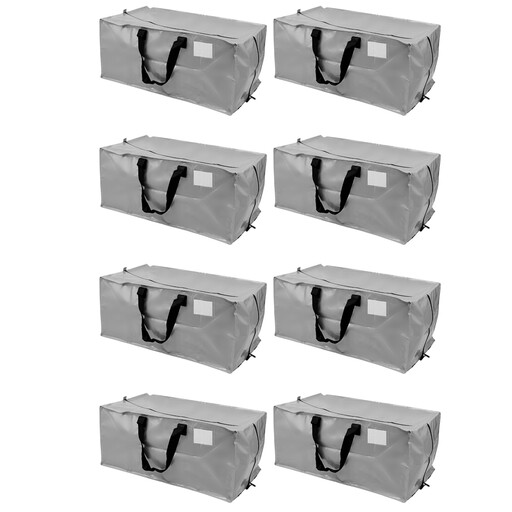
Why this product suits this user: If you mainly need to transport or store lots of larger items, this multipack offers plenty of capacity. For moving house, storing materials or occasional transport, it may be a more practical option than several small bags.
The dimensions of 73 × 34 × 37 cm are clearly stated, so you can check before buying whether you really need that much capacity. If you want to keep hand tools organised, you’ll need to add separate organisers or inserts.
Set of eight bags, extra-large size, sturdy handles, zips and rucksack-style shoulder straps.
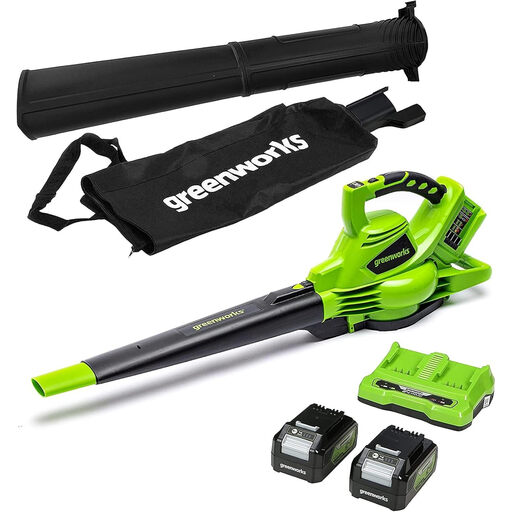
Why this product suits this user: This isn’t a tool bag, but a cordless leaf blower and vacuum with a separate collection bag. It’s therefore suited to people who need a carrying and collection solution for garden or grounds maintenance.
The package contents include a 45-litre collection bag and an adjustable shoulder strap. This makes it clear that the bag is designed for the machine and shouldn’t be mistaken for a universal tool bag.
45-litre collection bag, shoulder strap, 48-volt system with two 24-volt batteries and six speed settings.
Before placing your order, check:
We’ve put together a complete, regularly updated list of products that meet these strict selection criteria and fully comply with the safety regulations in force in the EU.
Its lifespan depends on how much you carry, how often you transport it, exposure to moisture and how well you look after it. Reinforced seams, an abrasion-resistant base and a sturdy zip can help it stand up to everyday use. Overloading the bag or storing it somewhere that’s constantly damp can put strain on the material and seams, whatever the product description says.
A shoulder strap can make the bag easier to carry, especially if you need to keep both hands free. Look for an adjustable strap with secure attachment points and enough padding for the load. For very heavy machinery, a toolbox or wheeled system may be a better choice.
A compact bag with a wide opening is often enough for hand tools and accessories. If you also need to carry measuring instruments, cables or protective equipment, check the internal dimensions and pocket layout against the tools you have. A large tool bag offers more capacity, but can become much heavier and harder to handle when full.