
Lieferung heute & morgen

Qualitätsgarantie

Willkommens-Angebote freischalten: KOSTENLOSE Lieferung | Bis zu 80 % RABATT | Kostenlose 30-Tage-JoyPlus-Testphase
App herunterladen
The introduction of weaning foods is a significant milestone for both parents and their child. However, with the abundance of products on the market, choosing the right baby food can often be a challenge. Many parents feel overwhelmed by marketing promises and a confusing variety of products. This guide will help you understand the essential criteria and avoid common pitfalls when buying baby food jars, so you can make an informed decision for your child.
Manufacturers often advertise with appealing slogans, but not all of them deliver on their promises. Watch out for these three typical pitfalls to avoid making the wrong purchase:
To make the right choice, you should focus on objective and verifiable criteria. These three parameters are crucial for the quality and suitability of baby food.
The ingredients are listed in descending order by quantity, meaning the first ingredient is the most abundant. Look for a short, understandable list without unnecessary additives. A key point is the salt content. For infants, this should be as low as possible. Many high-quality products omit added salt entirely. On the other hand, ingredients like rapeseed oil are valuable, as manufacturers state it contains alpha-linolenic acid (an omega-3 fatty acid), which is important for the development of brain and nerve cells.
The texture of the food plays a central role in the weaning plan and supports oral motor development.
When buying baby food, the EU organic logo is a reliable sign that the ingredients come from organic farming and were produced without artificial fertilisers or pesticides. Brands like HiPP often emphasise that their internal quality controls exceed legal requirements.
Every child has individual needs. Here are some product recommendations tailored to different stages and preferences.
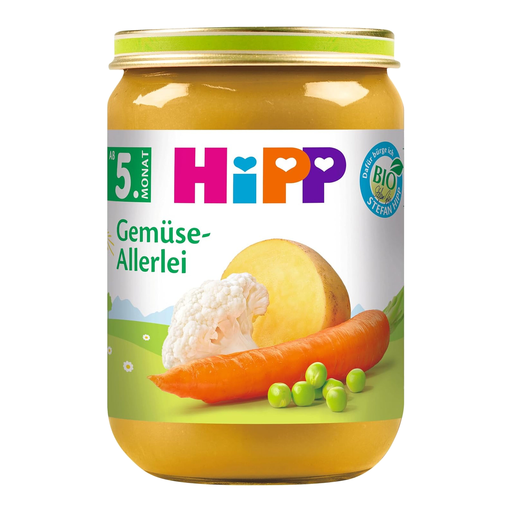
Why this product is a good fit: Ideal for starting weaning. The finely pureed consistency and mild flavour from carrots, potatoes, cauliflower, and peas make the transition from milk to puree easier.
The product contains no added salt or flavourings. The ingredients list is short and transparent, which avoids the "hidden sugar" trap.
Made with 73% organic vegetables and enriched with rapeseed oil, a source of omega-3 fatty acids.
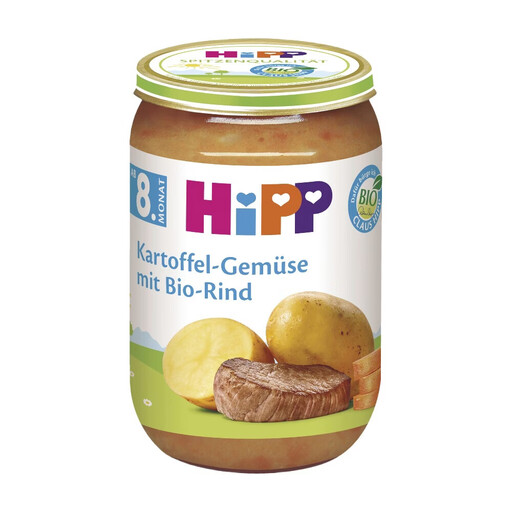
Why this product is a good fit: This Hipp Menu is a complete meal for babies who are already used to purees. It offers a balanced combination of vegetables, potatoes, and meat.
The fine lumps are perfectly tailored to the needs of babies from 8 months onwards, encouraging them to learn to chew without being overwhelming. The salt content is appropriately low for babies.
Certified organic quality (DE-?KO-001) and free from added flavourings, preservatives, and colourings.
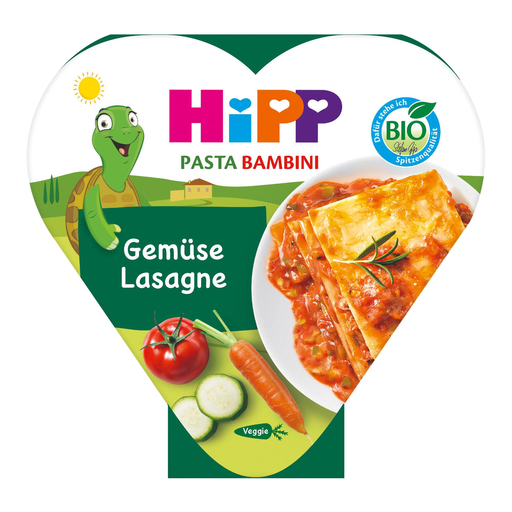
Why this product is a good fit: For toddlers who are already eating at the family table. This lasagne offers the taste of a classic dish but is adapted in its nutritional values and composition to meet the needs of children.
The salt content is dosed appropriately for children, and the ingredients are gently steam-cooked to preserve their natural flavour, rather than relying on artificial flavourings.
A complete and convenient meal of organic quality that can be heated quickly and is ideal for self-feeding from the heart-shaped bowl.
We have compiled a comprehensive, up-to-date list of products that fully meet these strict selection criteria and German regulations.
Once opened, the jar should be tightly sealed and stored in the refrigerator. According to most manufacturers, the unheated remainder should be consumed by the next day. Leftovers that have already been heated must not be reused.
Look for a short and understandable ingredients list. The main ingredient (e.g., vegetable or fruit) should be listed first. Check if added salt, sugar, flavourings, or thickeners have been omitted. Terms like "fruit juice concentrate" or "fruit sweetener" indicate added sugar.
Yes, this is a great way to add variety and create a complete meal. For example, a pure vegetable puree can be combined with a meat or fish preparation. Some manufacturers also provide specific recommendations on the packaging. Make sure that the components are suitable for the same age group.