Lieferung heute & morgen

Qualitätsgarantie

Willkommens-Angebote freischalten: KOSTENLOSE Lieferung | Bis zu 80 % RABATT | Kostenlose 30-Tage-JoyPlus-Testphase
App herunterladen
Designing an outdoor space—whether a sprawling garden, an urban terrace, or a compact balcony—is a dialogue with the seasons. It's about creating a space that retains its structure and grace not only in the warm months, but also in the cool light of autumn and the quiet chill of winter. The challenge lies in selecting objects that can withstand the elements without sacrificing aesthetic quality. A carefully chosen outdoor planter thus becomes a silent anchor, bridging the transience of nature with the permanence of thoughtful design.
The longevity of an outdoor planter is largely determined by its material and construction. While traditional materials like terracotta are charming, their porosity makes them susceptible to frost damage when water freezes and expands within their pores. Modern material compositions offer a sophisticated alternative. A planter considered frost-proof must be able to withstand repeated freeze-thaw cycles without cracking or chipping.
Material blends, often referred to as fibreglass planters, play a key role here. These are often made from a composite of clay, synthetic resin, and fibreglass. This combination mimics the tactile quality and weight of stone or ceramic, yet is significantly more robust and lightweight. Its lower porosity prevents water penetration, making the planters resistant to low temperatures. Another crucial factor is UV resistance. A UV-resistant flower pot will maintain its colour and material integrity for years, even under intense sunlight.
Beyond the material, its form is of functional importance. A large balcony planter can act as a standalone feature, creating a visual focal point and providing ample root space for small trees or perennials. A rectangular terrace planter, on the other hand, is ideal as a subtle divider to delineate different zones, such as dining and lounge areas. Functional drainage is always critical. One or more drainage holes at the bottom are essential to prevent waterlogging—the primary cause of root rot and frost damage to the vessel itself.
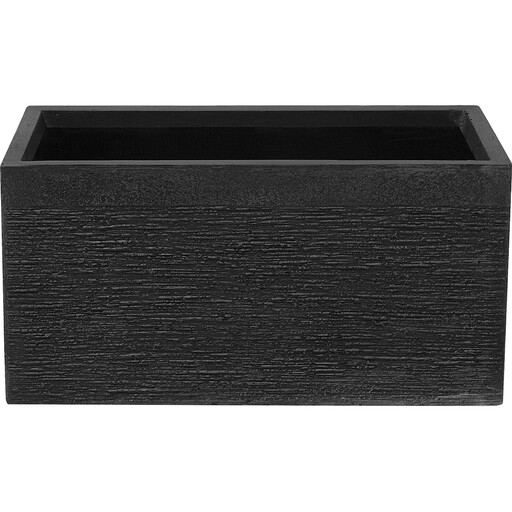
The deliberate organisation of an outdoor area begins with defining space and structure. Here, planters can take on an almost architectural function. An elongated, linear vessel like the Beliani MYRA Planter in Black serves as a clear statement. Its rectangular shape and understated colour create a neutral stage that brings the green of the plants to the forefront. Crafted from a clay-fibre blend, it combines the aesthetic of a heavy stone trough with the practical advantages of a weatherproof material. Placed on a terrace, it can draw a clean line or bring a bare wall to life.
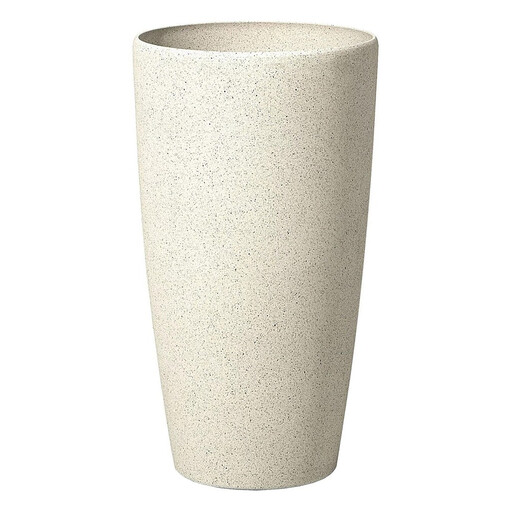
For softer contours and vertical accents, tall, round shapes are ideal. They draw the eye upward and can establish an elegant presence even in smaller spaces. The Beliani ABDERA Planter in Stone Beige is an example of this subtle elegance. Its slender silhouette and light hue blend harmoniously into natural surroundings. The material, a blend of stone, polyresin, and fibreglass, is designed for year-round outdoor use. A detail like the pre-drilled drainage hole, which can be sealed if needed, shows that form and function have been thoughtfully considered to offer a durable, low-maintenance solution.
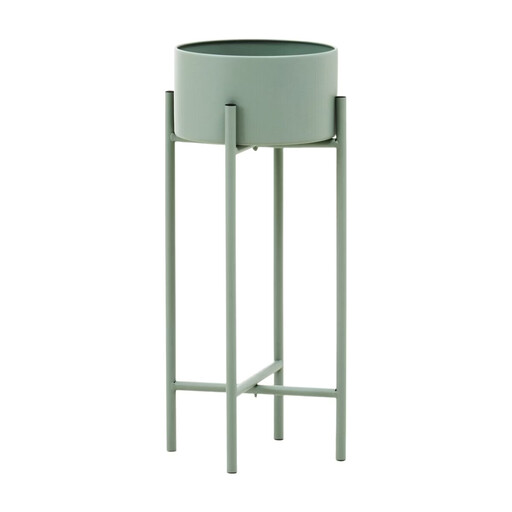
A modern interpretation of the planter elevates the plant itself, lending the arrangement a floating lightness. Models that rest on delicate stands create an interesting visual layer and simplify floor maintenance. The Trosa series from Premier Housewares takes this approach with a minimalist iron frame. The large grey Trosa standing planter combines a simple container with a crossed base, creating a contemporary and airy aesthetic. By combining different sizes, such as the smaller grey version, you can create dynamic yet cohesive groupings on a balcony or terrace.
For those wishing to explore an expanded selection of objects designed to these material standards, the complete directory for planters with legs offers further inspiration.