Students working on paper constructions
If you want to show lines, compasses and rulers step by step, you’ll need an overhead view, suitable focus and a clear live image while you draw.


For geometric constructions on paper, a document camera is the obvious choice when an overhead view is key. A standard webcam may do the job if you can position it suitably above the page, or if you also want to appear on camera. The important thing is to check that fine lines, tools and hand movements remain clear in the live image on the display you plan to use. SchuleundComputer identifies a smooth image while writing under the camera as a key factor when choosing a model.
If you want to show lines, compasses and rulers step by step, you’ll need an overhead view, suitable focus and a clear live image while you draw.
If you need space beside the sheet for a set square, compass and your hands, check that the camera’s capture area covers your entire work surface.
If you want to connect existing cameras or display the image to a group, check how the mount, computer, connections and, where necessary, power supply work together.
First, consider whether you mainly want to show your work on paper or appear in the image yourself as well. Then make sure the framing, connection and display suit your presentation set-up.
A good fit if: you already have a webcam, want to appear on camera while explaining, or can set up a suitable mount for an overhead view.
What to bear in mind: A webcam’s stated field of view for video calls doesn’t guarantee that the page and fine lines will be clear from your chosen mounting position.
A good fit if: the paper construction is the main focus and a computer will send the camera image to a display or video-conferencing app.
What to bear in mind: USB on its own doesn’t provide a direct HDMI output. Also check the capture area and the video mode you plan to use.
A good fit if: you want to show the page on a compatible screen or projector without connecting a computer first.
What to bear in mind: The display input and power supply must be compatible with the mode you choose. Resolution may vary depending on the output connection.
| What you need | What to check before buying | Who is this important to? |
|---|---|---|
| Clear, fine lines | Check focus, lighting and frame rate in the video mode you plan to use; view your own construction on the display you’ll be using. | If I want to show intersections, short marks and compass movements clearly, I test the live image on the actual screen. Around 36% of consumers put clear, fine lines first. |
| Covering the work surface | Compare the size of your sheet and the space you need to move with the capture area specified for the exact model. | If you need the sheet, compass, ruler and hands in the image at the same time, check the framing across your whole work surface. Around 29% of consumers prioritise this complete view. |
| The right connection | Check the signal path to your computer or screen, as well as the power supply required for the mode you’ll use. | If you need to connect an existing computer, projector or screen, make sure the output connection is compatible. For around 21% of consumers, finding the right connection is the main priority. |
| Using an existing webcam | Try your webcam, its mount and your chosen framing for the paper and, if needed, your face. | If you want to use the camera for other video calls too and keep your set-up compact, try the webcam you already have first. Around 14% of consumers put versatility first. |
Resolution alone won’t tell you whether intersections, focus and hand movements will be clear on the display you plan to use. For the IPEVO VZ-R, the manufacturer specifies up to 3264 × 2448 over USB and up to 1920 × 1080 over HDMI.
Try a typical construction using your planned connection and the display you’ll use for your demonstration.
The stated field of view of the Logitech C920s doesn’t guarantee that fine lines will be readable from your mounting position. Logitech says the camera has a tripod thread, but it doesn’t come with a tripod.
If possible, try your existing camera first with a sample sheet and a suitable mount before choosing a different type of camera.
The connections don’t automatically send the image to the display in the same way. For the IPEVO VZ-R, the manufacturer says an additional power source is required for HDMI output.
Before buying, map out the complete signal and power path from the camera to the screen or projector.
Document cameras for connecting to a computer, as well as models with USB and HDMI output.
The INS-2 is a USB document camera for working on a larger drawing area using a computer.
The MX-P3 offers several output options for different presentation set-ups.
The C920s is a standard computer webcam if you want to appear on camera while explaining and set it up to show your paper too.
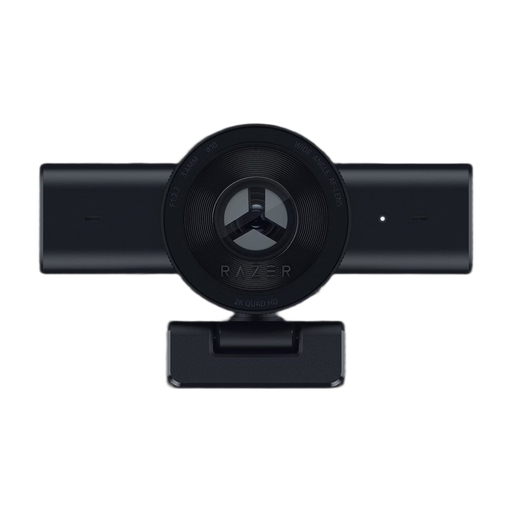
This selection includes a webcam for demonstrating a paper construction using a computer.
 No image available
As a standard webcam, it’s an option for demonstrations using a computer. Position it to suit your paper work and check the live image on your display.
Full HD, 1080p and 60 FPS are specified in the product name.
Not just because it has a USB connection. IPEVO describes the V4K as a USB-UVC camera; the VZ-R also has an HDMI output and needs a power source when you use it. Check which inputs your display has.
Arrange your sheet, compass and ruler as you would for your demonstration, then check the framing, focus, lighting and hand movements on the actual display. The manufacturer’s stated maximum capture area is a useful starting point, but it won’t tell you whether your drawing will be easy to read.
For a faulty purchase, the Verbraucherzentrale explains that your statutory rights are against the seller, and that you should initially request a remedy in the form of a repair or replacement. A voluntary manufacturer’s guarantee is separate; check the terms of your specific purchase.
There isn’t a single answer that applies to every recording or publication. If people, voices or personal documents are included in the recording or stream, check data protection requirements and your school’s rules for the specific purpose in advance. Publishing a recording is not the same as showing it in class. The consent guidance from the Hessian Commissioner for Data Protection and Freedom of Information dates from 2021 and is not a uniform requirement across all German federal states.