Show scales in detail
If you need to make small graduations or measurements visible while you move your hands, focus and framing at the camera’s intended height are key.


If your measurement demonstration needs to show scales, hand movements and the setup itself, a document camera is a good place to start. Compare its capture area and focus with your actual table setup, and check that the stand leaves enough room. If the conversation is the main focus and you only show the table occasionally, a tilting webcam could work well – provided your monitor position and viewing angle capture the area you need.
If you need to make small graduations or measurements visible while you move your hands, focus and framing at the camera’s intended height are key.
If several people are working at the table, the measuring object, tools and hands should all fit in the frame – without the camera stand getting in the way.
If you mainly explain things on a video call and only show the measurement occasionally, consider whether the camera can be positioned as needed and whether switching views fits your workflow.
First decide whether the table view or the conversation is your priority. Then check that the focus, capture area, connection and available space all suit your actual setup.
| What you need | What to check before buying | Who this matters most to |
|---|---|---|
| Make the scale easy to read | Check the focus range or manual focus, the distance to the scale and a test view in the video app you use. | I want to be able to see small graduations from the camera height I plan to use. Around 36% of consumers put the readability of fine scales first. |
| Capture the setup and hands | Measure the work surface and compare the capture area and stand position with your setup. | If tools, the measuring object and hands all need to be visible at once, the overall framing needs to be right. Around 29% of consumers prioritise showing the whole setup. |
| Switch views | Check your monitor position, the table angle you can reach and how to select the video source in the app you use. | I mainly want to talk and only tilt the camera towards the table for specific steps. Around 21% of consumers prioritise switching between conversation and the measurement view. |
| Connection and available space | Check the display’s video input, the computer’s USB port and the space available for an arm or mount. | If the camera needs to work with your existing devices and move between workspaces when needed, the connection and space it occupies matter. Around 14% of consumers put these points first. |
A high stated resolution alone won’t tell you whether the scale will be clear in the transmitted view from the camera height you plan to use. A frame that’s too tight could also cut off hands or other objects.
Test the focus and framing with a scale positioned at the height you’ll actually use the camera.
With the Logitech Brio 500, the table view is created by tilting the camera attached to the monitor. The monitor and table positions therefore determine the viewing angle you can achieve.
Measure the distance between the monitor and table, then check that hands and measurements fit in the frame without an awkward viewing angle.
Depending on your monitor position, you may need a different mount or an adjusted workspace setup.
CZUR specifies fixed focus and MJPG video at 3264 × 2448 at 10 frames per second for the Shine800 Pro. The Shine800 A3 Pro is a different version with different focus characteristics.
If you move measuring instruments or change their height, check the video and focus specifications for the exact version rather than relying on scan or OCR features alone.
The camera base and arm take up space, and people and documents may also appear in the transmitted image.
Position the stand away from where people need to work, and check which people and documents appear in the frame before sharing the view.
Document cameras for table views; the V4K PRO is one example, with USB-UVC, autofocus and a specified capture area.
USB cameras such as the HD Pro may suit you if a close-up with manually adjusted focus fits your workflow.
According to Logitech, the Brio 500 offers a tilting table view for occasional demonstrations during a conversation.
The MX-P3 is a document camera for demonstrations on a computer or compatible display.
The M11-8MV is one example of a visualiser with an arm and several outputs.
For scanner-focused table cameras such as the Shine800 Pro, consider flat documents separately from moving measuring objects.
The Joybuy range includes webcams for table views during measurements and video calls.
 No image available
This webcam could suit you if you want to position the camera flexibly at a shared table and use it for video calls too.
Full HD 1080P; microphone; USB Plug & Play.
 No image available
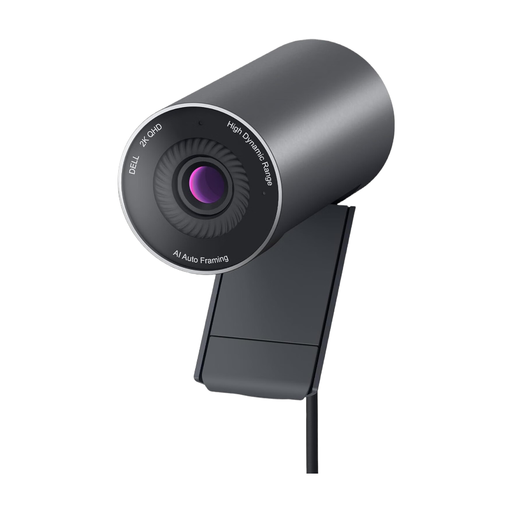
This webcam could suit you if you want to attach it to your monitor and adjust the viewing angle. Check that its position captures both the scale and your hands.
2K; USB 2.0; audio included.
No. Check that the focus works at your camera height and see how large the scale appears in the view that’s actually transmitted. IPEVO specifies a focus range from 10 cm for the V4K PRO; HUE describes manual close-up focus for the HD Pro. These are manufacturer specifications, not a guarantee of how the image will appear in your particular app.
According to Logitech, you attach the Brio 500 to your monitor and tilt it towards the table for Show Mode. If the mount isn’t secured with the micro-suction pad, the manual recommends holding it while tilting. Test the view with your actual measurement setup before your appointment.
That depends on the camera model and the display’s input. ELMO specifies an HDMI output for the MX-P3, while AVer specifies HDMI for the M11-8MV. USB-UVC is specified for the IPEVO V4K PRO, not HDMI.
For a consumer purchase in the EU, you have a statutory two-year legal guarantee with the seller from the date you receive the goods. An additional manufacturer’s warranty doesn’t replace it; check its voluntary terms separately.
There isn’t a simple yes-or-no answer. The German Data Protection Conference notes that people nearby and visible documents may also involve personal data. Whether a particular broadcast or recording is permitted, and on what legal basis, depends on how it’s used. Frame the camera around the measurement where possible, and check the data protection requirements for your organisation’s context.