Teacher working with printed sheet music
If you regularly explain specific passages on a sheet of music, key selection criteria include being able to position the camera overhead, having a suitable capture area and keeping the paper in focus.


If the printed sheet music is your main focus, a document camera is usually the better place to start. Check the capture area, how clearly it focuses on the paper and which connection you need. If you’ll mainly be on camera yourself and only occasionally show something on your desk, a webcam with a desk view may be enough. However, its stated resolution alone won’t tell you whether small musical symbols will be legible on the classroom screen.
If you regularly explain specific passages on a sheet of music, key selection criteria include being able to position the camera overhead, having a suitable capture area and keeping the paper in focus.
If you’ll be displaying the image on a projector or screen, check in advance whether the camera feed needs to go through a computer or whether you need a direct video output.
If you switch between addressing the class and showing sheet music, consider whether a tilting webcam is enough for your desk view or whether a separate document camera would be more practical.
For clearly legible sheet music, the actual framing and how the signal reaches the classroom screen matter just as much as the stated resolution.
A good fit if: you mainly show individual pages and send the image via a computer.
Things to consider: Check the capture area and legibility on the screen you plan to use. A direct HDMI connection isn’t listed for the IPEVO V4K PRO.
A good fit if: you want to show sheet music directly on a compatible projector or screen without using a computer.
Things to consider: The output, display input and power supply must suit your existing setup. The IPEVO VZ-R has different stated maximum resolutions depending on whether you use USB or HDMI mode.
A good fit if: you mainly teach facing the class and only occasionally show part of a score or a marked passage.
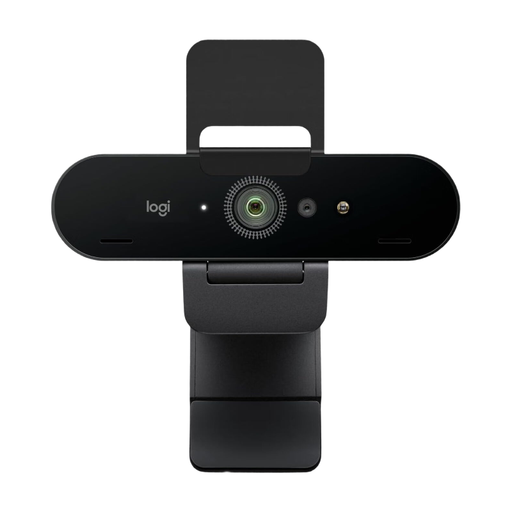
Things to consider: The Logitech Brio 500 tilts down for a desk view. Check that the framing, focus on the sheet music and mount stability work for your setup.
| Priority | What to check before buying | Who it matters most to |
|---|---|---|
| Legibility of the sheet music | Compare the page size with the capture area; check focus and framing on the screen you’ll actually use. | When I explain printed sheet music, the stave lines and accidentals need to remain clear in the displayed image. Around 36% of consumers put sheet music legibility first. |
| Connection to the classroom screen | Check the inputs on the projector or screen; confirm whether a computer will sit between the camera and the display. | If I want to use the projector I already have, the signal path needs to match its connections. Around 29% of consumers prioritise a connection that works with their classroom screen. |
| Switching between teacher and sheet music | Try switching views with your planned mount; check whether your video-conferencing software offers the view you need. | If I switch between speaking to the camera and pointing to the score, I want to change perspective easily. Around 21% of consumers prioritise being able to switch between views. |
| Lighting and positioning | Check a sheet of music for glare under your usual classroom lighting; consider space, cable routing and focus controls at your desk. | If space is limited or the lighting isn’t ideal, I need a practical position for the camera and paper. Around 14% of consumers prioritise lighting and positioning. |
The capture area and framing affect how large musical symbols appear on the classroom screen. For the IPEVO VZ-R, the manufacturer lists different maximum resolutions for USB and HDMI modes.
Compare the page size with the capture area, then check a typical passage on the screen you use for teaching.
Connecting a camera to a computer via USB and sending a video signal directly via HDMI are two different signal paths.
Plan the route from the camera to the classroom screen and check which connections your projector actually has.
The Logitech Brio 500 tilts down for its desk view and is then repositioned. This isn’t the same as a document camera that stays positioned above the page.
If you work directly with the score often, check whether a separate document camera would better suit your teaching routine.
A camera’s functionality doesn’t give you permission to transmit or record protected sheet music.
Before using it, check which rights apply to the specific edition, transmission method and audience.
Document cameras for an overhead view of sheet music; connections vary by model.
A webcam option for teachers who are usually on camera and occasionally need a desk view.
Presentation cameras for classrooms; according to the manufacturer, the MX-P3 is designed for setups with or without a computer.
Classroom visualisers; the capture area and connection details here relate to the M11-8MV.
USB document camera with foldable document and webcam modes on the INS-2 model.
The Joybuy products below are webcams for teaching conversations; according to the product details, one model is also designed for a desk view.
 No image available
A webcam option if you mainly teach through video calls and don’t need a document camera that stays in position.
 No image available
A webcam option for online teaching if you’re looking for a camera for video calls rather than a separate overhead view.
 No image available
This webcam could be an option for video calls and online learning if you need a front-facing view for teaching conversations.
 No image available
A webcam option if you need a desk view as well as video calls.
Listed as a 4K webcam with auto-framing, HDR and DeskView; the product name also specifies a 1/2″ sensor.
According to the product details, it’s currently not compatible with ARM-based Windows systems.
 No image available
A webcam for video calls if you mainly want to be on camera yourself.
The product name identifies it as a 4K webcam.
Not just because it has a USB connection. To connect directly without a computer, you need a video output that’s compatible with the projector; the IPEVO VZ-R has HDMI, according to the manufacturer. Also check the power supply and the input on the specific projector.
Place the page within the capture area, then check the framing, focus and any glare on the classroom screen you’ll actually use. For the Brio 500’s Show Mode, Logitech explains how to tilt the camera towards the desk; how easy this is depends on how the mount is attached.
Check the terms for the specific model and offer. IPEVO lists a three-year warranty from the date of purchase for the V4K PRO. This is a manufacturer’s statement for that model, not a guarantee that applies to every offer.
Not in every case. § 60a UrhG sets out conditions for certain uses to illustrate teaching; special limits apply to graphic reproductions of music. The VG Musikedition also notes that music schools may be able to enter into a licence agreement for limited reproductions. Check the rights for the specific edition and planned transmission; buying a camera doesn’t grant permission to use the material.
You can’t determine that simply by choosing a device. The Datenschutzkonferenz states that video conferences involve processing personal data, and that the responsible organisation must check whether the specific processing is lawful and necessary. If you don’t need to show pupils to explain the material, point the camera at the sheet music instead.