Digital design reviews
If you want to review text or a layout together, you can share the relevant window or your entire screen in Microsoft Teams and use your webcam to show yourself. Microsoft Support explains both sharing options.


For digital designs, screen or window sharing matters more than a 4K webcam: the camera shows you, while your meeting software displays the text or layout. In a flat share, you should also check the framing, background and how clearly your voice comes through from the spot where you plan to sit. If paper designs are regularly the focus, a tilting webcam or document camera may be a better fit.
If you want to review text or a layout together, you can share the relevant window or your entire screen in Microsoft Teams and use your webcam to show yourself. Microsoft Support explains both sharing options.
If you don’t want your living space or housemates to appear on camera, it’s important to choose the right framing and check the preview before the call. A privacy shutter only blocks the camera’s view when it’s closed.
If you regularly show handwritten changes, check that the page size, focusing distance and space available suit your setup. IPEVO gives the V4K PRO a capture area of up to 34.2 × 25.5 cm and a focus range starting at 10 cm.
A good fit if: digital files or on-screen text are the main focus, and you want the webcam to show you.
Bear in mind: A higher camera resolution is no substitute for screen sharing. Check in advance which window other people will be able to see.
A good fit if: you’ll mainly be talking, with the occasional sketch or detail on paper to show. Logitech says you can tilt the Brio 500 towards your desk.
Bear in mind: How much of the paper is visible depends on your setup. Logitech’s instructions say to hold the mount when tilting the camera if the suction mount isn’t attached.
A good fit if: you regularly show printed or handwritten designs and want the page on your desk to be the main focus.
Bear in mind: A document camera needs extra desk space, and it won’t show you on camera or resolve what can be seen or heard in the background of your flat share.
| What matters | What to check before buying | Who cares about this? |
|---|---|---|
| Making digital designs easy to read | Check your meeting software’s sharing options, and make sure the webcam’s connection and mounting work where you plan to use it. | If I want to review text or a layout together, I’d rather share the design as a window than film my monitor. Around 33% of consumers would put reviewing digital designs first. |
| Keeping speech clear | Check the microphone and whether you can select a separate audio input. Test how it sounds from the place where you’ll actually sit before the call. | If I want my feedback to be understood despite the noise of a flat share, I’ll test the audio beforehand. Around 25% of consumers would put clear speech first. |
| Controlling the picture and background | Check the preview from the spot where you plan to sit, and see whether you can adjust the field of view and whether there’s a privacy shutter. | If I don’t want to show more of my living space than necessary, I’ll pay attention to the framing and check the preview. Around 25% of consumers would prioritise control over the picture and background. |
| Showing paper designs | Check the page size, capture area, focusing distance, mount and available USB port. | If I regularly show handwritten changes, the page needs to fit clearly in the frame from the camera position I plan to use. Around 17% of consumers would put showing paper designs first. |
For digital text, sharing a window or your screen is the direct way to show it. The resolution of your video-call camera won’t do the same job.
First, test screen sharing in your meeting software and check which window is visible. Then decide whether you need a different camera to show yourself.
Manufacturers’ claims about noise-reducing microphones don’t tell you how clearly your voice will come through against the specific background noise in your home.
Test the microphone you plan to use from your usual spot. If needed, check whether you can select a different audio input in your meeting software.
A closed shutter blocks the camera’s view between calls. When the lens is uncovered and the camera is on, the framing determines what people can see during the call.
Before switching on the camera, check the preview and the background in your flat share.
The Brio 500 may suit calls where you occasionally need to show a sketch.
The Taxon QHD may be worth considering if you want autofocus, a wider field of view or a privacy cover.
The C-600 Pro may suit a computer with USB-A if you want a webcam that doesn’t require additional driver installation.
The PowerConf C200 is an option if you want to adjust the field of view using software.
The V4K PRO is a document camera for situations where you regularly need to show printed designs.
The webcams below are selected for showing yourself during digital design reviews. You can share the design itself using your meeting software’s screen-sharing feature.
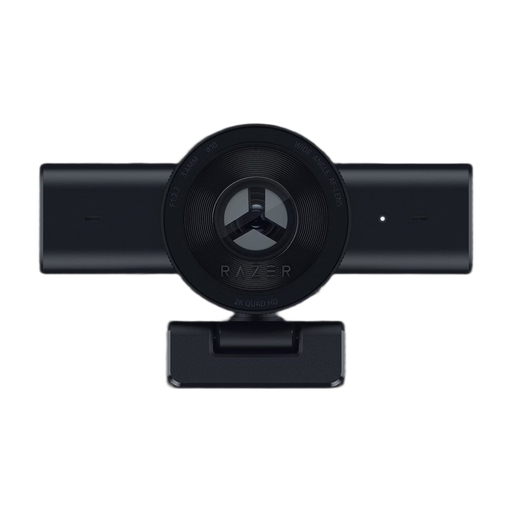 No image available
An option for showing yourself on camera, with adjustable framing and a privacy cover.
Full HD at 1080p and 60 FPS; the product description lists autofocus and a built-in microphone.
Adjustable field of view via software; built-in privacy cover.
 No image available
For showing yourself on camera, with autofocus and a privacy cover listed in the product title.
The title lists 4K, PDAF autofocus, two microphones and a 75° field of view.
USB-A/USB-C; privacy cover.
 No image available
A USB webcam for showing yourself on calls, if autofocus and flexible positioning on your desk matter to you.
The product description lists Full HD, autofocus, exposure correction and a built-in stereo microphone.
78° field of view; adjustable stand and tabletop tripod, according to the product description.
 No image available
A QHD webcam for showing yourself on calls, with a clip-on mount for a laptop or desktop computer.
The product title lists a noise-reducing microphone and a clip-on mount.
Colour: Silver; EU Version.
 No image available
For showing yourself on camera, with autofocus and a cover for when you’re between calls.
The product title lists 4K, 8 MP, autofocus, two microphones and a privacy cover.
USB-A; colour: Black; EU Version.
No, if your meeting software has a suitable sharing option. In Microsoft Teams, you can present a window or your entire screen. Before sharing, check which window the other people will actually see.
First, check the framing from where you sit at your monitor. Logitech says you can tilt the Brio 500 downwards; if the suction mount isn’t attached, hold the mount while you do so. The instructions say it connects via USB-C.
Not necessarily. Hama describes the C-600 Pro as UVC plug-and-play, with no driver installation required. Extra features may need software, though: Logitech says Logi Tune is required for the Brio 500’s advanced RightSight auto-framing.
For statutory warranty claims, contact the retailer, not the manufacturer. The Verbraucherzentrale explains that goods generally have a two-year statutory warranty; this is separate from any additional manufacturer’s guarantee.
Buying a webcam doesn’t give you permission to make recordings. For video conferences in businesses and other organisations, the Data Protection Conference addresses the legal basis required and says recording should be prevented by technical means unless it is permitted for other reasons. Whether a particular recording is allowed depends, among other things, on its purpose and the people involved.