If you regularly need to weigh very small amounts of cornflour, choose scales with fine increments across the range you actually need. For larger quantities and everyday cooking, kitchen scales with 1 g increments and a tare function may be enough. Before buying, check the weighing range, the space available for your container and the maximum capacity, including the container. A finer display alone does not mean the scales are more accurate. This is about cornflour for thickening, not maize flour.
Which scales are right for you?
For small amounts of cornflour
If you regularly want to adjust the amount of cornflour in a single serving of sauce by weight, look for fine increments in the range you need – not just a high maximum capacity. GEFU and Beurer specify fine increments, which vary depending on the weight, for certain models.
For weighing directly into a container
If you want to put a small container on the scales and add ingredients straight into it, a tare function, a stable platform and a clear display are important. Beurer and WMF specify a tare function for the models described here; make sure the platform is large enough for your bowl.
For everyday cooking
If you want to weigh larger quantities of ingredients and containers as well as cornflour, check the platform size and maximum capacity. According to the manufacturer, the WMF kitchen scales have a maximum capacity of 5 kg, but display readings in 1 g increments.
What to look for when buying
Precision scales or combination scales
Suitable if: you regularly weigh small amounts of cornflour and want fine increments in this weight range.
Things to consider: Check the weighing range and platform size. GEFU specifies 0.1 g increments from 1 g to 1 kg for PREZISO; for the Beurer KS 36, the 0.1 g increments apply only below 500 g, according to the specifications.
Kitchen scales with 1 g increments
Suitable if: you usually weigh larger quantities and want to use the scales for other cooking ingredients and containers too.
Things to consider: According to WMF, this model offers 1 g increments, a tare function and a capacity of up to 5 kg. Small quantities will be shown in fewer increments.
A middle ground with 0.5 g increments
Suitable if: half-gram increments are fine for you and you’d like a larger platform for containers.
Things to consider: Tefal specifies 0.5 g increments from 2 to 999 g and 1 g increments from 1 to 5 kg for the Optiss BC50U0. No corresponding increment range is specified for quantities under 2 g.
| What you need |
What to check before buying |
Who it matters to |
| Weighing small amounts precisely |
Check the minimum weight and increments in the range you need. GEFU and Beurer specify different increments depending on the model and weight. |
If I want to adjust small amounts of cornflour for a single serving regularly, the increments in the relevant range matter to me. Around 36% of consumers say weighing very small quantities is their main priority. |
| Weighing directly into a container |
Check how easy the tare function is to use, whether the display is easy to read and whether the platform is large and stable enough. Beurer specifies a weighing area of 11.5 × 8.0 cm for the KS 36; WMF gives dimensions of 23 × 15 cm for model 3201000339. |
If I want to add cornflour straight to a small container, I want to be able to put it on the scales and tare them without transferring the contents. Around 29% of consumers say this is their main priority. |
| Space and readability |
Compare the scales’ dimensions, display position and the space available for your bowl. Beurer describes the KS 19 Pure White as just 16 mm high; Tefal specifies a glass platform measuring 17.5 × 22.5 cm for the Optiss BC50U0. |
If space is limited in my kitchen, I need scales that are easy to store and have a display I can still see beside my bowl. Around 21% of consumers prioritise storage and readability. |
| Weighing other ingredients too |
Check the maximum capacity, including the container, separately from the increments at the lower end of the range. WMF specifies a capacity of up to 5 kg and 1 g increments for its kitchen scales, model 3201000339. |
If I want to use the same scales for larger quantities of ingredients, capacity with a bowl matters more than especially fine increments. Around 14% of consumers say versatile use is their main priority. |
Common misconceptions
-
Looking at “0.1 g” without checking the weighing range
Increments can change depending on the weight. According to the specifications, the Beurer KS 36 uses different increments across different weight ranges; the increments on the GEFU PREZISO also change above 1 kg.
Check the specifications for the exact model and take the weight of your container into account. Also make sure the platform is large enough for the bowl you usually use.
-
Assuming a high capacity means small amounts will register well
Scales can have a capacity of up to 5 kg and still display readings in 1 g increments. The maximum capacity alone doesn’t tell you how finely small quantities will be displayed.
Compare capacity, minimum weight and increments separately. Everyday scales may still be a good choice for larger quantities of ingredients.
-
Confusing app features with finer measurements
According to the manufacturer, the GEFU SCORE connects to an app and has 1 g increments. That’s not the same as finer increments for small amounts of cornflour.
Choose app features only if you’ll actually use them alongside weighing.
Using app features adds an extra step.
Brands to consider
GEFU
GEFU’s range includes PREZISO precision and kitchen scales, as well as SCORE kitchen scales with app features. These details apply to these product lines, not to every GEFU scale.
- GEFU specifies 0.1 g increments from 1 g to 1 kg, a tare function and a maximum capacity of 3 kg for PREZISO; above 1 kg, the increments are 1 g.
- GEFU specifies 1 g increments for SCORE. An app isn’t necessary if you simply want to weigh cornflour.
Beurer
The KS 36 is a precision scale with increments that vary according to weight, and a calibration function. The KS 19 Pure White is a slim everyday option with a tare function.
- According to Beurer’s specifications, the KS 36 displays readings in 0.1 g increments below 500 g; the product details give a weighing area of 11.5 × 8.0 cm.
- The KS 36’s 0.1 g increments don’t apply across the entire weighing range. The KS 19’s slim glass surface doesn’t mean it offers the same fine increments as a precision scale.
Tefal
The Optiss BC50U0 is a middle-ground option if half-gram increments in the specified lower range and a larger platform are important to you.
- Tefal specifies 0.5 g increments from 2 to 999 g, 1 g increments from 1 to 5 kg, a tare function and a backlit display.
- No suitable increment range is specified for quantities under 2 g. According to Tefal, the glass platform measures 17.5 × 22.5 cm.
WMF
The digital kitchen scales 3201000339 are an everyday option with a tare function and a larger platform.
- WMF specifies a maximum capacity of 5 kg and 1 g increments.
- For very small amounts of cornflour, the display offers fewer increments than the precision scales mentioned above. According to WMF’s instructions, the scales must not be immersed in water or cleaned in a dishwasher.
Suitable products at Joybuy
The following Joybuy models are digital coffee or kitchen scales. If you’re weighing cornflour for a small serving of sauce, check whether the increments on the specific model suit the quantity you need.
 No image available
TIMEMORE Coffee Scale Basic 3.0, Black
When weighing cornflour, check whether the increments in the range you need are suitable for the quantity you’re measuring.
The product name mentions a coffee-to-water ratio, flow-rate display, timer and switchable Ounce/kg units.
View at Joybuy
 No image available
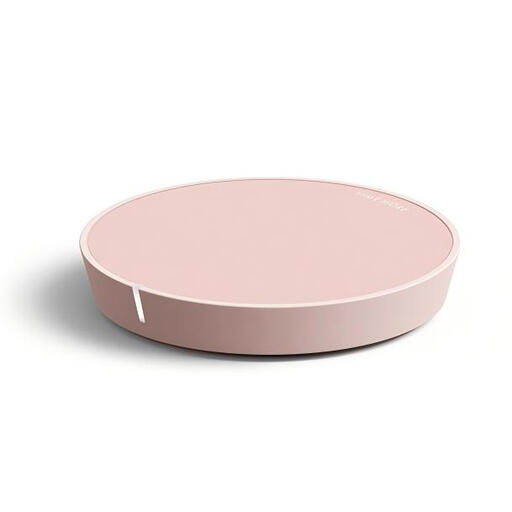
TIMEMORE Coffee Scale DOT, PINK
If you’re using these scales for cornflour, check whether the increments in the range you need are suitable for the quantity you’re measuring.
The product name mentions a coffee-to-water ratio, flow-rate display, timer and switchable Ounce/kg units.
View at Joybuy
 No image available
TIMEMORE Coffee Scale Basic 2.0 Electronic, White
This model is also described as suitable for kitchen use, baking and cooking. If you’re weighing small amounts of cornflour, check the increments in the range you need.
The product name mentions a flow-rate display, timer and switchable Ounce/kg units.
View at Joybuy
 No image available
Aigostar Duncan digital kitchen scales
Kitchen scales with a tare function can make it easier to weigh directly into a container. Check that the platform is large enough for your bowl and that the increments suit the amount of cornflour you need.
The product name specifies a capacity of up to 5 kg, a stainless steel platform and a tare function.
View at Joybuy
 No image available
Smart Coffee Scale Pour Over
If you’re weighing cornflour for a small serving of sauce, check whether the increments in the range you need are suitable for the quantity you’re measuring.
The product name describes this model as digital coffee and kitchen scales.
View at Joybuy
Frequently asked questions
How do I weigh cornflour for a small serving of sauce?
Place a suitable container on the scales, tare them, then add the cornflour. Before adding it to the hot sauce, mix it with a little cold water. The amount you need depends on the recipe and how thick you want the sauce to be.
Do 0.1 g increments mean the scales measure accurately to 0.1 g?
No. Increments describe the steps shown on the display and don’t, on their own, prove how accurate the measurements are. According to the specifications, the Beurer KS 36 displays readings in 0.1 g increments below 500 g; the increments change at higher weights. Beurer’s instructions also explain how to calibrate the scales using the weight supplied.
Can I rinse the scales after spilling cornflour on them?
Follow the instructions for the specific model. WMF recommends using a damp cloth if needed and says not to immerse the scales in water or clean them in a dishwasher. This doesn’t automatically apply to all kitchen scales.
How should I dispose of used batteries from appliances?
In Germany, according to the Federal Ministry for the Environment, Climate Action, Nature Conservation and Nuclear Safety, used batteries from appliances must not be put in household waste. They can be returned free of charge to suitable collection points at retailers or local authorities. Remove any batteries that can be taken out before disposing of an appliance.


