Class instructors measuring small portions of cornflour
If you want to weigh small quantities separately and consistently, you’ll need to balance the scale’s increments against the limited capacity of precision scales.


For small portions of cornflour, precision scales with 0.1 g increments may be suitable, but their limited capacity can restrict your choice of bowl. The kitchen scales covered here have 1 g increments and offer more capacity for larger containers, but display less precise steps. Your choice depends on the smallest quantity in the recipe and the combined weight of the bowl and its contents. Fine increments alone do not prove that a scale is accurate.
If you want to weigh small quantities separately and consistently, you’ll need to balance the scale’s increments against the limited capacity of precision scales.
If you’re weighing ingredients directly into a bowl, consider the tare function, the combined weight of the bowl and its contents, and whether the display remains easy to read with the bowl in place.
For repeated use at a workstation, a clear display, ease of cleaning and the power supply are important factors—not just the size of the increments.
Suitable if: You want to weigh small portions of cornflour separately in a lightweight container, and the total load is within the maximum capacity. CASO Design specifies 0.1 g increments and a maximum capacity of 500 g for the FinoCompact.
Trade-off: The weight of the bowl and ingredients counts towards the total. The increments shown on the display do not prove the scale’s actual accuracy.
Suitable if: You want to weigh ingredients in a larger container. Soehnle, Beurer and WMF list a tare function, 1 g increments and a maximum capacity of 5 kg for the models described here.
Trade-off: 1 g increments give you fewer steps for very small quantities. A large bowl may also obscure the display.
Suitable if: Being able to read the display repeatedly at a fixed workstation matters more than having a particularly flat design. ADE lists a backlit display, a maximum capacity of 5 kg and 1 g increments for the PW501.
Trade-off: It isn’t a precision scale for portions below 1 g. Also check that its dimensions suit your workstation.
| Buying priority | What to check | Who it matters most to |
|---|---|---|
| Small portions of cornflour | Compare the smallest quantity in your recipe with the scale’s increments and capacity; include the weight of the container. | If I want to measure out small quantities separately, I check which increments the display can actually show. Around 33% of consumers would make small portions their top priority. |
| Weighing directly into a bowl | Check the tare function, the total load including the container, and whether the display remains visible. | If you want to weigh ingredients directly into a sauce bowl, you need enough room for the container and a display that’s easy to see. Around 25% of consumers would prioritise weighing directly into a container. |
| Repeated use at a workstation | Check how easy the display is to read in the available light, as well as the care instructions for the specific model. | If I need to take reliable readings over several sessions and clean the scale appropriately afterwards, the features that suit the workstation matter. Around 25% of consumers would prioritise repeated use. |
| Getting ready and putting it away | Check the battery type and what’s included, as well as the auto-off function and the scale’s dimensions. | If you want the scale ready to use for the class and easy to put away afterwards, consider its power supply and dimensions in advance. Around 17% of consumers would give the greatest priority to easy preparation and storage. |
The increments describe the weight steps shown on the display, not the actual measurement deviation of the specific model.
Compare the increments with the smallest quantity you need to weigh. If the deviation could affect your class, look for independent measurement data for that exact model.
The bowl also adds to the load on the scale. The stated maximum capacity of the CASO FinoCompact is 500 g.
Allow for the combined weight of the bowl and ingredients, and check that the container sits on the scale without obscuring the display.
The AAA batteries specified for the CASO FinoCompact are not included. According to the product information, the WMF scale 3201000339 is not dishwasher-safe.
Before the class starts, check what’s included, the battery type and the care instructions for the specific model.
The FinoCompact is a precision scale option for small portions of ingredients that you want to weigh separately.
According to the product information, the Page Compact 300 is a flat kitchen scale designed for weighing ingredients in a bowl.
According to the German product page, the KS 19 Ice Cream combines a flat glass surface with a tare function.
The PW501 is a portion scale designed for a fixed workstation.
The digital kitchen scale 3201000339 may be suitable if its 23 × 15 cm weighing surface fits the container you use.
The Joybuy products below are digital scales, including models with specified coffee functions and one scale whose product title also lists kitchen, baking and cooking as intended uses. Before using one to weigh cornflour, check that its functions and controls suit the way your class runs.
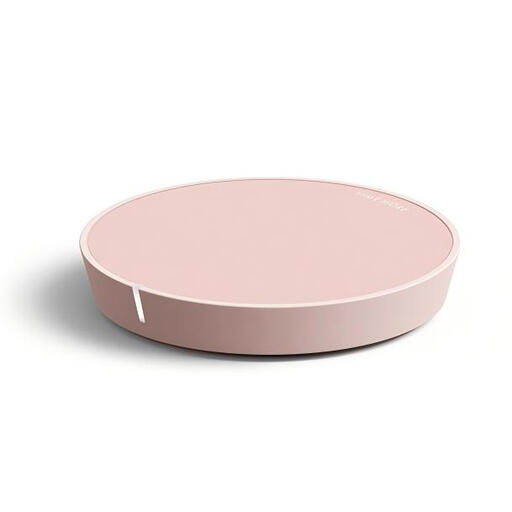 No image available
The product title identifies this model as a coffee scale. Check whether its features suit the weighing steps in your cookery class.
The title lists a timer, ratio and water flow-rate functions, as well as switchable ounce/kg units.
Listed for espresso and pour-over modes.
 No image available
For small portions, the stated 0.1 g increments below 1 kg may be useful, provided the bowl and its contents stay within the maximum capacity.
Maximum capacity: 3,000 g; increments: 0.1 g below 1 kg and 1 g from 1 kg upwards. The description lists automatic tare.
The ABS surface should be wiped with a damp cloth. Do not immerse the scale.
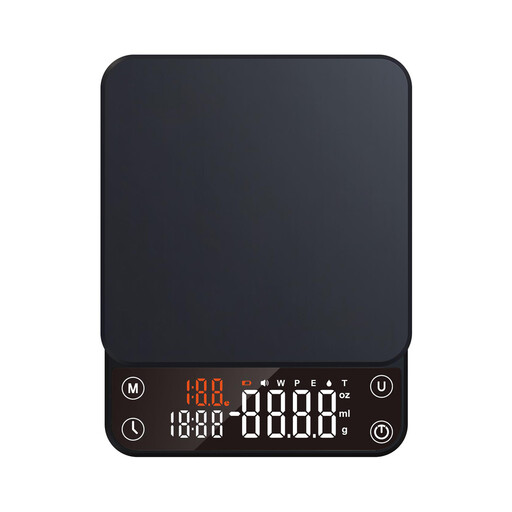 No image available
The product title lists kitchen, baking and cooking as intended uses. Check whether the scale suits your recipe quantities and containers.
The title lists four brewing modes, an LED real-time display, a timer, ratio and volume displays, and auto-tare.
Listed as rechargeable.
It depends on how small the amount of cornflour required by the recipe is. Compare the quantity with the scale’s increments. If you need to read smaller steps, precision scales may be suitable. Remember to include the weight of the container when checking their maximum capacity. Increments of 1 g or 0.1 g alone don’t prove the scale’s actual measurement deviation.
This can work if the container is suitable for the scale and the total load stays within its maximum capacity. Tare the container, and check that the display and buttons remain accessible. Only place a hot container on the scale if the instructions for that specific model allow it.
Follow the care instructions for the specific model. According to the product information, the WMF scale 3201000339 isn’t dishwasher-safe; the CASO FinoCompact is listed as having a separate weighing bowl. This doesn’t mean that other models or parts are dishwasher-safe.
It depends on how the measurement is used. The MessEV defines a direct sale as a legal transaction in which the measured value forms the basis for the price to be paid. If this type of use applies, you should check separately whether the specific scale needs to be officially verified.
For direct contact with food, the EU framework for food contact materials is relevant, including Regulation (EC) No 1935/2004. A statement about the metal surface alone doesn’t confirm that a particular bowl is suitable for every type of food contact.