
Lieferung heute & morgen

Qualitätsgarantie

Willkommens-Angebote freischalten: KOSTENLOSE Lieferung | Bis zu 80 % RABATT | Kostenlose 30-Tage-JoyPlus-Testphase
App herunterladen
A wet and dry vacuum cleaner can tackle a range of cleaning jobs: dust on hard floors, spilt liquids, carpet stains or pet hair inside your car. However, not every machine offers the same features. If you focus only on high wattage or Pascal figures, you can easily miss important details about tanks, filters, battery life and maintenance.
A traditional wet and dry vacuum cleaner can usually pick up solid dirt and certain liquids. A hard floor cleaner with a mopping function, on the other hand, uses clean water and a roller brush. A carpet washer or carpet cleaner sprays cleaning solution onto fabrics and then sucks up the dirty water.
A cordless handheld vacuum cleaner isn’t automatically suitable for liquids. The ROUNY X3 Pro, for example, is explicitly stated as not being suitable for picking up water or other liquids.
Figures such as 13 kPa, 15 kPa or 18 kPa describe a technical maximum. Actual cleaning performance also depends on the nozzle design, roller brush, airflow and condition of the filter. A high figure is of little use if the filter is blocked or the dirty water tank is overflowing.
A self-cleaning vacuum cleaner can rinse the roller brush or internal pipes after use. You’ll still need to empty, rinse and dry the dirty water tank, filter, roller and nozzles regularly. If damp residue is left inside the machine, it can cause odours and affect performance.
Wet cleaners with separate clean and dirty water tanks are suitable for sealed hard floors. Carpets, sofas and car seats, on the other hand, need a carpet cleaner, upholstery cleaner or pet hair and stain cleaner with a spray extraction function. Before you buy, check whether the manufacturer approves the machine for use on:
A steam cleaner is a separate category of appliance. It uses hot steam and isn’t automatically suitable for picking up liquids.
A wet and dry floor cleaner should have separate clean and dirty water tanks. This stops the water used for mopping from mixing with dirt that has already been collected. Check the capacity of each tank and whether they can be removed and rinsed.
A washable filter, such as a washable HEPA filter, can help reduce ongoing costs. However, it must be completely dry before you put it back in the machine. When choosing a cordless wet vacuum cleaner, also consider charging time, battery capacity and maximum run time.
A compact handheld vacuum cleaner may be all you need for a small flat, desk or car. For several rooms, battery life and tank capacity matter more. Mains-powered models provide continuous power, but you’ll need a socket and a cable that’s long enough.
Consider the weight, too. A machine weighing around four kilograms may be easy to manoeuvre on hard floors, but less convenient than a smaller model for longer cleaning sessions on stairs or upholstery.
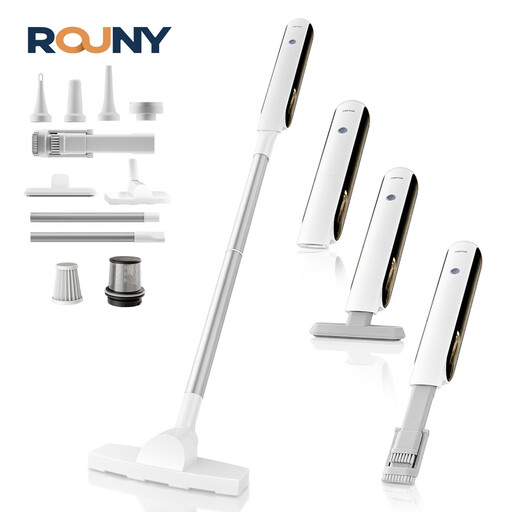
Why it suits this need: This compact 2-in-1 machine can be used as a handheld vacuum cleaner or with the extension tube and floor brush for light floor cleaning. It’s ideal for cars, desks, offices and small living spaces.
The product specifications clearly list two suction settings, a 150 ml dust container and a maximum run time of 15 or 30 minutes. It’s explicitly not designed for liquids.
An LED light, blower function, seven attachments and a washable HEPA filter help you clean tight spaces and fine dust deposits.
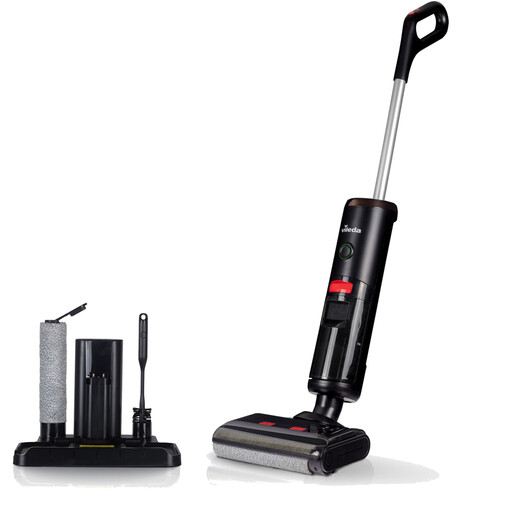
Why it suits this need: This cordless vacuum cleaner is designed to clean sealed hard floors, combining sweeping, vacuuming and mopping in one go.
The specifications distinguish between the clean and dirty water tanks, with capacities of 750 ml and 600 ml respectively. The self-cleaning function still doesn’t replace emptying and drying the machine after use.
Features include a run time of 35 to 45 minutes, a 220-W motor, a washable HEPA filter unit and self-cleaning via the charging dock.
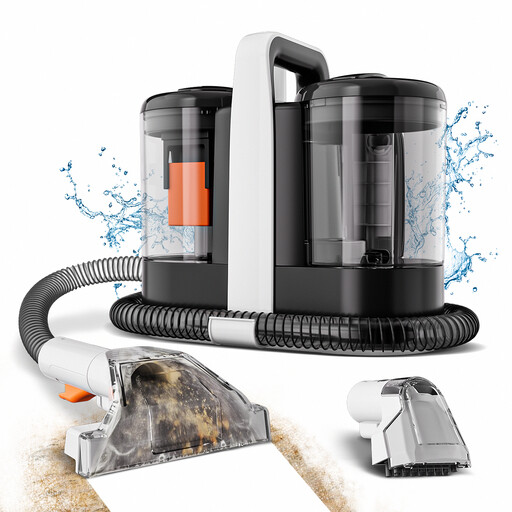
Why it suits this need: This portable upholstery cleaner is designed for homes with carpets, sofas, mattresses, car seats or recurring stains.
The design keeps the clean and dirty water tanks separate. Their capacities are clearly stated as 1.5 litres and 0.8 litres respectively; be sure to observe the maximum fill line.
The 3-in-1 spray, brush and suction system, along with 15 kPa suction pressure, is designed for fabric surfaces. The hose and mains cable extend your cleaning reach.
We’ve put together a complete, regularly updated list of products that meet these strict selection criteria and fully comply with the safety regulations in force in the EU.
Only use a machine on surfaces approved by the manufacturer. Liquids such as fuel, alcohol, solvents or flammable substances must never be put into a wet and dry vacuum cleaner. With steam cleaners, check that the material is suitable and can withstand the heat.
The main ongoing costs to consider are:
It depends on the type of machine. A hard floor cleaner with a mopping roller is generally designed for solid, water-resistant floors. For carpets and upholstery, you’ll need a carpet cleaner with a spray and suction function or a suitable upholstery cleaner.
Run time depends on the suction setting, roller brush, battery condition and type of floor. Treat the manufacturer’s figure as a maximum or guideline. For larger homes, run time, charging time and the option of continuous mains operation are particularly important.
Empty the dirty water tank, rinse the tanks and nozzles, and let the filter and roller dry completely. If you have a self-cleaning vacuum cleaner, run the automatic programme straight after use. You’ll still need to check the machine manually.