
Lieferung heute & morgen

Qualitätsgarantie

Willkommens-Angebote freischalten: KOSTENLOSE Lieferung | Bis zu 80 % RABATT | Kostenlose 30-Tage-JoyPlus-Testphase
App herunterladen
A wet and dry vacuum cleaner can pick up dry dust, spilled liquids, coarse dirt and pet hair. However, not every appliance is designed for the same tasks. Focusing solely on a high wattage or Pascal rating often means overlooking crucial details.
Motor power in watts mainly describes electrical power consumption. On its own, it does not indicate how well an appliance picks up dirt from carpets, hard floors or crevices. With cordless vacuum mops and wet and dry floor cleaners, brush design, water flow, filtration and battery life also play a role.
It is therefore worth looking at the complete cleaning system: Which types of flooring is it designed for? Are there separate tanks for clean and dirty water? Is a suitable filter for wet and dry operation included?
A vacuum cleaner with a mopping function usually works with a damp cloth or a rotating mop roller. This is not automatically the same as a traditional wet vacuum cleaner, which draws liquids directly into a tank. A robot vacuum with a mopping function is generally suitable for regular floor care, but not for larger quantities of liquid or renovation waste.
For spilled drinks, wet potting soil or damp dirt, the product description should explicitly state wet vacuuming.
Depending on its design, a self-cleaning vacuum cleaner rinses the brush roller and internal hoses. Filters, dirty-water tanks, seals and brushes still need to be checked and dried regularly. If damp residue remains inside the appliance, it can lead to unpleasant odours and operating problems.
Dry vacuum cleaners and workshop vacuums have different maintenance requirements: filters and dust bags must be suitable for the type of dirt being collected. A wet filter must not be replaced with a damp filter insert unless the manufacturer specifically permits this.
A versatile wet and dry vacuum cleaner should have separate or clearly described filter solutions. According to the product information, the Vacmaster VQ1530SFDC is designed to use a disposable cartridge filter for dry dirt and foam filters for wet work. The Clatronic BS 1313 lists washable permanent filters and an overflow protection system with a float valve.
Important: Before changing the operating mode, filters and tanks must be fitted as described in the instructions. Liquids such as petrol, solvents or other flammable and chemical substances must not be collected with household appliances.
Tank capacity affects how often you need to stop cleaning. A 20- to 30-litre tank is practical for workshops, cars, renovation work or larger quantities of liquid, but is generally bulkier than a compact vacuum mop.
For the home, cordless vacuum mops with separate water tanks are easier to handle. According to the product data, the Lubluelu T8A has a 910-ml clean-water tank and a 600-ml dirty-water tank. When buying, you should also check whether the dirty-water tank can be removed and rinsed easily.
A corded appliance offers constant operating time, but requires a power socket. According to the product description, the Clatronic BS 1313 has a cable approximately 5 metres long. The Vacmaster also features an integrated 240-volt EU socket for connecting power tools.
With a cordless vacuum mop, battery life and charging time are key. The Lubluelu T8A is specified as offering up to 30 minutes of operating time and a charging time of around four hours. This is enough for small to medium-sized cleaning areas, while larger homes may require an intermediate charge or a replacement battery.
Many vacuum mops are designed exclusively for sealed hard floors. Carpets, delicate parquet or unsealed surfaces may not be suitable. If you are looking for a vacuum cleaner for pet hair, look for a brush design that minimises tangles, effective filtration and an easily accessible roller.
A robot vacuum can pick up pet hair regularly, but it needs clear pathways. Cables, small objects, stairs and high thresholds can limit its cleaning performance.
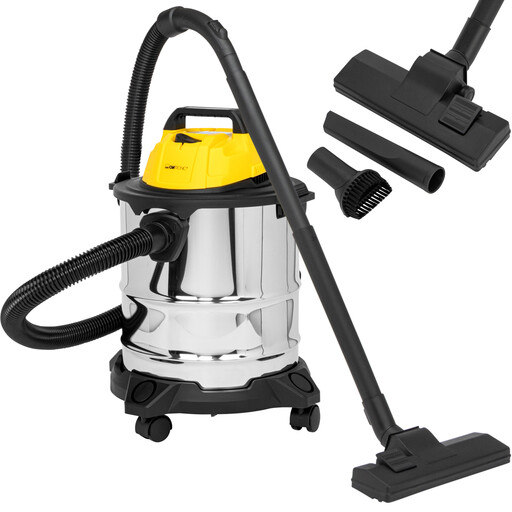
Why this product suits this profile: This corded appliance is designed for the home, car, garden and workshop, combining wet vacuuming, dry vacuuming and a blower function.
The product data specifies overflow protection via a float valve and washable permanent filters. The different applications are clearly separated.
20-litre stainless-steel tank, approximately 5-metre cable, four castors and accessories for wet, dry and crevice cleaning.
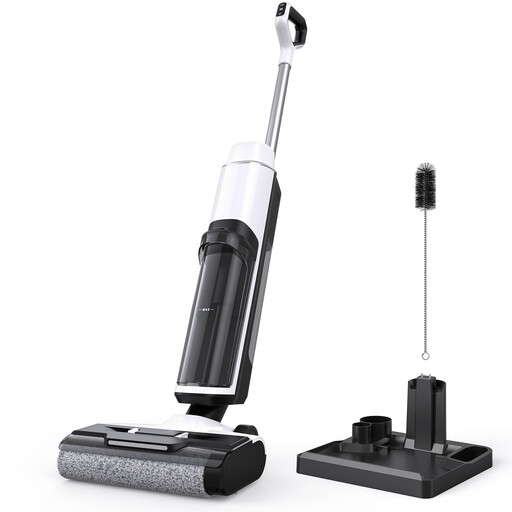
Why this product suits this profile: This cordless vacuum mop combines wet and dry cleaning on hard floors with self-cleaning and assisted forward movement.
The separate water tanks and specified self-cleaning mode make it easier to manage clean and dirty water.
Specified features include a maximum suction power of 15,000 Pa, up to 30 minutes of battery life and a noise level of no more than 70 dB(A).
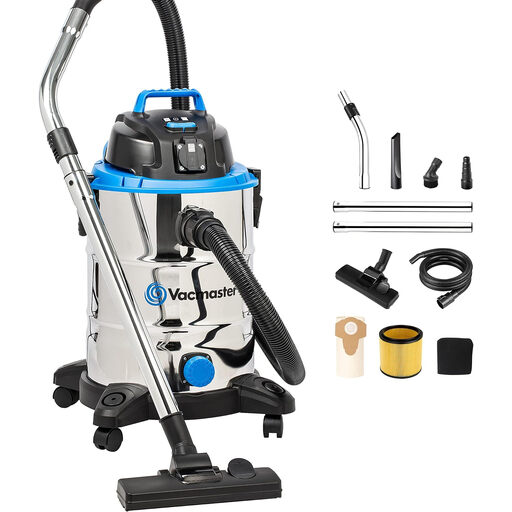
Why this product suits this profile: This workshop vacuum is designed for renovation work, power tools, coarse dirt and liquids, and also offers a blower function.
The product description specifies separate filter solutions for dry and wet tasks. A drain outlet makes it easier to empty liquids.
30-litre stainless-steel tank, 1500-W motor and integrated 240-volt socket for dust extraction during drilling or sanding.
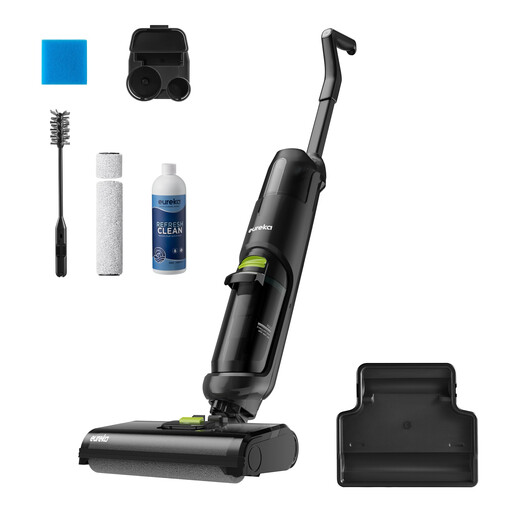
Why this product suits this profile: This cordless vacuum mop is designed for sealed hard floors and picks up dry and damp everyday dirt in a single pass.
The product information limits use to sealed hard floors. This makes it clearer that carpets and workshop waste are not its intended focus.
Self-cleaning function, separate water flow, assisted forward movement and a specified battery life of up to 30 minutes.
We have put together a complete, regularly updated list of products that fully meet these strict selection criteria and the safety regulations applicable in the EU.
After wet vacuuming, tanks and filters should be emptied, rinsed and dried completely according to the instructions. With cordless appliances, replacement rollers, filters, cleaning products and, where applicable, a spare battery also contribute to ongoing costs. Corded appliances are more likely to incur costs for dust bags or replacement filters.
The following applies to all designs:
Many models can pick up dry dirt from carpets. A vacuum mop, on the other hand, is often designed for hard floors only. The relevant factors are the manufacturer’s specifications and the floor attachment supplied.
Its service life depends on the operating mode, filter maintenance, frequency of use and availability of spare parts. Drying the appliance regularly after wet cleaning, keeping the airways clear and replacing the filter at the right time can help maintain its performance. It is not possible to give a reliable general service-life estimate.
In addition to electricity consumption, you should take cleaning products, filters, brush rollers and battery ageing into account. An appliance with self-cleaning can save time, but it still requires water, care and consumables. For an accurate estimate, it is worth comparing battery life, charging time and spare-part prices.