
Lieferung heute & morgen

Qualitätsgarantie

Willkommens-Angebote freischalten: KOSTENLOSE Lieferung | Bis zu 80 % RABATT | Kostenlose 30-Tage-JoyPlus-Testphase
App herunterladen
A wet and dry vacuum cleaner can clean dry dust, liquids and, depending on the model, carpets or hard floors. However, the wide choice can quickly lead to the wrong purchase. For example, a cordless wet and dry floor cleaner is not automatically suitable for workshop dust, while a robust wet vacuum without a mopping function only partly covers everyday floor cleaning.
The Joybuy Product Recommendation Officer selection therefore distinguishes between technical specifications and marketing claims. The key considerations are the intended use, filter system, tank capacity, operating range and how much maintenance is actually required after cleaning.
A high suction-power rating, such as 16,000 or 20,000 Pa, does not by itself describe the cleaning result. Brush design, airflow, filter condition and floor type also affect how much dirt is picked up. For a hard-floor cleaner, water delivery and roller design are also relevant. For bulky workshop waste, on the other hand, hose diameter, filter and container size are more important.
A wet vacuum picks up liquids. A carpet cleaner also sprays water or cleaning solution onto textiles and then vacuums up the dirty liquid. This function is useful for carpets, upholstery or car seats, but requires more cleaning and drying time. A vacuum cleaner with a mopping function, on the other hand, is generally intended for sealed hard floors.
A self-cleaning station often rinses or dries the brush roller. The dirty-water tank, filter and seals still need to be emptied, rinsed and dried thoroughly on a regular basis. Otherwise, odours and deposits may develop. For corded appliances with a separate filter, also bear in mind that different filters may be required for wet and dry vacuuming.
Wattage indicates the motor’s power consumption and cannot be directly equated with suction power. For cordless appliances, the manufacturer may state Pa values, while workshop vacuums are more likely to specify watts or kilopascals. Therefore, only compare values measured using the same method.
A suitable filter system is important for dry fine dust. A HEPA filter can retain fine particles, provided the appliance is designed for this and the filter is fitted and maintained correctly. Many wet and dry vacuum cleaners use foam filters for liquids. Never fit a filter while it is wet unless the operating instructions expressly permit this.
A 20- or 30-litre tank reduces interruptions during renovation work, in the garage or in the workshop. However, the larger housing requires more storage space and is often less manoeuvrable. For everyday hard-floor cleaning, compact appliances with separate clean- and dirty-water tanks are generally more practical.
With a cordless wet and dry vacuum cleaner, runtime and charging time should be considered together. Stated runtimes depend on the cleaning mode. An appliance with up to 30 minutes of runtime is suitable for small or medium-sized areas; models offering up to 40 or 45 minutes can provide more flexibility in larger homes. These figures come from the respective product specifications and may vary depending on use.
A flat-reclining position is useful in homes with low furniture. According to the product description, the Tineco Floor One Stretch S6 can be reclined flat to 180° and is designed for areas beneath furniture with a clearance of around 13 cm. Edge cleaning with a gap of just a few millimetres can reduce the amount of manual finishing required along skirting boards.
For workshops and cars, other features matter: long cables, extension tubes, a crevice tool, a blower function and a socket for power tools. A vacuum cleaner with a blower function, for example, can move leaves or light shavings out of hard-to-reach areas. However, flammable liquids, hot ash, sharp metal parts and hazardous substances should not be put into a household appliance unless the manufacturer expressly permits this.
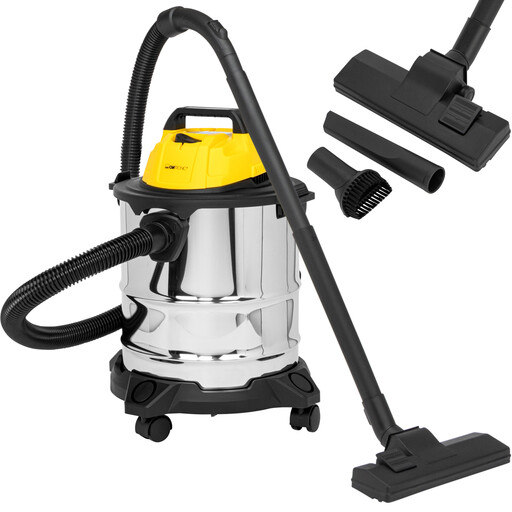
Why this product suits this profile: This corded wet and dry vacuum cleaner covers household, car, garden and smaller workshop tasks, with no battery charging required.
The specification goes beyond suction alone: it clearly lists a 20-litre stainless-steel tank, washable permanent filters and a blower function.
1200 watts, approximately 5 metres of cable, 360° castors and three suction tubes. Suitable for liquids, coarse dirt and dry dust.
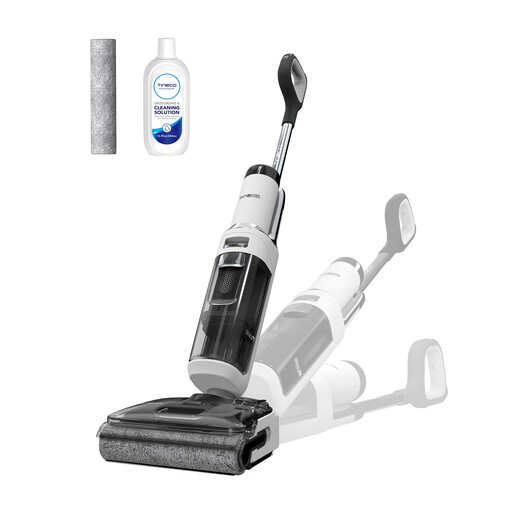
Why this product suits this profile: This cordless wet and dry floor cleaner is designed for routine cleaning of sealed hard floors such as tiles, laminate or sealed wood.
Its suitability is clearly limited to hard floors. This prevents the mistaken expectation that a wet and dry floor cleaner can replace a carpet cleaner for carpets.
180° flat design, three-sided edge cleaning, self-cleaning with 70-°C drying and up to 40 minutes of runtime according to the product specifications.
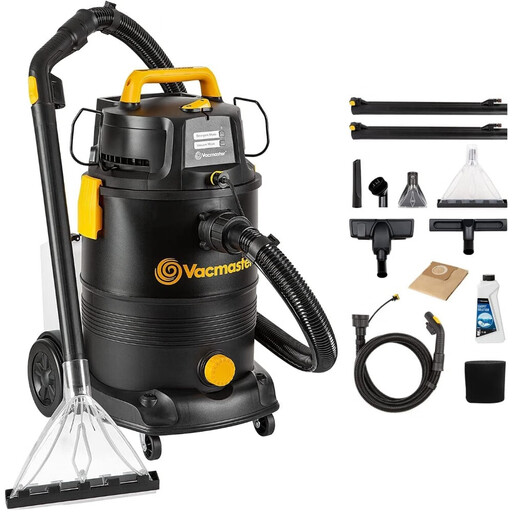
Why this product suits this profile: This vacuum combines wet and dry vacuuming with carpet and upholstery cleaning, making it suitable for households, car owners and anyone who cleans frequently.
Separate filters for dry, wet and shampoo operation make the intended use clear. A 30-litre collection tank reduces the need for frequent emptying.
1300-watt motor, 6-litre cleaning-solution tank, 30-litre collection tank and HEPA exhaust filter according to the product description.
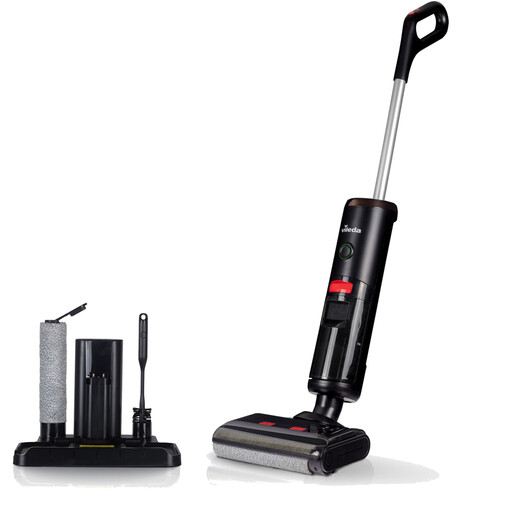
Why this product suits this profile: This appliance combines vacuuming and mopping on hard floors, while an anti-hair roller and washable HEPA filter address common needs in homes with pets.
Runtime is stated as a range of 35 to 45 minutes. This makes it easier to estimate the area that can realistically be cleaned than a single, general runtime figure.
220 watts, 750 ml clean-water tank, 600 ml dirty-water tank and self-cleaning in the station.
We have put together a complete, regularly updated list of products that fully meet these strict selection criteria and the safety regulations applicable in the EU.
Before using the appliance for the first time, check that the filter is fitted correctly for wet or dry operation. After each wet-cleaning session, we recommend the following steps:
For cordless appliances, charging cycles, replacement rollers, filters and cleaning solution also contribute to ongoing costs. A self-cleaning wet and dry floor cleaner can reduce the need for manual brush maintenance, but it uses electricity and still requires clean tanks. With a dry vacuum cleaner for workshop tasks, dust bags or replacement filters may also create ongoing costs.
Only models with a specified washing or carpet-cleaning function are designed for this purpose. A standard wet vacuum picks up liquid, but does not necessarily spray cleaning solution onto the carpet. For upholstery and car seats, check the operating instructions for suitable nozzles and the approved cleaning method.
It would not be reliable to give a fixed service life for all models. Longevity depends on frequency of use, filter maintenance, storage and the availability of spare parts. Emptying and drying the appliance regularly, as well as removing hair from the brush, can reduce strain on the motor and airflow system.
Water consumption depends on the floor type, water setting and cleaning mode. The manufacturer’s specifications for tank capacity and runtime provide an initial indication. To keep running costs low, use only the amount of cleaning solution specified, keep the filter clean and do not place the charging station somewhere damp or unsuitable.