Brands to consider
The details below relate to the specific product lines and models mentioned, not necessarily to a brand’s entire range.
Adler
The foldable AD 7821 is a documented example of a heated airer for smaller indoor drying spaces.
- Adler Europe lists 18 heating elements, a rated power of 220 W, and separate open and folded dimensions for the AD 7821.
- The manufacturer’s claim of faster drying is not based on independent tests on aprons, and does not automatically apply to other Adler models.
Todeco
According to the manufacturer, the Airer Heater is a foldable, heated indoor airer with several tiers and wheels.
- For the version described, Todeco lists 300 W, a bar temperature of 45–55 °C and a maximum load of 5 kg per tier.
- Instructions on positioning and distance from water sources are specific to this model; they do not confirm drying times for aprons.
Foxydry
According to the manufacturer, Foxydry Pro is a mounted alternative with air circulation and optional hot air.
- The manufacturer lists ceiling- and wall-mounted versions of Foxydry Pro, with an evenly distributed load of up to 35 kg.
- You’ll need a suitable place to install it; these details do not show that it dries a single apron more effectively.
InnovaGoods
According to the manufacturer, Dupledry Blue is a portable warm-air appliance with a cover and hanging space, rather than a traditional airer with heated bars.
- For this version, InnovaGoods lists 1200 W, a timer of 30–180 minutes and a maximum load of 15 kg.
- It uses a different type of heat; claims by the manufacturer about sterilising or removing odours are not independently verified.
Leifheit
The Pegasus Slim 16m is an example of an unheated clothes airer to compare if you don’t need extra heat.
- For this model, Leifheit lists a 16 m drying length and dimensions of 87 × 167 × 55 cm when set up.
- There’s no active heat support without a heating function.
Joybuy products for indoor drying
The Joybuy products below are designed for heated indoor drying and include foldable airers and portable dryers.
 No image available
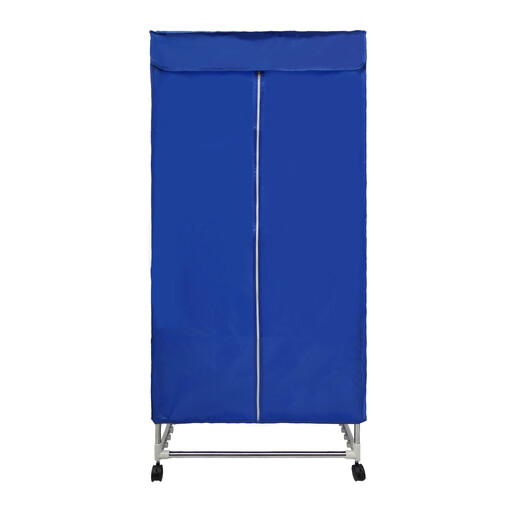
Heated clothes airer, 45–55 °C, foldable, 144 × 53 × 96 cm
This foldable design could suit you if you want to put your heated airer away after use.
The product name lists 45–55 °C and dimensions of 144 × 53 × 96 cm. Before buying, check that your apron can hang freely and that the heat is suitable for its care label.
View at Joybuy
 No image available
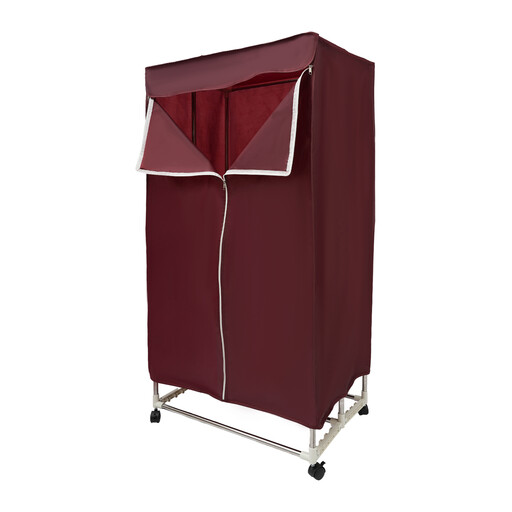
Portable electric clothes dryer with timer, foldable
The portable, foldable design could suit a drying space you want to move or put away as needed.
The product name mentions a timer. Check that the available hanging space is sufficient for your apron, and follow its care label when using heat.
View at Joybuy
 No image available
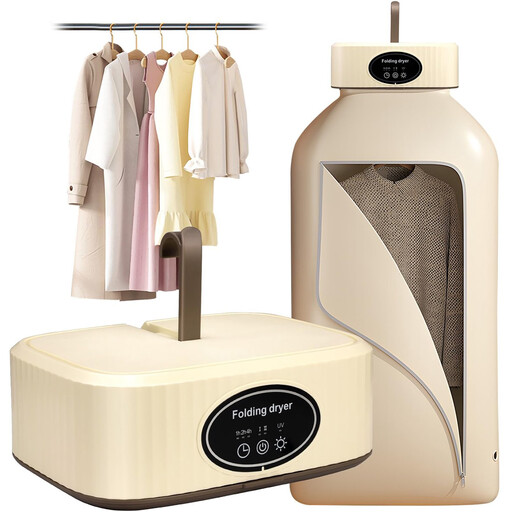
Foldable electric clothes dryer, 1200 W, timer, 66.14 lbs
This foldable electric dryer could be an option if you want to dry several items at once.
The product name lists 1200 W and a load capacity of 66.14 lbs. Check that the hanging space suits your apron, and ventilate regularly when drying clothes indoors.
View at Joybuy
 No image available
Portable clothes dryer, 600 W, timer for 1, 2 or 4 hours
The timer options listed in the product name may be useful if you want to limit drying time.
The product name lists 600 W and timer options of 1, 2 or 4 hours. Check that the hanging arrangement suits your apron’s shape and care label.
View at Joybuy
Frequently asked questions
Can I put any wet apron on heated bars?
No. This does not mean that heated bars are suitable for every fabric. Check the care label: GINETEX Germany’s symbols for natural drying distinguish between methods such as hanging and laying flat. For delicate fabrics, also check whether the heat is suitable.
Does the heating function mean I don’t need to ventilate?
No. When drying clothes indoors, you need to remove moisture regularly. The Verbraucherzentrale recommends checking room humidity with a thermo-hygrometer if needed.
How can I estimate the cost of electricity for heating?
Multiply the power consumption in kilowatts by the running time in hours and your price per kilowatt-hour. Adler Europe lists a rated power of 220 W for the AD 7821; running continuously at its rated power for two hours would work out at 0.44 kWh. Actual consumption depends on how you use it.
Where can I set up the Todeco Airer Heater?
For the 300 W Airer Heater described, Todeco specifies a flat, dry surface and a distance of at least 1.5 m from heat or water sources. These instructions apply to this model and should not automatically be assumed to apply to other appliances.
What does the CE marking mean on an electric clothes airer?
For products covered by EU rules requiring CE marking, the manufacturer uses the mark to declare that the product meets the applicable requirements. The European Commission points out that the CE mark is not an independent quality mark; the requirements and whether they apply depend on the specific product.
How long does the legal guarantee last when buying in Germany?
When you buy goods from a trader in the EU, you have a legal guarantee of at least two years from the date you receive them. The European Commission distinguishes this legal guarantee from a voluntary manufacturer’s guarantee.


