
Lieferung heute & morgen

Qualitätsgarantie

Willkommens-Angebote freischalten: KOSTENLOSE Lieferung | Bis zu 80 % RABATT | Kostenlose 30-Tage-JoyPlus-Testphase
App herunterladen
The range of wet cat food is vast, and it can be difficult to see through the marketing claims made by manufacturers. As a cat owner, you want to make an informed decision that supports your cat's health and suits their preferences, without falling for marketing hype. This guide will help you identify the key hallmarks of quality and steer clear of common purchasing pitfalls.
Many well-intentioned purchases turn out to be unsuitable or of lower quality than expected. Watch out for these three points to avoid disappointment:
To find the right food, you should focus on objective, verifiable criteria. These three aspects are essential for making the best choice.
The ingredients list is the most important indicator of a food's quality. An "open declaration," where all ingredients are listed individually with their percentages, is more transparent than a "closed declaration," which groups ingredients together (e.g., "meat and animal derivatives"). Pay attention to which types of meat are listed first. The designation complete food is also a crucial feature, as it guarantees that the food covers the entire nutritional needs of an adult cat.
Whether your cat prefers a fine p?té, chunks in jelly, or cat food in gravy is a matter of individual taste. However, the packaging also has practical advantages. A wet cat food pouch or tray is ideal for guaranteeing freshness and dosing the food amount precisely. This avoids leftovers that lose their aroma in the fridge. For multi-cat households or for stocking up, a bulk cat food pack of cans can be a cost-effective alternative.
A balanced recipe contains fats, vitamins, and minerals in addition to protein. Taurine is an essential amino acid for cats and must be included in every complete food. Look for the absence of artificial colours, preservatives, and flavourings, as well as sugar, which has no nutritional benefit in cat food.
Here are some product recommendations tailored to the different requirements of cats and their owners.
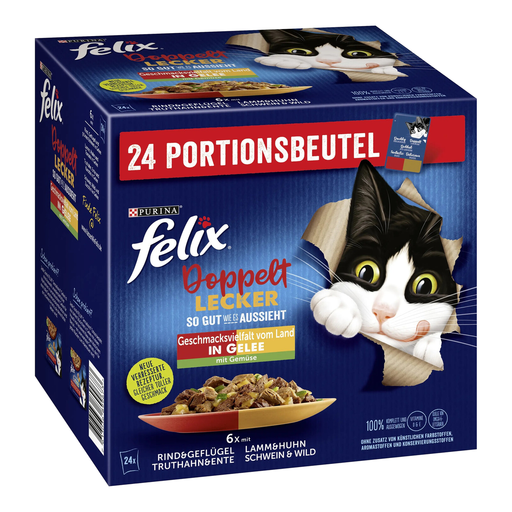
Why This Fits Their Persona: Ideal for owners who want to stock up while getting solid value for money. This bulk cat food pack offers variety and is a practical solution for everyday feeding.
It avoids the 'false variety' trap by offering four distinct dual-flavour combinations (e.g., Beef & Poultry), ensuring genuine taste variety.
Designed as a complete food, it provides all necessary nutrients, vitamins D & E, and Omega-6 fatty acids. The convenient pouches make feeding easy.
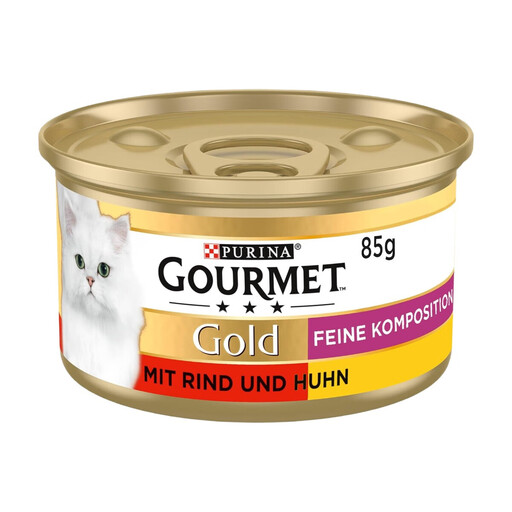
Why This Fits Their Persona: Picky cats often respond well to special textures and intense flavours. The combination of two types of meat in one meal offers an appealing experience for discerning palates.
By combining beef and chicken in gravy, this food offers more complex flavour and texture variety within a single portion, which can increase acceptance among fussy eaters.
A complete meal that, according to the manufacturer, is free from added artificial colours, preservatives, or flavourings. The 85g tins ensure fresh servings.
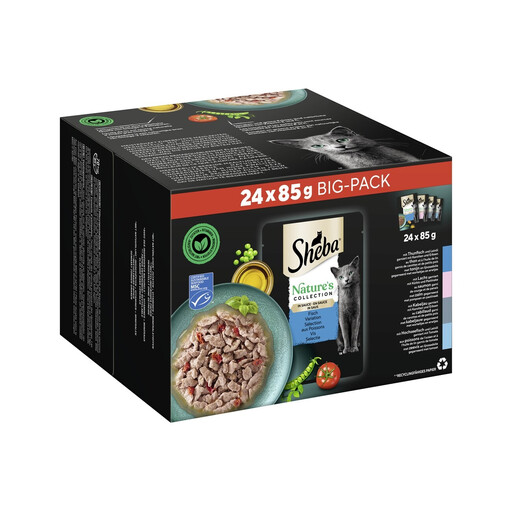
Why This Fits Their Persona: For cat owners who value a conscious diet and are specifically looking for grain-free cat food with traceable, natural ingredients.
This food avoids the 'grain-free halo effect' by not only omitting grain but also being based on high-quality, carefully selected natural ingredients, according to the manufacturer.
The grain-free recipe is particularly suitable for cats with dietary sensitivities. It is a complete food enriched with vitamins and minerals for a balanced diet.
We have compiled a comprehensive, up-to-date list of products that fully meet these strict selection criteria and all relevant regulations.
1. How much wet food does an adult cat need per day? The required amount of food depends on your cat's weight, age, and activity level. An average active cat weighing 4 kg needs about 200 to 250 grams of wet food per day, divided into at least two meals. Always refer to the feeding recommendations on the product packaging, as calorie content can vary, and adjust the amount as needed.
2. Can you mix wet and dry cat food? Yes, mixed feeding is a common practice. It combines the benefits of both food types: wet food ensures good hydration, while dry food can support dental care and be left out for flexible feeding. If you mix, it's important to adjust the total calorie intake to avoid overfeeding. Many manufacturers, such as Sheba or Felix, provide recommendations for mixed feeding on their packaging.
3. How long does opened wet cat food last? After opening, wet food should be immediately transferred to a clean, sealable container or the original packaging should be well-covered. Stored in the refrigerator, it is generally good for up to 48 hours. Serve the food at room temperature, as most cats dislike cold food straight from the fridge.