
Lieferung heute & morgen

Qualitätsgarantie

Willkommens-Angebote freischalten: KOSTENLOSE Lieferung | Bis zu 80 % RABATT | Kostenlose 30-Tage-JoyPlus-Testphase
App herunterladen
Wet cat food is part of the daily feeding routine in many households. The selection ranges from cat food in sauce and jelly to pâtés, fillet pieces and multipacks with assorted varieties. This sheer variety can make the buying decision more difficult.
Three common pitfalls occur particularly often:
For daily main feeding, the label should explicitly state complete food. Complementary food, by contrast, is intended to be combined with a complete diet or served as a snack.
This is particularly important when choosing products: Sheba Filets Bowl Natural Chicken 16 x 60 g, for example, is described as complementary food. Some fish or prawn fillet varieties are likewise not intended to be served as a sole daily meal. The quantity of the main food must then be adjusted accordingly.
Wet food for adult cats is formulated for fully grown animals. For young cats, choose kitten wet food specifically, or a food intended for cats up to one year of age. Kittens have different nutrient and energy requirements from adult cats.
Also pay attention to the recommended daily ration. These figures are guidelines and depend, among other factors, on body weight, age, activity level and living conditions. An 85 g portion is easy to portion out, while 400 g cans may be more suitable for multi-cat households or cats with a higher daily requirement.
When choosing wet cat food, it is worth checking:
Claims such as “no artificial colourings” or “no preservatives” should always be verified against the current packaging. Recipes can change.
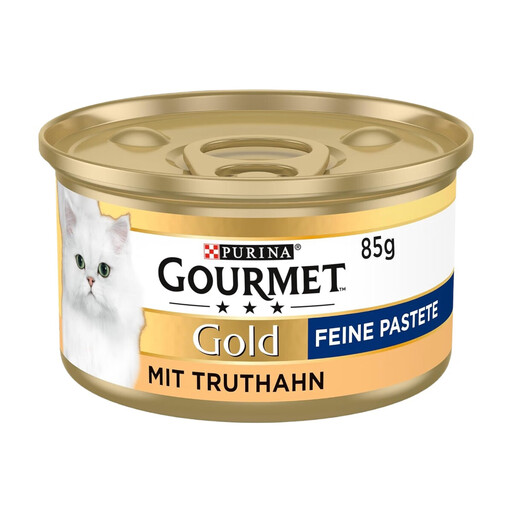
Why This Fits Their Persona: The 12 individual 85 g portions make it easy to get started and help minimise opened leftovers in the refrigerator.
The portion size is clearly stated. As the product information contains differing details about the food category, the label should be checked for confirmation that it is a complete food before purchase.
12 cans, a smooth pâté texture and stated values of 10.5% protein and 6.0% fat.
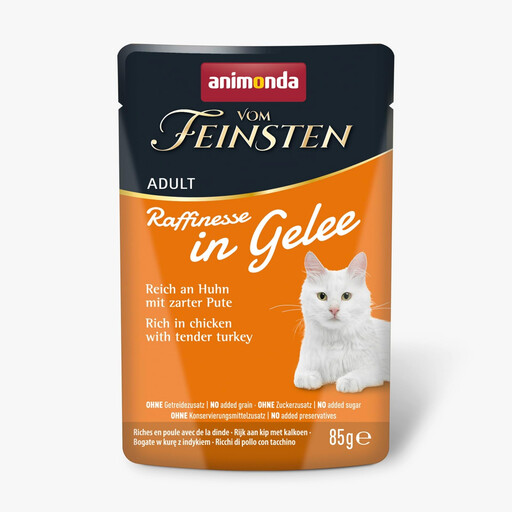
Why This Fits Their Persona: Ideal for owners who specifically look for a declared recipe without grains, added sugar, soya, colourings or flavourings.
The advertised features are specifically listed in the available product information. Nevertheless, allergies and the current ingredients list should be checked before feeding.
24 portion pouches, 39% meat and animal derivatives according to the product information, plus 82% moisture.
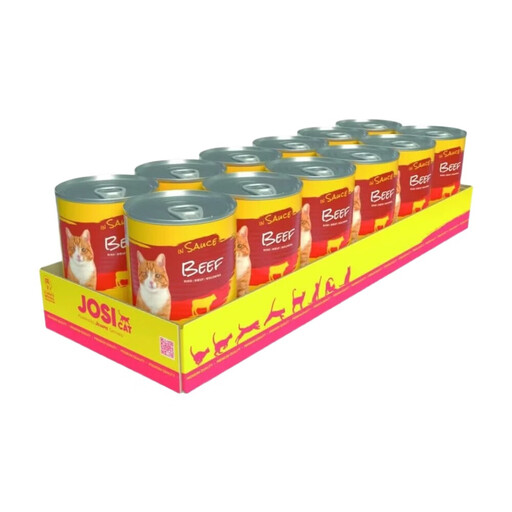
Why This Fits Their Persona: The large cans, totalling 4,980 g, are designed for higher consumption and can be practical for households with several adult cats.
The large quantity is clearly stated. Anyone feeding just one cat should compare the daily requirement and shelf life after opening with the can size.
Cat food in sauce, 415 g cans and feeding guidelines for cats weighing 4 to 6 kg.
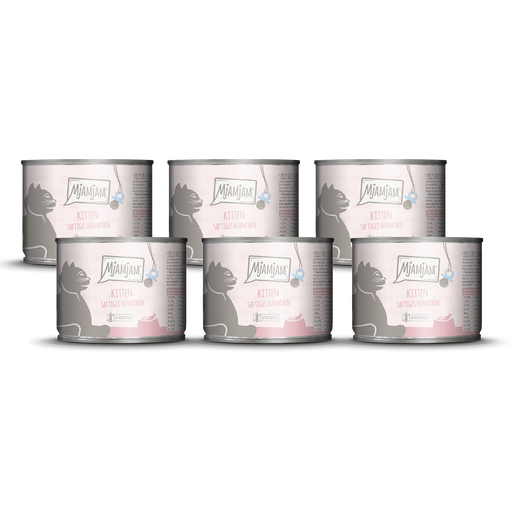
Why This Fits Their Persona: According to the product information, the recipe is intended for kittens and contains chicken, broth and salmon oil.
The clear life-stage designation helps prevent adult food from being used accidentally as the main diet for a young cat.
200 g portions, 70% chicken according to the product information and stated feeding guidelines for kittens weighing approximately 0.5 to 2 kg.
If you are looking for variety, a multipack with several flavours can be a good choice. The Daily Cat Multi-Pack Ocean Range, for example, includes varieties with salmon and trout, plaice and cod, as well as tuna and herring. When choosing fish-based cat food, consider sensitive animals and any known intolerances.
For a sauce-based texture, options include Vitakraft Poésie Deli Sauce with Chicken, Sheba Selection Mini Fillets or Purina Gourmet Perle with Chicken Strips. Those who prefer beef can consider Vitakraft Poésie Création with Beef and Carrots or JosiCat Beef in Sauce. However, the exact composition can differ significantly: one product may contain grains, while another may be labelled grain-free.
For storage, keep unopened packs in a cool, dry place. Opened cans, trays or pouches should be stored in the refrigerator. The permitted consumption period after opening varies by product and packaging; the label is always the decisive source.
We have put together a current selection of products that can be compared based on recipe, life stage, portion size and food category.
That depends on the manufacturer’s instructions. It is often recommended to store opened portions in the refrigerator and feed them within 24 to 48 hours. The packaging takes precedence. Before serving, the food can be brought to room temperature.
Either can be appropriate depending on the cat’s preference. Jelly is firmer, while sauce is more fluid and may improve acceptance for some cats. For nutritional suitability, however, the classification as complete food, the ingredients list and the feeding recommendation are more important than texture alone.
There is no one-size-fits-all amount. Weight, activity level, age, neutering status and additional treats all influence requirements. Use the table on the packaging as a guide and monitor your cat’s body weight regularly. If your cat has specific dietary needs, consult a veterinary professional.