
Lieferung heute & morgen

Qualitätsgarantie

Willkommens-Angebote freischalten: KOSTENLOSE Lieferung | Bis zu 80 % RABATT | Kostenlose 30-Tage-JoyPlus-Testphase
App herunterladen
The idea is tempting: a single device that vacuums and mops simultaneously to save precious time on household chores. A vacuum mop promises just that. But the market is flooded with devices whose marketing promises often shine brighter than the floors they clean. Many buyers find that after just a few months, their new device misses corners, is cumbersome to maintain, or its cleaning performance fails to meet expectations.
As your Joybuy Product Recommendation Officer, I'll help you identify the typical pitfalls. Instead of being swayed by exaggerated advertising claims, we'll focus on the technical features that truly determine a vacuum mop's everyday usability.
Before you make a decision, you should be aware of three common problems that often only become apparent after the purchase and lead to frustration.
To avoid buyer's remorse, you should focus your attention on the following practical features. These determine whether a vacuum with a mopping function will actually make your daily life easier.
The first decision concerns the type of device that fits your lifestyle.
For households with pets, a well-designed brush system is essential. A vacuum mop for pet hair should have a special anti-tangle brush. These brushes often have a V-shaped bristle arrangement or integrated combs that prevent long hair from wrapping around the roller. For vacuum mops for hard floors, soft microfiber rollers are ideal as they effectively pick up dirt without scratching sensitive surfaces like parquet.
A quality feature that is often overlooked is the tank system. Simple models use only one tank, which means dirty water is quickly spread back onto the floor. Look for a dual-tank system that consistently separates fresh and dirty water. This ensures that you are always mopping with clean water and achieving a hygienic cleaning result.
Instead of making a one-size-fits-all recommendation, we have selected models tailored to specific needs and household types.
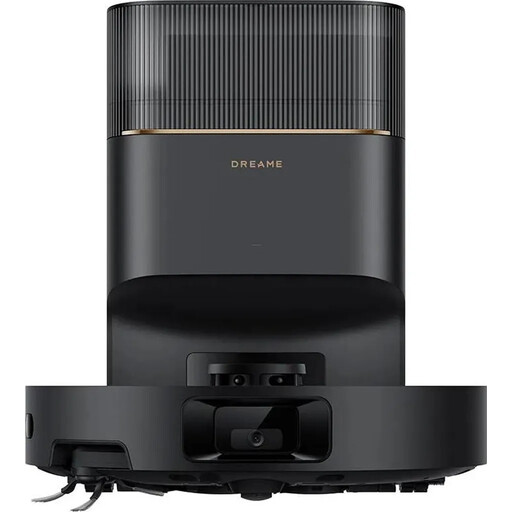
Why this model fits: This model is designed for maximum autonomy. The base station empties the robot's dustbin into a large 5-liter bag, which the manufacturer claims allows for up to 150 days without manual intervention. Ideal for those looking for a "set-it-and-forget-it" solution for daily floor care.
The extendable side brush and precise Pathfinder navigation address the problem of poor edge cleaning (Pitfall 2). The fully automatic station significantly minimizes maintenance effort (Pitfall 3).
The combination of 13,000 Pa Vormax suction power and advanced 3D structured light obstacle detection ensures efficient and trouble-free cleaning even in complex environments.
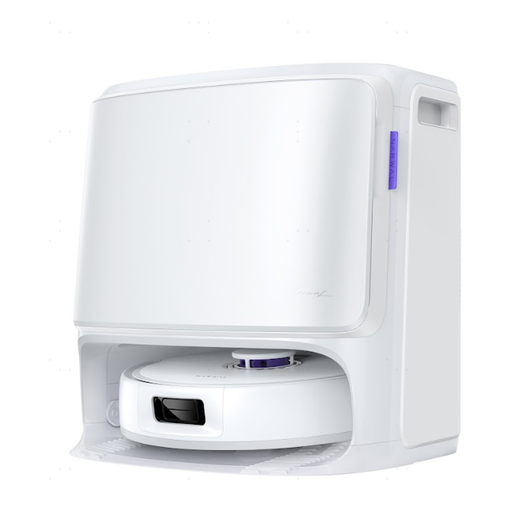
Why this model fits: This device was specifically developed for the challenges in households with pets and children. The combination of strong suction power and a special brush system is designed to effectively eliminate pet hair without requiring constant manual cleaning of the brush.
The "Double anti-tangle brush" counteracts the problem of constant maintenance due to tangled hair (Pitfall 3). The triangular mop design improves cleaning in corners and along edges (Pitfall 2).
The station cleans and dries the mopping pads with hot air, which inhibits the growth of bacteria and odors. The ultrasonic sensors detect carpets and automatically lift the mops.
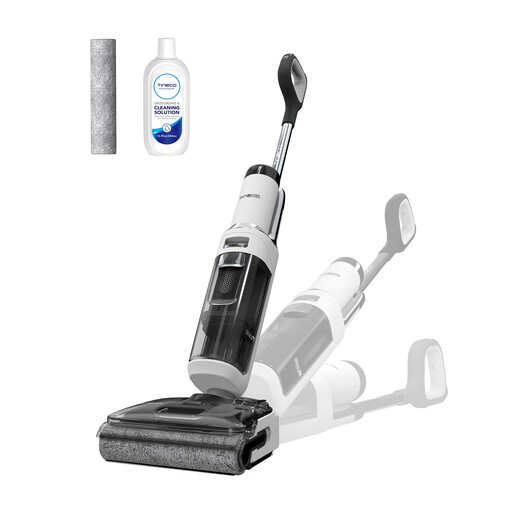
Why this model fits: As a manual cordless vacuum mop, the Stretch S6 offers full control and, thanks to its unique design, is able to lie almost completely flat on the floor. This makes it the ideal choice for cleaning under sofas, cabinets, and beds where robots can't reach.
The 180° lay-flat design completely solves the problem of poor flexibility (Pitfall 2). The 3-sided edge cleaning improves performance along baseboards. The FlashDry self-cleaning with hot air drying minimizes maintenance (Pitfall 3).
Enables cleaning under furniture with a low clearance of just 13 cm. The battery life of up to 40 minutes is sufficient for both targeted and larger cleaning tasks.
We have compiled a complete, up-to-date list of products that fully meet these strict selection criteria and UK safety regulations.
No, it is important to only use low-foaming cleaning solutions recommended by the manufacturer or explicitly suitable for vacuum mops. Conventional floor cleaners can foam too much and damage or clog the device's internal pipes, sensors, and pumps.
The replacement intervals depend heavily on the model, frequency of use, and the level of dirt. As a general guideline:
Modern, high-quality robot vacuums feature automatic carpet detection using ultrasonic sensors. When the robot moves onto a carpet in mopping mode, it automatically lifts its mopping module to prevent it from getting wet. For simpler models, you may need to manually set up "No-Mop Zones" for your carpets in the app.