
Lieferung heute & morgen

Qualitätsgarantie

Willkommens-Angebote freischalten: KOSTENLOSE Lieferung | Bis zu 80 % RABATT | Kostenlose 30-Tage-JoyPlus-Testphase
App herunterladen
A single device that vacuums and mops at the same time—the idea is tempting. A wet-dry vacuum promises to cut your cleaning time in half, clearing floors of dust and stains in a single pass. But the market is flooded with models whose marketing promises often fall short in practice. Before you make a purchase, it's crucial to understand the common pitfalls that can lead to disappointment and unnecessary expense.
As your Joybuy Product Recommendation Officer, I'm here to help you separate the wheat from the chaff. We'll look at which technical specs actually matter and how to find a device that's the right fit for your home.
Many devices look impressive on paper but reveal their weaknesses only in everyday use. Pay special attention to these two points:
To avoid a bad purchase, you should focus on objective, real-world features. These three parameters are crucial for the performance and longevity of a wet-dry vacuum.
A cordlessvacuum cleaner offers maximum flexibility, but only if the battery performance is sufficient for your living space. Manufacturer claims about maximum runtime almost always refer to the eco mode with the lowest suction power. In turbo mode, which is needed for stubborn dirt or carpets, the runtime can drop to just 10–15 minutes.
A good wet-dry vacuum must consistently separate fresh and dirty water. This is the only way to ensure you're always mopping your floors with clean water, not just spreading dirt around.
A bagless wet-dry vacuum may not have costs for dust bags, but it does require regular maintenance. The longevity of the device depends directly on how easy this maintenance is.
Instead of making a one-size-fits-all recommendation, we've selected models tailored to specific needs and household types.
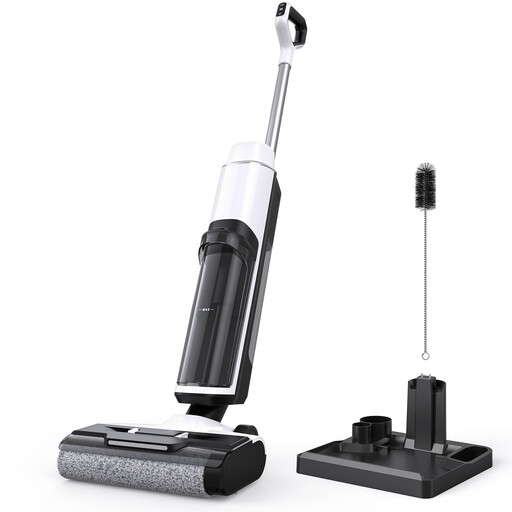
Why This Fits Their Persona: This model is a great choice for households looking for a reliable solution for daily hard floor cleaning. It combines the essential features of a wet-dry vacuum without breaking the bank.
It features a clear dual-tank system (910 ml fresh water, 600 ml dirty water) that ensures clean separation. The self-cleaning function rinses the brush, reducing direct maintenance.
Generous tank capacities for fewer interruptions; LED display and voice prompts for easy operation.
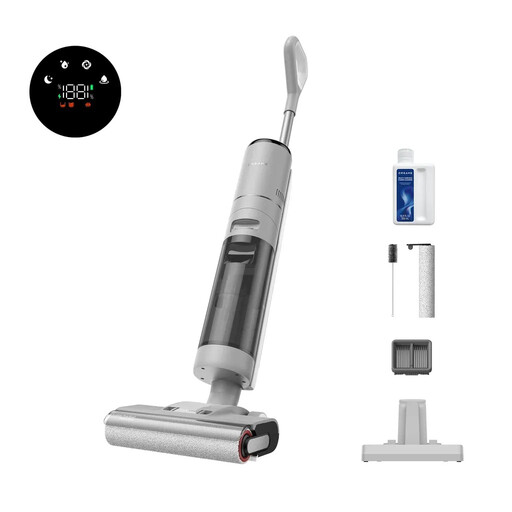
Why This Fits Their Persona: Ideal for families and pet owners who deal with hair, food spills, and liquids daily. Its design is focused on thoroughly and efficiently removing stubborn messes.
An integrated comb-like scraper actively de-tangles hair from the brush roller during operation, countering the common problem of matted brushes. The 16,000 Pa suction power is combined with an effective brush design.
Effective edge-to-edge cleaning thanks to the forward-facing brush; four cleaning modes (including a suction-only mode) for different needs.
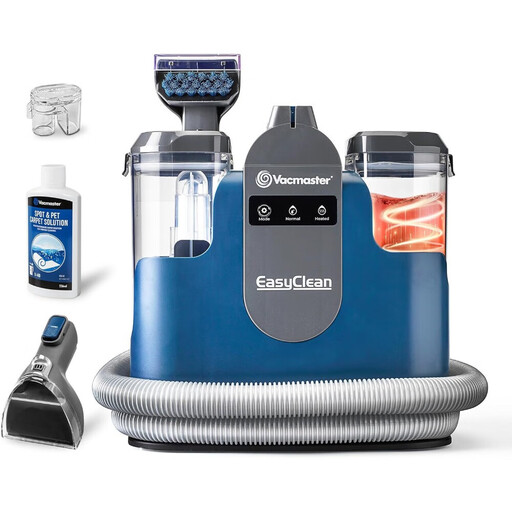
Why This Fits Their Persona: This isn't a classic stick vacuum but a specialised *upholstery cleaner*. It's the right choice for anyone who wants to spot-clean stains on sofas, carpets, or car seats, where a standard wet-dry vacuum reaches its limits.
Instead of being an all-in-one device, it focuses on one job and does it effectively. The heated cleaning function tackles tough stains more precisely than the cold-water systems of many wet-dry vacuums.
Dual-mode heating function for normal and stubborn stains; long hose (180 cm / 5.9 ft) for excellent reach in cars or on stairs.
Some cleaning tasks require specialised tools. For deep cleaning vehicle interiors, we've curated a selection of products tailored to these specific needs.
1. How often should you clean the filter of a wet-dry vacuum? This depends on the frequency of use and the type of dirt. As a rule of thumb, the foam filter should be rinsed under running water after each use. The HEPA filter should be cleaned or replaced every 1-3 months, depending on the manufacturer's instructions. It's crucial that all filters are completely dry before being reinserted to prevent mould and odours.
2. Can you use any cleaning solution in a wet-dry vacuum? No. It is strongly recommended to only use cleaning solutions provided by the manufacturer or those explicitly approved for wet-dry vacuums. Standard household cleaners can foam up too much and damage the motor or corrode the device's sensitive hoses and seals. Additionally, the manufacturer's cleaning solutions are formulated for specific surface treatments.
3. Is a self-cleaning function with hot-air drying really worth it? Yes, this feature provides significant added value. While a simple rinse function is better than no cleaning at all, it's the subsequent drying of the brush roller and suction channels that effectively prevents the growth of bacteria and mould. This leads to more hygienic cleaning, less maintenance, and prevents the musty odours that are a common problem with simpler models.