
Lieferung heute & morgen

Qualitätsgarantie

Willkommens-Angebote freischalten: KOSTENLOSE Lieferung | Bis zu 80 % RABATT | Kostenlose 30-Tage-JoyPlus-Testphase
App herunterladen
A modern self-cleaning wet & dry vacuum promises to make household chores significantly easier: vacuuming and mopping in a single pass, followed by an automatic brush cleaning cycle. In practice, however, not all devices live up to their advertising claims. Certain design flaws and exaggerated marketing statements often lead to user dissatisfaction after a short time. Before you make a purchasing decision, it's crucial to understand the typical weak points.
Common Pitfalls When Buying a Wet & Dry Vacuum:
cordless vacuum mop is often depleted after just 15 to 20 minutes, interrupting the cleaning process.To avoid these problems, you should focus your attention on a few core technical parameters. These are the key determinants of performance and everyday user comfort.
An effective self-cleaning system is the core feature of this product category. Look for models that offer more than just a cold water rinse. Hot water cleaning (e.g., at 60°C) dissolves grease and stubborn dirt from the brush roller much more effectively. Even more important is a subsequent hot air drying cycle. Only a floor washer with a drying function that actively dries the brush can reliably prevent the growth of bacteria and odours.
Suction power, often specified in Pascals (Pa), is an indicator of how well a wet-dry vacuum can pick up both dry dust and wet messes. For household use, values between 15,000 and 18,000 Pa are generally sufficient. However, high suction power also requires a powerful battery. Compare the battery capacity (in mAh) and the realistic runtime in Standard or Turbo mode, not just Eco mode. A good cordless vacuum and mop should offer a fine balance to clean a medium-sized apartment without interruption.
A well-thought-out device design proves its worth in practice. A wet & dry vacuum with edge cleaning features a brush roller that extends to the very edge of the housing—ideally on both sides. This minimises the uncleaned strip along walls. Additionally, a low-profile design is advantageous. Models that can lay almost completely flat (e.g., with a 180-degree joint) allow for cleaning under sofas, beds, and other low furniture, making manual follow-up work unnecessary.
Based on these objective criteria, we have identified several models that are well-suited for different user profiles and their specific floor cleaning needs.

Why This Fits Their Persona: This model is aimed at users with the highest standards for hygiene and convenience. The combination of high suction power, intelligent dirt detection, and a fully automated maintenance system makes it a comprehensive solution for tech-savvy households seeking efficient cleaning for hard floors and more.
The 60°C hot water self-cleaning and 5-minute hot air drying actively combat odour and mould formation. The dual-sided edge-cleaning design eliminates the uncleaned strip along skirting boards.
Fully automated maintenance (washing, drying, detergent dispensing) and the 180° lay-flat design for cleaning under furniture.
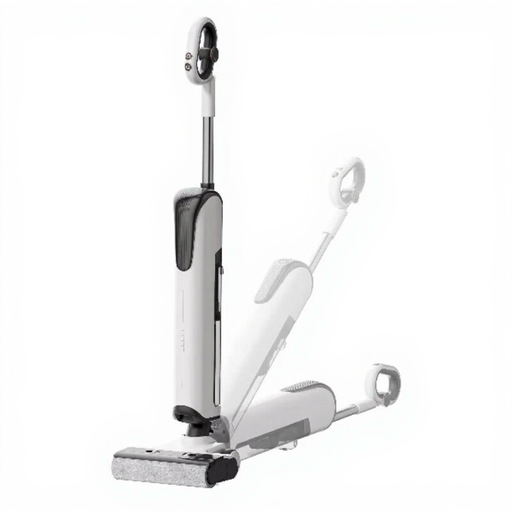
Why This Fits Their Persona: This device offers a good balance of suction power (17,000 Pa) and practical features for daily life with children or pets. Adaptive cleaning modes and a comb-scraper to prevent hair tangles make it a solid all-rounder for mixed messes.
The 60°C air drying in the station prevents odour build-up. The slim design allows for cleaning with only a 2-4 mm gap to the edge, significantly reducing the uncleaned strip.
Offers an electrolysed water cleaning function for extra hygiene and adaptive cleaning modes that adjust to the level of dirt.
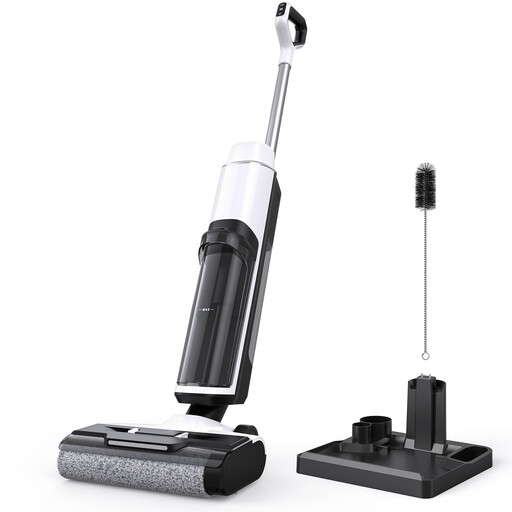
Why This Fits Their Persona: For users who want to experience the benefits of a self-cleaning wet & dry vacuum without immediately investing in a premium model. It offers the core functions like vacuuming, mopping, and automatic brush cleaning at a more accessible price point.
Features an automatic self-cleaning function that is more hygienic than manual cleaning. The dual-sided brush improves edge cleaning compared to basic models without this feature.
Good value for money. Offers useful convenience features like self-propulsion and voice prompts in an affordable package.
We have compiled a complete, up-to-date list of products that fully meet these strict selection criteria and German safety regulations.
It is recommended to empty and briefly rinse the dirty water tank after each use. This prevents the development of unpleasant odours and bacterial growth. The tank size (usually 600–700 ml) is typically designed for a complete cleaning cycle of an average-sized apartment.
Not necessarily. An automated cleaning process, especially with controlled water temperature, can be gentler than manual scrubbing. The subsequent drying also prevents material fatigue from constant moisture. Regardless, the brush roller is a consumable part that should be replaced every 6 to 12 months, depending on the frequency of use and floor type.
Even with automatic cleaning, minimal manual maintenance is necessary. This includes regularly cleaning the dirty water tank and the filters (e.g., HEPA filter) to ensure consistently high suction power and clean exhaust air. You should also occasionally check if long hairs or threads have become entangled in the brush roller's mechanism, which the self-cleaning system might not have completely removed.