
Lieferung heute & morgen

Qualitätsgarantie

Willkommens-Angebote freischalten: KOSTENLOSE Lieferung | Bis zu 80 % RABATT | Kostenlose 30-Tage-JoyPlus-Testphase
App herunterladen
Whether it's spilled liquids in the kitchen, stubborn dirt in the workshop, or a deep clean of your car seats – a powerful wet-dry vacuum promises to be a universal solution for demanding cleaning tasks. But the market is flooded with devices and grandiose marketing claims that often fail to deliver in practice. Many buyers only realise after the purchase that their new appliance is unwieldy, difficult to clean, or disappointing in its performance.
As your Joybuy Product Recommendation Officer, I'll help you identify the common pitfalls and make an informed decision. We'll focus on the objective features that truly matter and cut through the marketing hype.
Before you invest, you should be aware of the three most common issues that can lead to a bad purchase. Understanding these is the first step toward choosing a device that will serve its purpose for years to come.
To avoid the pitfalls mentioned above, you should focus on three core technical features. These determine the actual performance and user-friendliness of your device.
Suction power is the most critical factor. It's not determined by motor power (Watts) alone, but by the synergy of the motor, airflow design, and nozzle construction. A value that often better describes actual performance is the suction power at the nozzle, sometimes specified in Airwatts (AW).
The tank capacity (in litres) is crucial for the intended use. For occasional car cleaning or minor household mishaps, a volume of 15–20 litres is often sufficient. For use as a workshop vacuum or during renovations where a lot of coarse dirt or liquid is generated, models with 30 litres or more are the better choice. Also, pay attention to mobility: large wheels and a long operating radius thanks to an adequate cable are essential for practical handling.
Think carefully about the primary tasks the device should perform:
A good filter system not only protects your health but also the device's motor.
Based on the criteria above, we have identified a few models that represent a well-thought-out solution for specific user profiles.
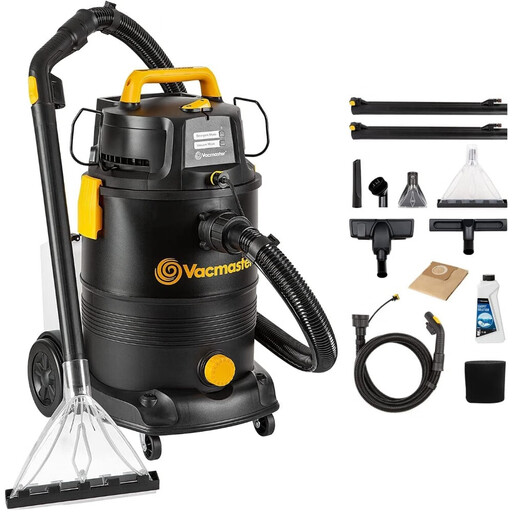
Why This Fits Their Persona: This model is designed for users who need a versatile appliance for their home, workshop, and vehicle care. It combines wet and dry vacuuming with a genuine washing function for carpets and upholstery.
It addresses the pitfall of impractical tanks with a dual system: a 30-litre collection container and a separate 6-litre detergent tank. The HEPA filter system also ensures clean exhaust air during dry vacuuming.
Large Capacity: The 30-litre tank minimises interruptions. 3-in-1 Functionality: One device for vacuuming, washing, and collecting liquids.
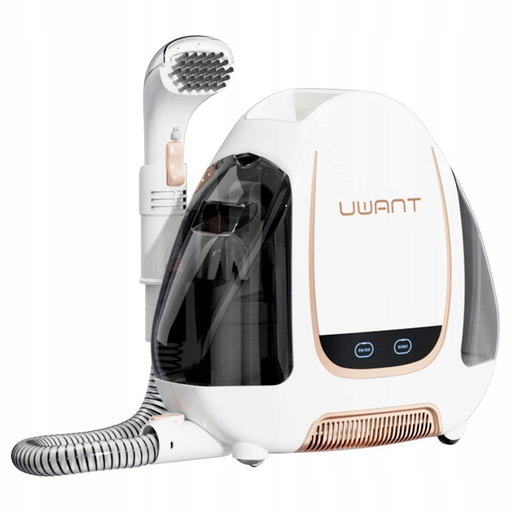
Why This Fits Their Persona: Ideal for households with children, pets, or anyone who values spotless upholstery and carpets. This device is a specialised spot cleaner designed for targeted stain removal.
It solves the problem of superficial cleaning with a high-pressure spray system that dislodges dirt from deep within the fibres and immediately vacuums it away. The patented self-cleaning function for the hose also prevents odours.
Two Suction Levels: Adjustable power (up to 12,000 Pa) for different levels of soiling. Automatic Cable Rewind: Ensures easy and tidy storage.
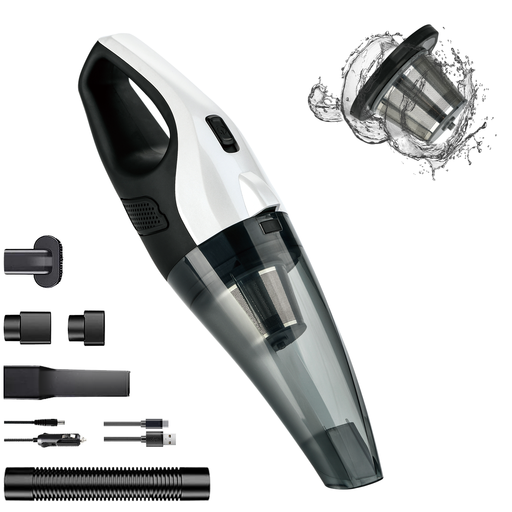
Why This Fits Their Persona: Perfect for car enthusiasts and anyone looking for a quick, uncomplicated solution for crumbs, dust, and pet hair in small spaces. This cordless handheld vacuum is lightweight and always ready to go.
This device doesn't try to be a jack-of-all-trades. It focuses on one task: quick, dry vacuuming. It bypasses the pitfall of being unwieldy by being compact and lightweight, requiring no complex tank or filter systems.
Dual Power System: Can be operated cordlessly with a battery or directly via the 12V socket in the car. Compact and Lightweight: Easy to store and handle.
We have compiled a complete, up-to-date list of products that fully meet these strict selection criteria and German safety regulations.
A wet-dry vacuum is primarily designed to suck up dry debris (dust, shavings) and liquids. It cleans surfaces but does not wash them. A carpet cleaner (also called a spray extraction device) is a specialist for fabrics. It sprays water with detergent onto the surface and immediately vacuums up the dirty liquid to achieve a deep clean.
No, it is important to only use low-foaming detergents recommended by the manufacturer or specifically designated for carpet cleaners. Standard household cleaners can foam too much, which can damage the motor and impair suction power. Additionally, aggressive chemicals can attack the device's seals and hoses.
The frequency depends on usage. After each wet vacuuming session, the foam filter should be rinsed under clean water and allowed to dry completely. The dry filter (e.g., cartridge filter) should be regularly tapped out or cleaned with a brush. A replacement is generally necessary when the suction power noticeably decreases or the filter shows visible damage. Please refer to the manufacturer's instructions for specific guidance.