
Lieferung heute & morgen

Qualitätsgarantie

Willkommens-Angebote freischalten: KOSTENLOSE Lieferung | Bis zu 80 % RABATT | Kostenlose 30-Tage-JoyPlus-Testphase
App herunterladen
A wet and dry vacuum cleaner can pick up dry dust, coarse dirt and spilled liquids. Models with a mopping or washing function can also clean hard floors with water. However, product descriptions are not always clear: a wet and dry vacuum cleaner for the workshop works differently from a cordless floor cleaner with a rotating brush roller.
If you only look at wattage or terms such as “3-in-1”, it is easy to buy a machine that does not suit your intended use in everyday life. Three common pitfalls are particularly important:
For renovation work, garages, cellars, gardens or vehicle cleaning, corded machines with a large container are a practical choice. Depending on the filter and the manufacturer’s specifications, they can pick up liquids, wood shavings, leaves or coarse dirt. A container with 20 litres or more means fewer interruptions while you work.
A blowing function is useful, for example, for removing dry leaves or dust from hard-to-reach areas. However, it is not a substitute for a leaf blower when covering large areas. You should also check the castors, cable length, hose diameter and available accessory holder.
Cordless wet and dry vacuum cleaners with a mopping function often combine dry vacuuming and damp cleaning in a single operation. They are designed for sealed hard floors such as tiles, laminate, vinyl or sealed wood. Carpets, untreated wooden floors and delicate surfaces should only be cleaned if the instruction manual expressly permits it.
Important specifications include the capacity of the clean- and dirty-water tanks, the runtime, and the drying and cleaning routine after use. A self-cleaning wet vacuum cleaner can take care of certain steps for you, but it does not eliminate the need to empty and dry the machine.
A washing vacuum cleaner sprays cleaning solution or water onto textile surfaces and then vacuums the liquid back up. For carpets, car seats and upholstered furniture, the spray function, separate tanks, suitable nozzles and adjustable water output are therefore important. After cleaning, textiles need sufficient time to dry.
When switching between wet and dry vacuuming, using the right filter is essential. Many wet and dry vacuum cleaners use foam filters for liquids and cartridge or pleated filters for dry dust. Some models also support a dust bag.
The filter must be fitted correctly and, if specified by the manufacturer, cleaned regularly. Filters and containers must be completely dry before dry vacuuming. A multi-stage filtration system may be useful for fine dust or pet hair. Specifications such as “HEPA” should always be considered in relation to the specific filter, maintenance requirements and the manufacturer’s guidance; they do not provide a blanket health guarantee.
For corded machines, tank capacity and cable length are important practical specifications. A 20-litre tank and a five-metre cable, as specified for the Clatronic model, can provide a larger working radius for the workshop and home.
For cordless machines, runtime depends on the mode selected. Manufacturer claims such as “up to 40 minutes” do not necessarily refer to the highest power setting. Also check the charging time, whether a replacement battery is available, and the size of the clean- and dirty-water tanks. Small tanks are more compact, but need to be emptied or refilled more frequently.
A crevice nozzle, furniture brush, wet/dry floor nozzle or upholstery nozzle expands the range of possible uses. For workshop jobs, robust suction tubes and a durable container are important. For floors, however, the brush roller, edge cleaning and suitable water flow take priority.
As a rule, hot ash, burning items, explosive substances and flammable liquids must not be vacuumed. Sharp-edged items such as nails or shards of glass can damage the filter, hose or motor unless the model is expressly designed for them. Always follow the manufacturer’s instruction manual and safety guidance.
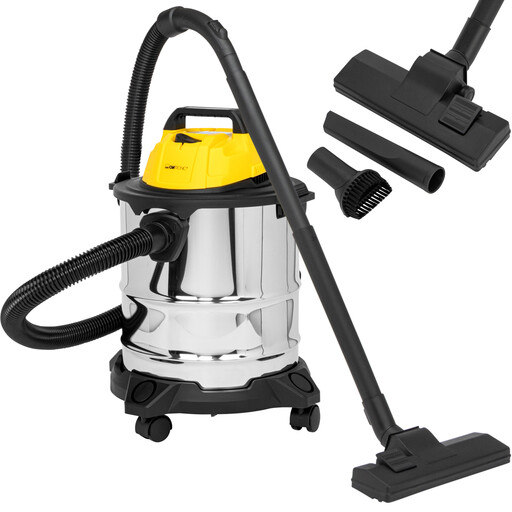
Why this product suits this profile: This corded wet and dry vacuum cleaner handles essential tasks around the home, cellar, garden and workshop.
The technical specifications list wet and dry vacuuming separately, as well as washable permanent filters and a float valve.
1200 W, approximately 20-litre tank, five-metre cable, blowing function and three suction tube sections.
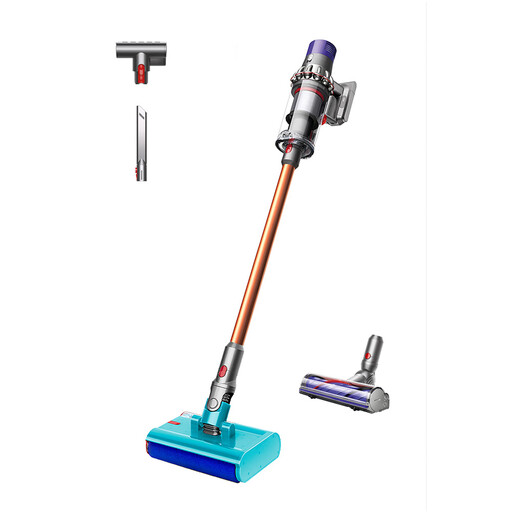
Why this product suits this profile: This cordless system combines dry cleaning with a separate wet-mopping attachment for hard floors.
The product specifications clearly distinguish between the 0.76-litre container, the wet-mopping head and the dry-cleaning head.
Cordless operation, up to 60 minutes’ runtime in Eco mode and several attachments for floors, upholstery and crevices.
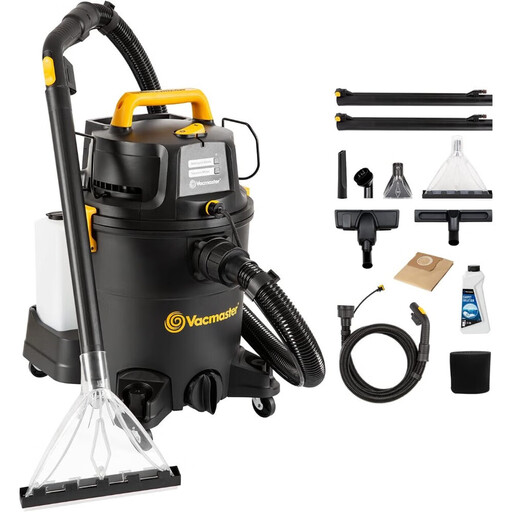
Why this product suits this profile: This model is designed for wet vacuuming, dry vacuuming and carpet cleaning, making it suitable for the home, car and textile surfaces.
Separate filters for dry, wet and washing modes, together with two tanks, reduce the risk of using the wrong operating mode.
1300 W motor, 23-litre capacity, HEPA exhaust filter according to the product specifications, and accessories for carpets and upholstery.
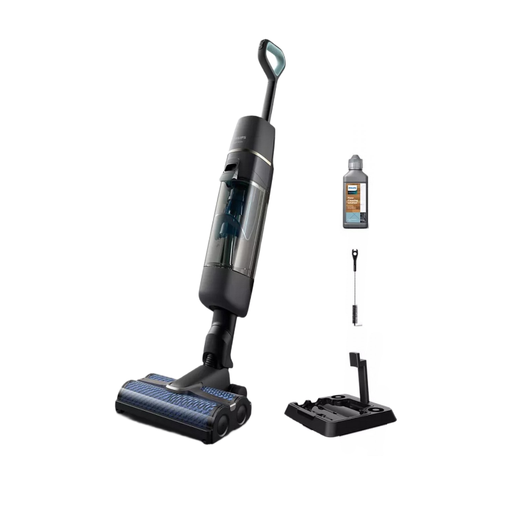
Why this product suits this profile: This cordless wet and dry vacuum cleaner is designed for the daily cleaning of sealed hard floors using dry and wet functions.
The clean- and dirty-water tanks are listed separately, while automatic self-cleaning is described as a separate maintenance step.
Three cleaning modes, up to 25 minutes’ runtime, 670 ml clean-water and 600 ml dirty-water tanks, plus an LCD display.
We have put together a complete, regularly updated list of products that fully meet these strict selection criteria and the safety regulations applicable in the EU.
Yes, provided the manufacturer approves dry vacuuming for the relevant surface and the correct filter is fitted. A wet vacuum cleaner for the workshop is not automatically optimised for delicate hard floors or carpets.
Service life depends on the battery chemistry, charging cycles, operating level, maintenance and availability of replacement parts. The stated runtime is a guideline. Replaceable wear parts, available filters and an accessible brush roller are important for longer-lasting use.
Electricity costs depend on power consumption and how long the machine is used. A 1200 W machine theoretically uses 1.2 kWh per hour of operation when running continuously at full load. Actual consumption may be lower because the motor does not always operate under the same load. For cordless machines, charging losses and, where applicable, replacement batteries also add to the cost.