
Lieferung heute & morgen

Qualitätsgarantie

Willkommens-Angebote freischalten: KOSTENLOSE Lieferung | Bis zu 80 % RABATT | Kostenlose 30-Tage-JoyPlus-Testphase
App herunterladen
A wet & dry vacuum cleaner can pick up liquids, remove dry dirt, or combine both with a mopping function. For households with children and pets, lots of hard floors, or regular cleaning tasks, a combined appliance might seem like a simple solution. In practice, however, models differ significantly in design, maintenance, battery life and suitable surfaces.
Before you buy, it is worth looking at your actual cleaning conditions. A vacuum mop for sealed floors serves a different purpose to a large wet vacuum for the workshop, car or carpet cleaning.
The description usually refers to the ability to pick up dry dirt and liquids. It does not, however, tell you whether the appliance is intended for unsealed wood, delicate coverings, high-pile carpets or upholstery.
Many wet & dry vacuum cleaners with a mopping function are designed, according to product specifications, for sealed hard floors such as tiles, vinyl, laminate or sealed wood. Depending on the model, a carpet may only be refreshed. For a thorough textile clean, a dedicated carpet and upholstery cleaner with detergent feed and suitable filters is usually more appropriate.
Figures such as 15,000 or 20,000 Pa refer to a specific technical measurement. For everyday cleaning, what matters is:
A cordless wet & dry vacuum cleaner with high maximum power can run for significantly less time in turbo mode. For larger homes, the combination of battery capacity, run time and charging time is more important than a single suction power figure.
A wet vacuum with self-cleaning typically rinses the brush roller and pipes with water. Some stations also dry the roller with warm air. Nevertheless, the dirty water tank, filter and removable parts should be emptied, rinsed and dried according to the instructions after use.
If dirty water is left in the container, odours can develop. Self-cleaning is therefore a maintenance aid, not a complete automatic appliance care system.
For daily kitchen and hallway cleaning, a cordless floor cleaner with separate clean and dirty water tanks is practical. A pair of tanks prevents the brush from working exclusively with already dirty water. Pay attention to the manufacturer’s recommended surfaces.
For the workshop, cellar, car or renovation work, appliances with a large tank, suction hose and various nozzles make sense. An example is a classic wet & dry vacuum cleaner with a 20-litre container and blower function. This design is less focused on comfortable mopping but can pick up coarse dirt and spilled liquids.
If crumbs regularly end up along skirting boards, the brush should work as close to the wall as possible. Details such as “3-sided edge cleaning” or a defined edge clearance are more concrete than general marketing claims.
For low furniture, a flat reclining angle and the overall height are crucial. Models with 180-degree tilt can be guided under sofas or beds, provided the furniture height is sufficient. Also check the weight, turning circle and the position of the tanks.
A corded model delivers continuous power during operation. The cable length determines the range of action; on larger areas, you may still need to switch sockets.
For a cordless wet & dry vacuum cleaner, the following details are relevant:
For a small flat, 30 minutes may be enough. In a large household, 40 to 50 minutes or a larger tank volume is more practical. The actual range depends on the floor, level of dirt and operating mode.
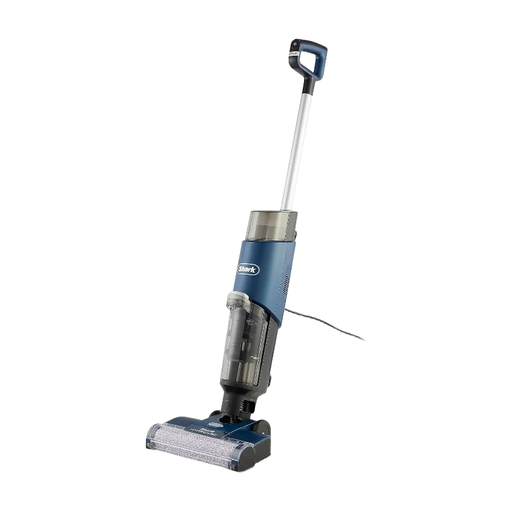
Why this product suits the profile: The corded design is ideal for users who do not want charging breaks and mainly need to clean hard floors and selected carpet areas.
The stated cable length of 25 feet provides a larger range of action without battery run time as a limiting factor. A self-cleaning mode and a separate dirty water tank support regular maintenance.
3-in-1 concept of vacuuming, washing and cleaning; 500 ml capacity and a fast-drying brush roller according to the product description.
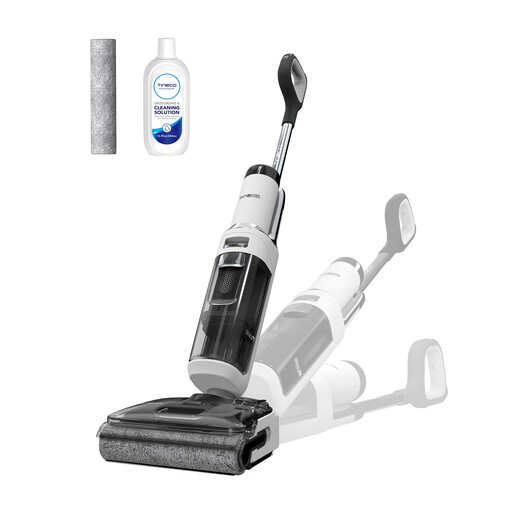
Why this product suits the profile: The design is aimed at households with lots of hard floors and furniture that needs regular cleaning underneath.
The stated flat design with a 13 cm reclining height addresses hard-to-reach areas. According to product details, use is limited to suitable hard floors.
Up to 40 minutes run time according to product specification; 180-degree design and 5-minute FlashDry self-cleaning.
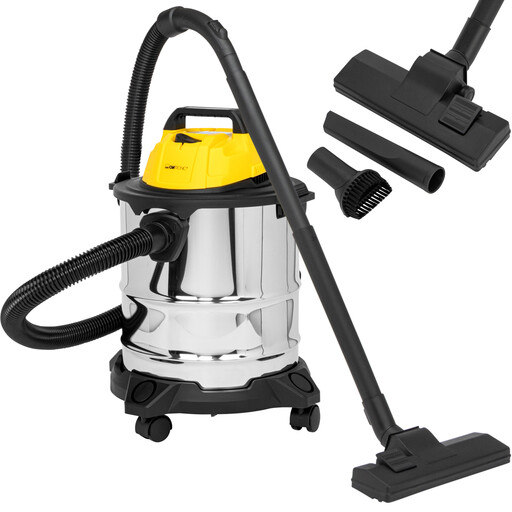
Why this product suits the profile: For the workshop, car, garden or renovation work, a large container with hose and blower function is more practical than a compact vacuum mop.
The appliance is not only designed for mopping; it features a 20-litre tank, 5 m cable, washable filters and several attachments for coarse and liquid dirt.
1200-watt mains operation; wet and dry vacuuming plus blower function with stainless steel housing according to the product description.
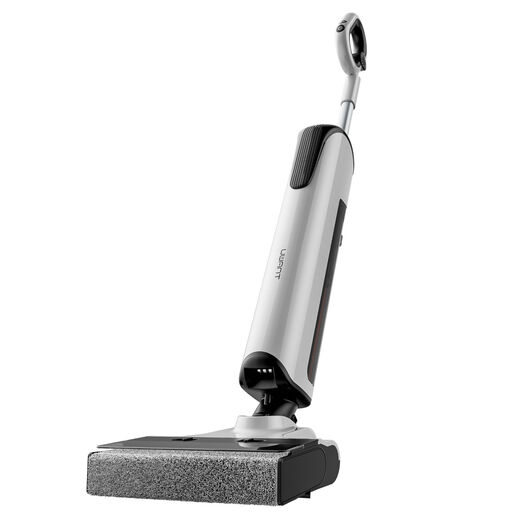
Why this product suits the profile: The combination of edge cleaning, long run time and automatic brush care suits frequent cleaning passes on hard floors.
The product specifications mention 2 mm edge clearance, 180-degree tilt and a station with thermal self-cleaning and drying. The dirty water tank still needs to be emptied.
Up to 45 minutes run time and three-stage water regulation according to the product description.
We have put together a full, regularly updated list of products that fully meet these strict selection criteria and the safety regulations in force in the EU.
A steam cleaner for floors works with heated water and is suitable for sealed surfaces approved by the manufacturer. However, it does not necessarily pick up dry crumbs or larger amounts of liquid. A vacuum mop, on the other hand, combines vacuuming and damp mopping, while a classic wet & dry vacuum cleaner is more focused on suction and versatility.
The choice therefore depends on the main problem:
A vacuum mop can combine vacuuming and damp mopping in one pass. For dried-on stains, delicate materials or particularly thorough textile care, a separate method may still be necessary. Always follow the manufacturer’s surface approvals.
The run time is often between around 30 and 50 minutes, depending on the model and operating mode. In turbo mode, it can be lower. When choosing, you should consider the floor area, tank size, charging time and desired cleaning intensity together.
In addition to electricity consumption, you may need cleaning solution, filters, brush rollers and spare parts. Corded appliances require power during operation; with cordless models, there are also charging cycles and, in the long term, possible battery costs. An appliance with easily accessible, washable filters and available spare parts can simplify ongoing maintenance.