
Lieferung heute & morgen

Qualitätsgarantie

Willkommens-Angebote freischalten: KOSTENLOSE Lieferung | Bis zu 80 % RABATT | Kostenlose 30-Tage-JoyPlus-Testphase
App herunterladen
Crumbs, spilled drinks, pet hair and footprints are part of everyday life in many British households. A wet and dry vacuum cleaner with mopping function can tackle these jobs in one go, reducing the need to switch between a vacuum cleaner and a mop. However, models differ considerably in terms of tank design, battery life, manoeuvrability and maintenance.
Anyone who focuses only on a high wattage or Pascal rating can overlook important details. The following buying criteria will help you assess marketing claims and choose a device that suits your household, flooring and cleaning routine.
Figures such as 22,000 Pa, 24,000 Pa or a motor output in watts describe individual technical specifications. On their own, they say little about how well a cordless vacuum mop picks up wet dirt, cleans along edges or can be guided across parquet and laminate flooring.
Other important factors include:
A cordless vacuum mop with a more moderate power rating may be more practical in everyday use if it is easy to manoeuvre and reliably collects liquids.
Depending on the model, a self-cleaning function rinses the brush roller and internal lines. The dirty-water tank, filter and brush usually still need to be emptied, rinsed and dried. If these parts remain damp, unpleasant odours can develop.
It is therefore worth checking whether the device has a drying function and how long it runs. With models that do not offer warm-air or rapid drying, the brush roller should be removed after every use or dried separately.
“Up to 60 minutes” generally refers to a particular mode and optimal conditions. A higher suction setting, wet dirt and frequent changes of direction can reduce runtime. When choosing a model, it is therefore important to consider whether the actual cleaning area matches the battery capacity and how long charging takes.
A hard-floor cleaner should ideally have separate clean- and dirty-water tanks. This prevents collected water from being spread across the floor again. Check the tank capacities and whether both containers can be removed easily.
For families with children or pets, it is also important to know whether the device is designed for sticky dirt and pet hair. A vacuum mop for pet hair needs a brush roller that minimises hair build-up, as well as an easily accessible area for removing hair during cleaning.
A wet vacuum cleaner for floors is generally designed for sealed hard floors such as tiles, vinyl, laminate, sealed parquet or stone. Untreated wood and delicate surfaces should only be cleaned in accordance with the flooring manufacturer’s instructions.
Controlled water distribution is particularly important for parquet and laminate. Cleaning with too much water can cause problems if moisture gets into joints or damaged finishes. For very delicate floors, a traditional floor mop with a spray function may offer better control.
A flexible brush head, a wide swivel range and a low overall height make it easier to clean beneath cupboards and sofas. Also check:
A vacuum cleaner and mop in one saves the most time when it can be moved through the rooms without frequent lifting or additional cleaning.
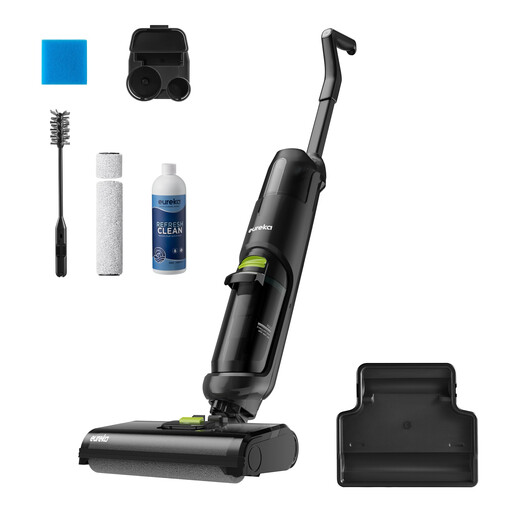
Why this product suits the profile: This model combines vacuuming and mopping, has separate water tanks and, according to the product details, offers up to 30 minutes of cordless runtime. Assisted forward movement can make it easier to guide across sealed hard floors.
The self-cleaning function reduces direct contact with the used brush roller. Clean and dirty water remain separate, although the tank and filter still need to be maintained after use.
Separate tanks, flexible brush-head movement and a stated self-cleaning function; suitable for several types of sealed hard flooring.
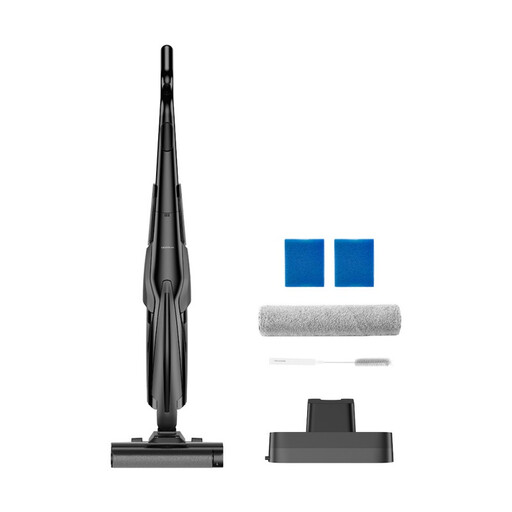
Why this product suits the profile: The product description lists a 70-degree brush wash, 100-degree drying, 22,000 Pa suction power and up to 50 minutes of runtime. It is aimed at users who want to combine cleaning and device maintenance in a systematic way.
The stated hot-air drying function tackles the residual moisture that is often overlooked. However, checking the tank and removing hair remain part of regular maintenance.
100-degree drying, a 180-degree flat-lying position and 120-degree steering according to the product data.
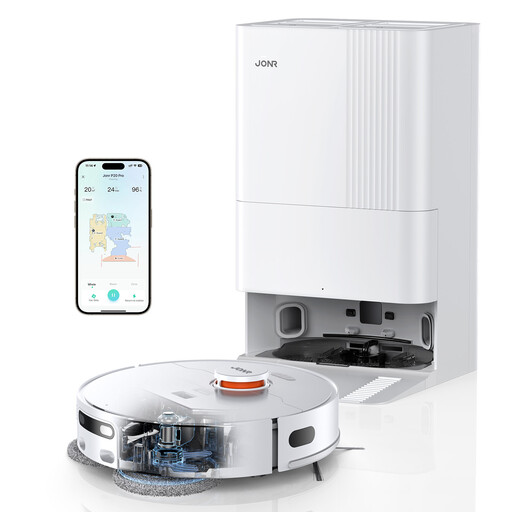
Why this product suits the profile: This robot vacuum with mopping function handles scheduled cleaning routines and offers, according to the specifications, up to 150 minutes of combined vacuuming and mopping. However, the station requires a permanent, unobstructed space.
Cables, sharp objects and delicate items must be removed before starting. This prevents the automation from being mistaken for completely maintenance-free cleaning.
Automatic charging, up to 150 minutes of combined cleaning time and a base station with water tanks.
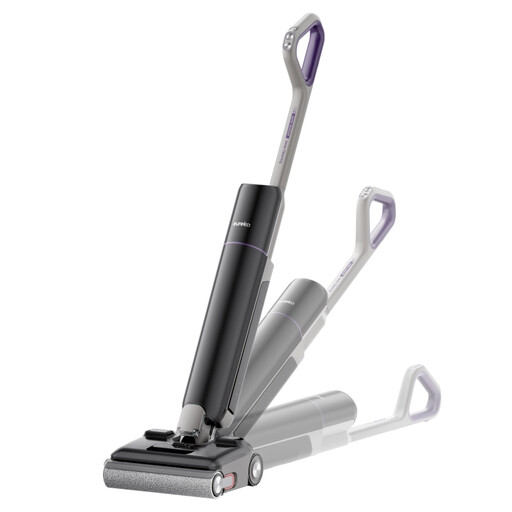
Why this product suits the profile: With a stated height of 13 cm, a 180-degree flat-lying position and three-sided edge cleaning, this model is designed for hard-to-reach areas beneath furniture. Runtime is stated as up to 60 minutes.
The low-profile design and edge brush reduce areas that conventional devices often miss. According to the safety information, this model is not intended for carpets.
24,000 Pa according to the product description, a 180-degree flat-lying design and stated hot-water cleaning followed by drying.
We have put together a complete, regularly updated list of products that fully meet these strict selection criteria and the safety regulations applicable in the EU.
The cost of a vacuum mop is not limited to the purchase price. Also consider:
Empty the dirty-water tank after every wet-cleaning session. Rinse the brush roller, filter and containers according to the instructions, and allow washable parts to dry completely. Do not use harsh cleaning products if the manufacturer specifies a particular cleaning solution.
The devices presented here are primarily intended for sealed hard floors. Carpets, untreated wood and delicate surfaces should only be cleaned if the operating instructions expressly permit it.
Runtime depends on the cleaning mode, level of dirt, battery age and floor area. Manufacturer figures such as 30, 50 or 60 minutes should be understood as maximum values. For larger homes, a device with longer runtime or a replaceable battery may be a sensible choice.
That depends on how you use it and the level of maintenance required. A combination device can save time, but it incurs costs for electricity, filters, brush rollers and, where applicable, cleaning solution. For small areas, a conventional mop may be sufficient; for frequent wet spills, a wet and dry vacuum cleaner may offer a more convenient cleaning routine.