
Lieferung heute & morgen

Qualitätsgarantie

Willkommens-Angebote freischalten: KOSTENLOSE Lieferung | Bis zu 80 % RABATT | Kostenlose 30-Tage-JoyPlus-Testphase
App herunterladen
A wet and dry vacuum cleaner can pick up dry dirt and wash hard floors in one go. This makes it a particularly appealing option for families, pet owners and busy professionals. However, wet and dry floor cleaners, cordless wet and dry vacuums and robot vacuums with mopping functions differ considerably in terms of maintenance, reach and level of automation.
A figure such as 25,000 Pa may sound impressive for a robot vacuum. But it doesn’t tell you on its own how well the appliance picks up crumbs, pet hair or sticky residue. The brush design, airflow, navigation and floorhead all affect the results too.
With traditional wet and dry cleaners for hard floors, water flow and the roller’s contact with the floor are also important. A powerful motor won’t automatically prevent streaks or leave the floor dry.
A self-cleaning function usually rinses the brush roller and internal tubing. You’ll still need to empty and rinse the dirty water tank. The filters, roller and dock also need regular care. If damp parts are left closed up, they can start to smell.
So look for removable parts, a clear drying function, and replacement rollers and filters that are readily available.
A cordless wet and dry vacuum cleaner gives you freedom to move around, but its performance depends on battery capacity and charging time. A run time of 30 to 45 minutes may be enough for a flat, but could feel limiting in a larger home with several hard-floor areas. A corded hard floor cleaner, on the other hand, works without needing to recharge, but you’ll need a plug socket and a suitable cable length.
Not every appliance is suitable for every surface. Product descriptions often specifically mention sealed parquet, laminate, vinyl and tiles. Unsealed wood and delicate surfaces may need a different approach.
A vacuum cleaner with a mopping function is designed to pick up dry dirt and small amounts of liquid at the same time. It won’t necessarily replace manually cleaning up large spills. Also check whether it detects carpets automatically or whether you need to switch off the mopping function yourself.
A dual-tank system separates clean and dirty water, so the roller is supplied with clean water while you clean. Key details to look out for include:
For everyday use, motor power and battery capacity aren’t the only things that matter. A weight of around 4 to 5 kilograms can make a difference during longer cleaning sessions. Also check how close the brush roller can get to skirting boards and furniture. Features such as side edge cleaning can offer a design advantage, but you may still need to go over hard-to-reach spots by hand from time to time.
With a robot vacuum with a mopping function, you’ll also need to consider the dimensions of the dock, obstacle detection, threshold height and how much clear space is needed in front of the charging station.
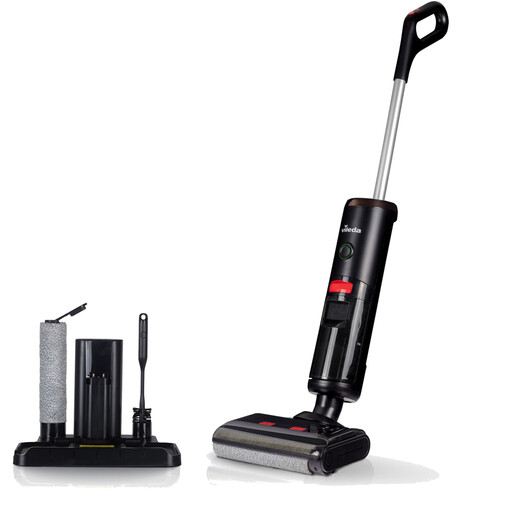
Why it suits this household: This cordless wet and dry floor cleaner vacuums and washes at the same time, with a stated run time of 35 to 45 minutes. That makes it a good fit for small to medium-sized hard-floor areas without having to change sockets.
The dual-tank system separates clean and dirty water. It has a self-cleaning function, but you’ll still need to look after the tank and filters.
220-watt motor, 750 ml clean water tank and 600 ml dirty water tank; washable HEPA filter according to the product description.
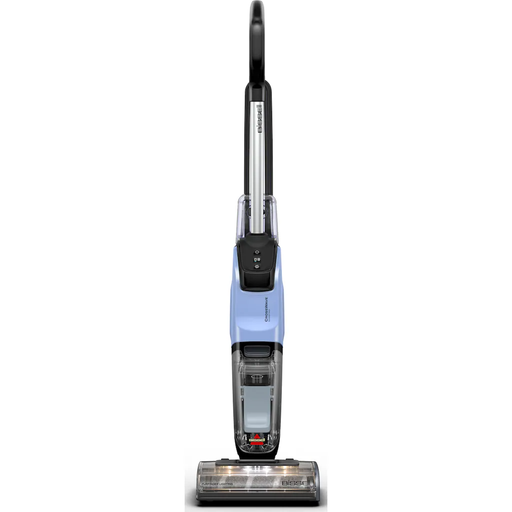
Why it suits this household: The corded design provides a constant power supply and is suitable for sealed hard floors and carpets, provided the instructions say they can be cleaned this way.
The stated cable length of 7.6 metres gives you a clear idea of its reach. If you have a larger home, it’s still worth checking where your plug sockets are.
340-watt power rating, dual-tank technology, self-cleaning dock and ZeroGap edge cleaning along the right-hand side of the appliance.
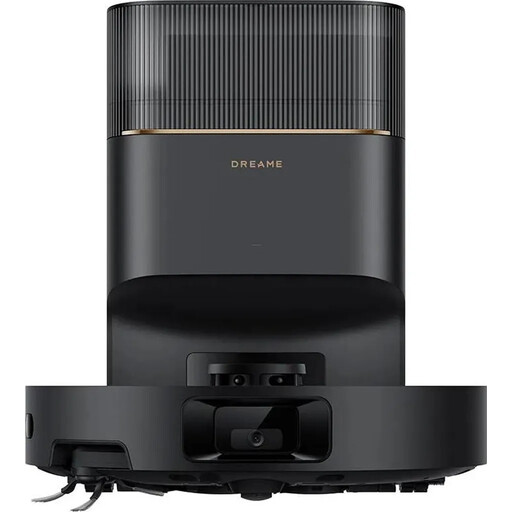
Why it suits this household: This robot vacuum with a mopping function is a good option if you want to schedule cleaning in an app and cut down on how often you need to pick up everyday dust.
The app lets you set cleaning preferences by room and create no-go zones. You’ll still need to clear cables and loose items before starting it.
Stated suction power of 13,000 Pa, up to 285 minutes’ run time in combined mode and a 5-litre dust bag in the base station.
We’ve put together a complete, regularly updated list of products that meet these strict selection criteria and fully comply with the safety regulations in force across the EU.
Where possible, empty the dirty water tank after every use and leave the roller, filter and tank open to dry. If you have a wet and dry vacuum cleaner for pet hair, check the brush roller regularly for tangled hair. Anti-tangle systems can reduce the amount of maintenance needed, but they won’t eliminate the need to clean it.
Running costs include electricity, cleaning solution, replacement filters, rollers, dust bags and, where necessary, a new battery. Robots also need dust bags and regular care of the base station. Don’t use flammable liquids, ash, sharp objects or substances that are unsuitable for the appliance. Always follow the safety instructions provided by the manufacturer.
It depends on the floor’s seal and the manufacturer’s instructions. Only use appliances and amounts of water approved for the specific floor. The floor shouldn’t be left visibly wet after cleaning.
Depending on the model, cleaning mode and floor type, the stated run time is often around 30 to 45 minutes. Battery age, charging cycles and the selected power setting can all affect how long it actually runs.
A robot is well suited to regular, scheduled maintenance cleaning, but needs enough clear space to navigate and for its dock. A manual wet and dry floor cleaner is usually more convenient for spills, individual rooms and targeted edge cleaning.