
Lieferung heute & morgen

Qualitätsgarantie

Willkommens-Angebote freischalten: KOSTENLOSE Lieferung | Bis zu 80 % RABATT | Kostenlose 30-Tage-JoyPlus-Testphase
App herunterladen
A wet-erase marker is an indispensable tool for clear, temporary markings on smooth surfaces. Whether for presentations, project planning, or office organisation, the requirement is always the same: clean writing that can be removed without a trace. However, the market is saturated with products that overpromise and underdeliver. Before you make a decision, you should be aware of the common pitfalls that lead to frustration and unnecessary expense.
As your Joybuy Product Recommendation Officer, I'll help you separate the wheat from the chaff. This guide focuses on the objective criteria that define a reliable wet-erase marker.
The 3 most common problems when choosing a wet-erase marker:
To avoid these issues, you should focus on three core technical features. These determine the performance and longevity of your marker.
The term "erasable" is not standardised. The most important distinction lies in the ink's composition:
wet-erase marker. The ink is based on water and dyes that can be removed from all smooth, non-porous surfaces (transparencies, glass, plastic) with a damp cloth. They are ideal as an OHP pen or for labels that need to last longer and shouldn't be accidentally wiped away.For most applications other than whiteboards, a non-permanent marker with water-soluble ink is the right choice.
The tip determines how precisely you can write and for what purpose. The most common designations are:
marker for smooth surfaces.A high-quality marker is distinguished by its durability. Look for a barrel made of Polypropylene (PP). This material effectively prevents the ink from drying out and significantly extends the marker's lifespan.
Another important aspect is refillability. A refillable wet-erase marker not only reduces waste but also saves costs in the long run. Models like the STAEDTLER Lumocolor non-permanent can be easily refilled using a matching refill station.
Based on these objective criteria, we have identified several models that are suitable for different user profiles.
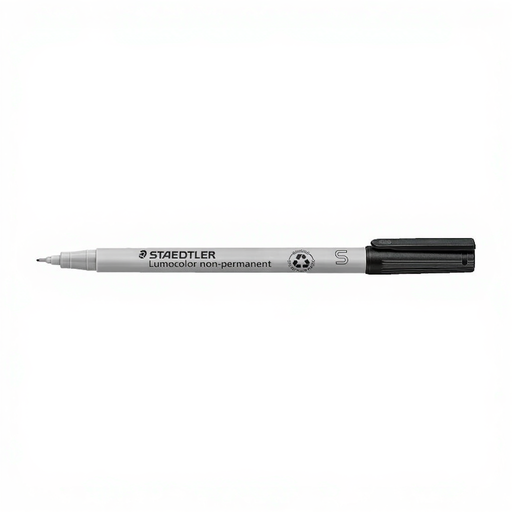
Why this model is a good fit: Ideal for users who need fine, clear lines on laminated plans, small labels, or in technical drawings. The superfine tip allows for maximum information density in limited space.
The high-quality, water-soluble ink can be wiped away without residue, even with the finest strokes, thus preventing "ghosting." The PP barrel reliably protects the delicate tip from drying out.
Precise line control with the 0.4 mm tip. The "Airplane-safe" technology prevents leakage during air travel.
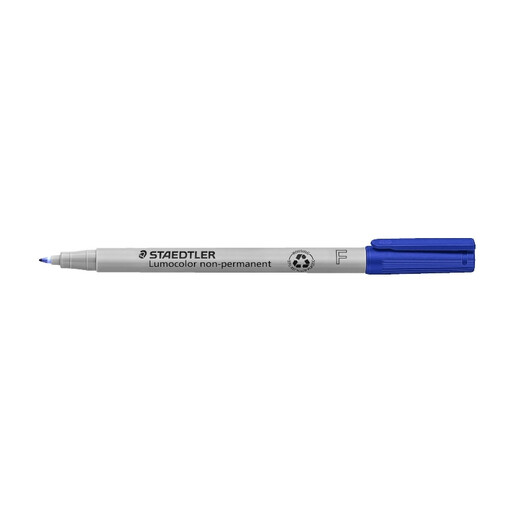
Why this model is a good fit: The 0.6 mm line width is the perfect middle ground, offering good readability for presentations and sufficient precision for notes. A reliable all-rounder for educators and project managers.
As a refillable marker, it counteracts the problem of a short lifespan. The ink is explicitly designed for wet-wiping and dries quickly to prevent smudging.
Balanced line width of 0.6 mm for universal applications. The high colour brilliance ensures excellent visibility on projection transparencies.
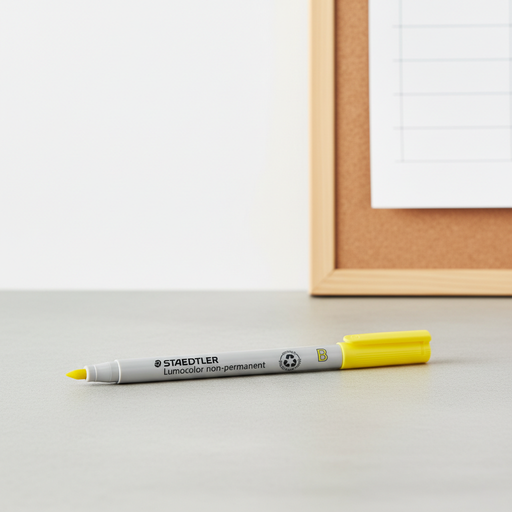
Why this model is a good fit: The chisel tip allows for both broad highlighting and bold lines. Perfect for trainers and lecturers who need to visualise content on flip charts or whiteboards and make it legible from a distance.
The ink is specially formulated for smooth surfaces and prevents the "beading" (droplet formation) that often occurs with broad strokes from inferior markers. Erasability is guaranteed even when applied over a large area.
Flexible line width thanks to the chisel tip (1.0 mm or 2.5 mm). The vibrant colour ensures maximum attention.
We have compiled a complete, up-to-date list of products that fully meet these strict selection criteria and German regulations.
A soft cloth dampened with water is usually sufficient to remove the ink from smooth, non-porous surfaces without leaving a residue. No special chemical cleaners are required. Avoid dry rubbing, as this can smear the ink.
Yes, this is possible, but the handling differs from that of a standard whiteboard marker. A non-permanent marker with water-soluble ink must be wiped off with a damp cloth, not a dry eraser. This can be an advantage if you want to protect notes from being accidentally erased.
This feature refers to an automatic pressure equalisation system within the marker. It prevents the marker from leaking during the pressure changes of a flight. For professionals and educators who travel frequently, this is an important feature to avoid ink stains in a bag or luggage.