
Lieferung heute & morgen

Qualitätsgarantie

Willkommens-Angebote freischalten: KOSTENLOSE Lieferung | Bis zu 80 % RABATT | Kostenlose 30-Tage-JoyPlus-Testphase
App herunterladen
As a cat owner, you know that many cats have a preference for tender chunks in a tasty gravy. Cat food in gravy is not only highly palatable but also contributes to hydration thanks to its high moisture content. However, the selection available is vast, and product claims can often be hard to decipher.
This guide will help you recognise common marketing traps and apply the right criteria when selecting a suitable wet food for your cat.
The choice of food has a direct impact on your cat's well-being. Pay attention to these three points to avoid making the wrong choice.
To find a suitable wet food for your cat, three core parameters are crucial.
An open declaration is a sign of quality. It lists exactly which types of meat and which parts are included, along with their proportions. Look for a high total percentage of meat and animal derivatives. Another key point is the addition of Taurine, an essential amino acid for cats that their bodies cannot produce in sufficient quantities. Products labelled as "complete food" must contain all necessary nutrients.
A look at the ingredients list reveals whether any unwanted substances are included. Grain-free cat food with no added sugar is often the better choice for a species-appropriate diet. A high-quality formula can also do without artificial colours, flavours, and preservatives.
Wet food for cats is available in various types of packaging. Cat food pouches are particularly convenient as they guarantee a fresh meal and are easy to handle. For owners who value variety or have multiple cats, cat food multipacks are a great option. They often contain different flavours and usually offer a price advantage over single purchases.
Based on these objective criteria, we have compiled a selection of products for various requirements.
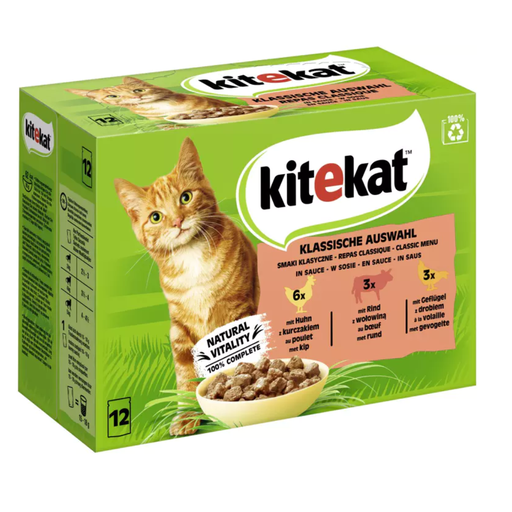
Why this product is a great fit: Ideal for owners who need a reliable and affordable daily feeding solution, especially in multi-cat households. The multipack offers variety at a good price per meal.
Although it uses a closed declaration, the manufacturer states it is formulated as a 100% complete and balanced food. This avoids the risk of feeding an incomplete diet. It also contains no added artificial preservatives.
Provides balanced nutrition at an accessible price point in a convenient multipack.
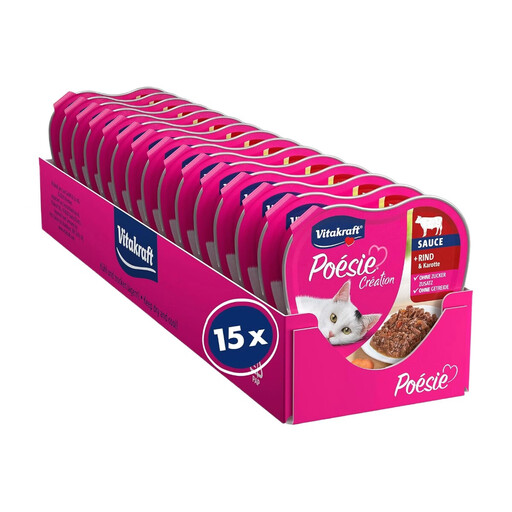
Why this product is a great fit: This choice is suitable for owners who actively seek out formulas without common fillers and who prioritise their cat's digestive health.
According to the manufacturer, the formula is explicitly "No added sugar" and "Grain-free." This directly addresses the pitfall of hidden, unnecessary fillers. The addition of inulin can support gut flora.
A grain-free and sugar-free formula with prebiotic inulin to support digestion.
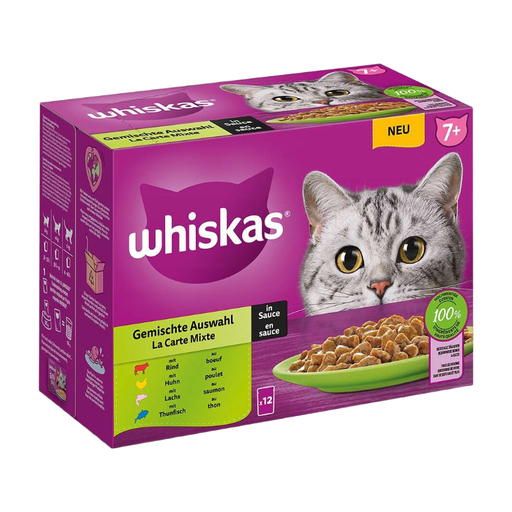
Why this product is a great fit: Perfect for owners of cats aged seven and over who require a diet tailored to their changing physiological needs. This wet senior cat food is specifically designed for this life stage.
This food avoids the "one-size-fits-all" trap by offering a targeted formula. According to the manufacturer, it contains balanced minerals to support urinary health and vitamins to promote mobility, addressing typical age-related concerns.
Specially developed for cats aged 7+, with adjusted nutrient levels to support the urinary tract and vitality.
We have compiled a complete, up-to-date list of products that meet these strict selection criteria and UK/EU pet food regulations.
The manufacturer's feeding guidelines on the packaging provide a good starting point. As a rule, the daily ration should be divided into at least two meals. Adjust the amount based on your cat's age, weight, and activity level.
Opened cat food pouches or cans should be refrigerated immediately at 2–6 °C. Cover the contents well and use within 24 to 48 hours to ensure freshness and hygiene. Serve the food at room temperature, as most cats prefer it that way.
Cats are obligate carnivores by nature and have no nutritional requirement for grain. Grain-free cat food can therefore be a beneficial option, especially for cats with sensitive digestion or known intolerances. However, for most healthy cats, a small amount of high-quality carbohydrate sources is not necessarily harmful. The decision depends on your cat's individual tolerance.